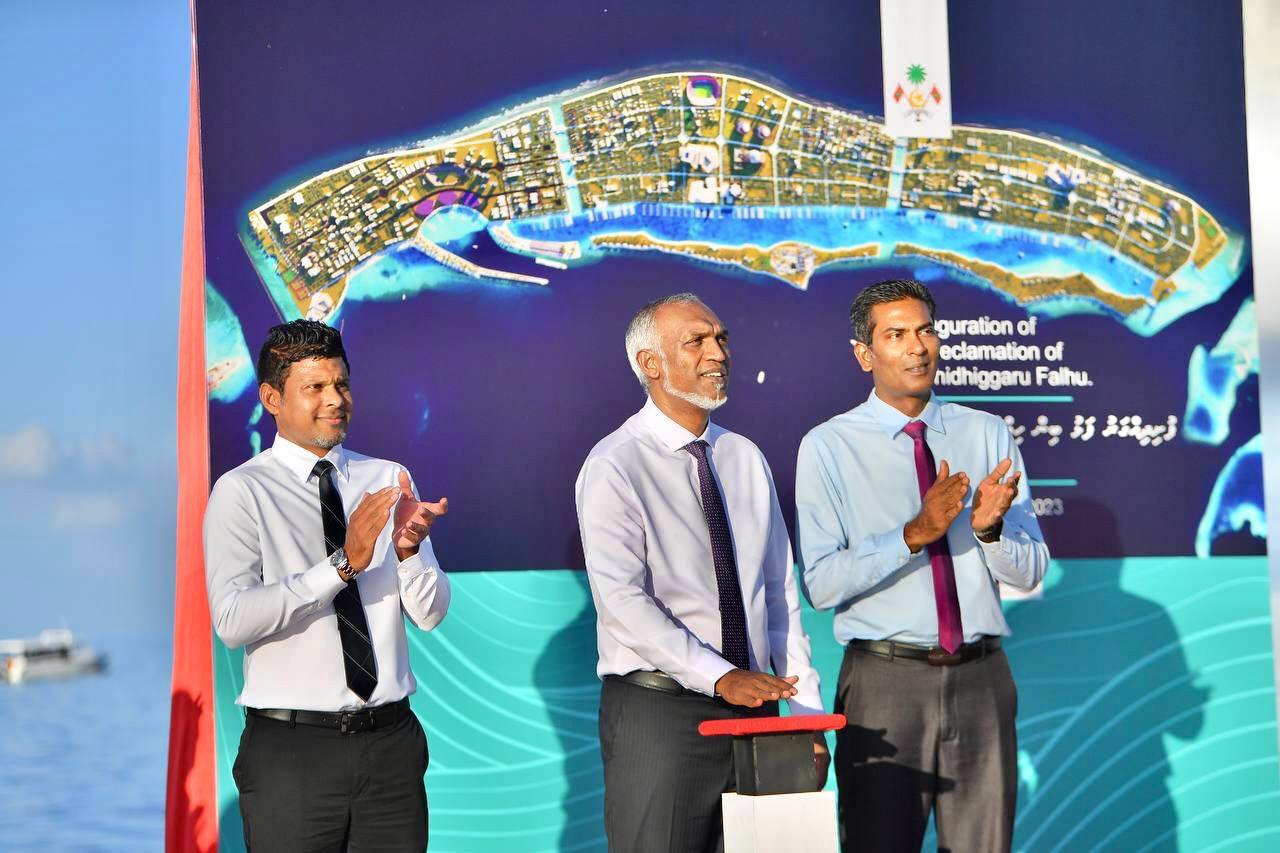
The Housing Development Corporation (HDC) has introduced an ambitious masterplan that places Rasmale at the center of the Maldives’ next phase of urban development. Branded as “The Rasmale – The Eco City,” the project aims to redefine modern island living through sustainability, inclusivity, and smart urban design.
HDC presented the full-scale Rasmale Eco City concept during an official unveiling, showcasing a long-term development strategy built around environmental responsibility, community living, and economic growth.
Rasmale as the Flagship Eco City
HDC designed Rasmale to serve as the Maldives’ flagship eco-city. The development will rise across carefully planned man-made islands, integrating housing, commercial hubs, public spaces, and tourism zones within a unified masterplan.
Instead of focusing solely on residential expansion, HDC structured Rasmale as a balanced ecosystem. The project combines green infrastructure, modern transport solutions, recreational facilities, and economic zones in one integrated environment.
Through this approach, Rasmale aims to ease housing pressure in the Greater Malé Region while setting new standards for sustainable island development.
Housing Solutions for Every Segment
Housing stands at the core of the Rasmale Eco City vision. HDC’s masterplan includes a wide range of residential options designed to meet different income levels and lifestyle needs.
The development will feature:
- A Farukolhufushi gated community with resort-style amenities
- Modern row houses
- Cost-efficient prefabricated homes
- Large-scale social housing projects
The Farukolhufushi gated community will offer premium residential living within Rasmale, blending privacy, security, and leisure facilities. Residents can expect landscaped surroundings and high-end amenities that reflect resort-inspired design.
At the same time, HDC has prioritised affordable and social housing to address the national housing shortage. By integrating cost-efficient prefab homes and large-scale housing blocks, Rasmale will support inclusive growth rather than exclusive expansion.
This mix ensures that Rasmale serves a broad demographic—from young professionals and families to middle-income earners and vulnerable households.
Smart Infrastructure and Mobility
HDC has embedded smart infrastructure into the Rasmale Eco City blueprint. The project will introduce multi-level smart parking systems to reduce congestion and optimise land use.
By designing vertical parking structures, planners aim to preserve open space and minimise traffic bottlenecks. This approach aligns with the eco-city philosophy, which prioritises efficient land management and pedestrian-friendly zones.
The integration of modern logistics systems will further strengthen Rasmale’s infrastructure. A smart warehouse complex will streamline storage and distribution, helping modernise supply chains in the Greater Malé Region.
Together, these systems will support both residents and businesses within Rasmale.
Recreation and Lifestyle Destinations
Rasmale will not focus solely on housing and commerce. HDC has incorporated recreational and tourism-driven attractions into the eco-city model.
One major highlight is Isle Adventure Park, designed as a family-friendly recreational space. The park will provide outdoor activities, leisure zones, and green areas that encourage active lifestyles.
The masterplan also includes Nooveli Island Retreat, a mixed-use destination combining commercial outlets and leisure facilities. This space will offer residents and visitors access to dining, retail, and relaxation within Rasmale.
Additionally, HDC has planned the Kinaaraa destination island, which will integrate tourism, entertainment, and camping experiences. By blending residential and tourism elements, Rasmale will generate economic activity while maintaining community balance.
Celebrating Heritage and Identity
Beyond modern development, HDC has incorporated cultural preservation into the Rasmale Eco City concept.
The project will feature a dedicated History Center to celebrate Maldivian heritage. This facility will highlight the nation’s cultural identity, traditions, and historical milestones.
By including a History Center within Rasmale, planners aim to ensure that rapid urban growth does not overshadow national heritage. The eco-city will therefore combine forward-thinking infrastructure with cultural continuity.
Economic Growth and Innovation
HDC’s Rasmale blueprint also prioritises entrepreneurship and knowledge-based growth.
The project includes an SME Building that will provide dedicated spaces for small and medium enterprises. Entrepreneurs will gain access to modern facilities, collaborative environments, and business support services.
A new HDC office building will also form part of the development. The structure will include public spaces designed to encourage community engagement and accessibility.
Perhaps most significantly, Rasmale will host a Knowledge Park. This education-focused hub will accommodate academic institutions, student housing, and learning facilities. By positioning education within the eco-city, HDC aims to cultivate innovation and long-term human capital development.
The Knowledge Park will help transform Rasmale into more than a residential zone. It will become a centre for research, training, and skills development.
Sustainable Urban Planning at the Core
Sustainability forms the foundation of the Rasmale Eco City concept. HDC designed the masterplan to integrate green spaces, energy-efficient buildings, and climate-conscious infrastructure.
Urban planners aim to maximise natural ventilation, encourage renewable energy integration, and preserve open spaces. Landscaped parks and pedestrian pathways will promote healthier lifestyles while reducing environmental strain.
The eco-city model reflects a broader shift in Maldivian development strategy. Rather than expanding in fragmented ways, Rasmale will grow under a cohesive sustainability framework.
By embedding eco-friendly principles from the start, HDC intends to build resilience against climate challenges while enhancing quality of life.
Transforming the Greater Malé Region
Rasmale’s scale and ambition position it as one of the most transformative urban projects in the Maldives.
The development directly addresses housing shortages, economic diversification, and infrastructure modernisation. It also supports decentralised expansion, reducing pressure on densely populated Malé.
As residential units, commercial centres, parks, and institutions take shape, Rasmale could redefine how Maldivians experience urban living.
HDC’s integrated approach ensures that the eco-city will not operate as an isolated housing scheme. Instead, Rasmale will function as a fully connected urban ecosystem.
A Model Eco City for Future Generations
Through “The Rasmale – The Eco City,” HDC has presented a long-term vision that balances sustainability, inclusivity, and economic growth.
The project combines:
- Diverse housing options
- Smart infrastructure
- Cultural preservation
- Tourism integration
- Entrepreneurial support
- Educational development
This multi-layered strategy positions Rasmale as a model eco-city not only for the Maldives but potentially for small island nations facing similar development pressures.
If implemented as planned, Rasmale will deliver more than physical infrastructure. It will create opportunities, strengthen communities, and establish a sustainable foundation for future generations.
As development progresses, Rasmale stands poised to become a landmark symbol of modern, inclusive island living in the Maldives.