Explore Nearby
Local Islands Near Ras Malé: Gulhi, Guraidhoo and Maafushi
Ras Malé is being built in South Malé Atoll, a short boat ride from three of the country's best-known local islands: Gulhi, Guraidhoo and Maafushi. Here is what each is like, how to get there from Malé, and what to know before you go.
Most visitors to the Maldives see only resorts, but the country's character lives on its local islands, where Maldivians live, work and fish. Three of the best-known lie in South Malé Atoll, not far from where Ras Malé is being built: Gulhi, Maafushi and Guraidhoo. Since 2009, when the government allowed guesthouses on local islands, all three have opened up to visitors. This guide covers what each is like, how to reach it, and how to visit respectfully. Figures come from the 2022 census and published sources. Transport times and prices change, so check them before you travel.
In short ⌄
- Gulhi, Maafushi and Guraidhoo are inhabited local islands in South Malé Atoll, between about 20 and 31 km south of Malé.
- Maafushi is the busiest, with 4,471 people in 2022 and more guesthouses than any other local island. Gulhi is small and quiet. Guraidhoo is known for surfing and snorkelling.
- All three are reached from Malé by public ferry or shared speedboat. Ferries are cheap but slow, and don't run on Fridays.
- Local islands follow Maldivian law and customs, so dress modestly in the village. There's no alcohol, and bikinis are only for designated beaches.
Gulhi: small and quiet
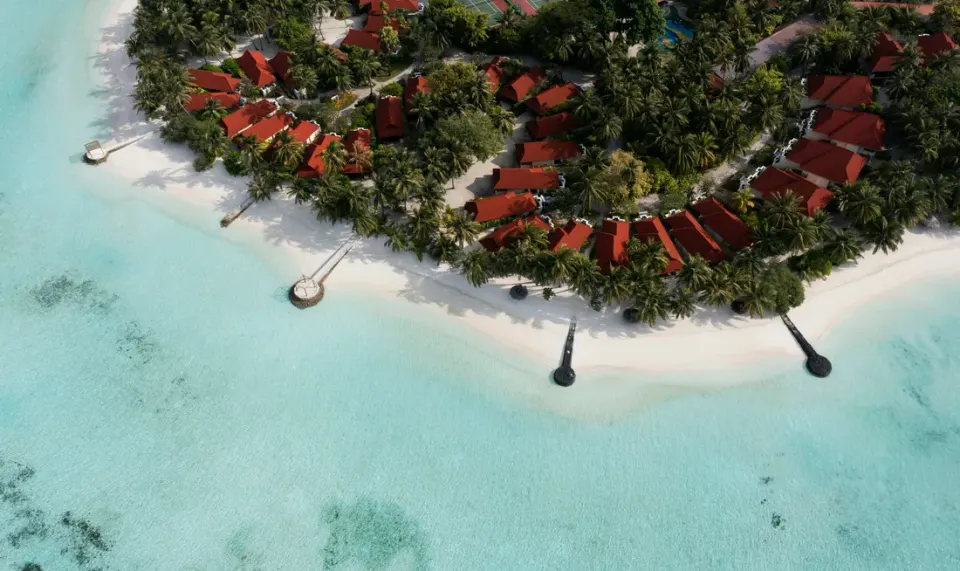
Gulhi is a small inhabited island in South Malé Atoll, about 20.6 km south of Malé and close to Maafushi. It's only about 400 metres long and 225 metres wide. At the 2022 census it had 976 residents, up from 832 in 2014.
Gulhi is the closest inhabited island to Ras Malé, which is being reclaimed in nearby Fushidhiggaru lagoon. Its small size makes it easy to walk around in minutes. It suits visitors who want a quieter base than Maafushi, with the same access to the sea. A public ferry run by the state-owned MTCC calls daily except Friday.
Maafushi: the guesthouse capital
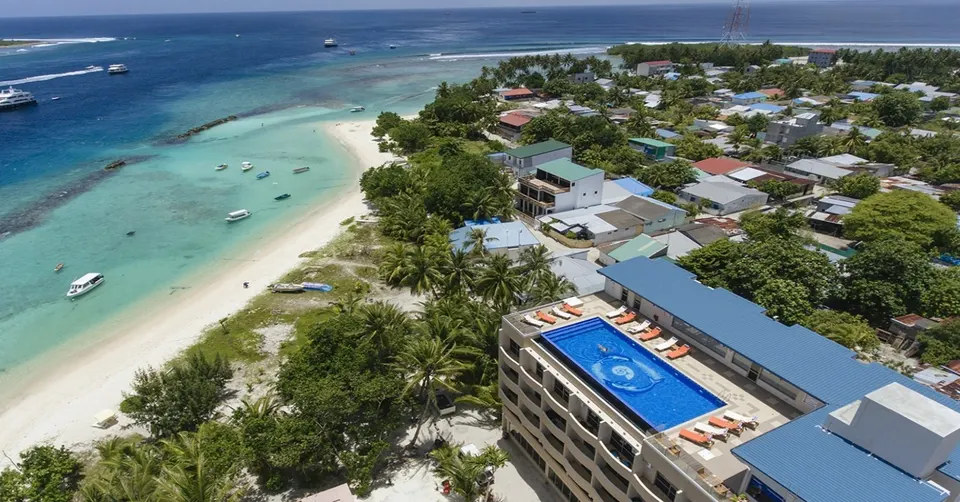
Maafushi is about 26 km from Malé, a long, narrow island roughly 1.3 km long and 260 metres wide. It's by far the busiest local island for tourism. At the 2022 census it had 4,471 people, including 1,276 foreigners, up from 2,631 in 2014.
Maafushi has been described as the local island with the most guesthouses and guest beds in the country. Its guesthouse count grew from 40 in December 2015 to 72 by December 2017. It has water sports centres, dive operators and souvenir shops, and it's a common base for excursions to sandbanks, snorkelling reefs and nearby resorts. It was badly damaged by the 2004 tsunami and has been rebuilt since.
Maafushi is also part of Ras Malé's story. The Environment Protection Agency permitted dredging for Ras Malé's sand in two areas west of Maafushi. Dive operators and fishermen have raised concerns about the effect of the dredging on the reefs and water around the atoll. Read more in Ras Malé's environmental impact.
Guraidhoo: surf and snorkelling
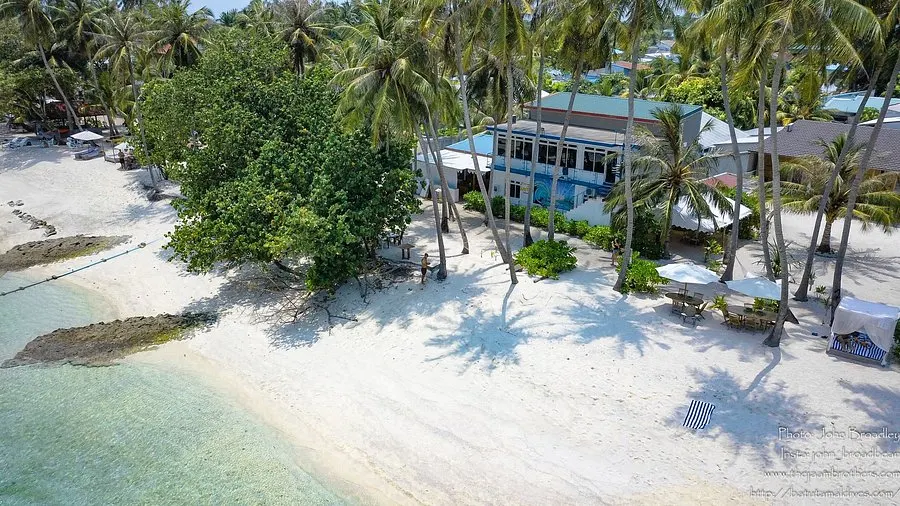
Guraidhoo lies about 31 km south of Malé, roughly 675 by 500 metres in size. It had 1,743 residents at the 2022 census, up from 1,580 in 2014. It's known for surfing, snorkelling with turtles, dolphin trips, sandbanks and diving. It's also home to the Maldives' only psychiatric facility.
Guraidhoo is close to several South Malé Atoll surf breaks, and a handful of guesthouses cater to surfers. See our guide to surfing near Malé.
How the islands are growing
All three islands have grown fast, largely on the back of tourism. Census figures show the change:
- Maafushi: 2,000 people in 2006, 2,631 in 2014 and 4,471 in 2022, more than doubling in 16 years.
- Guraidhoo: 1,220 in 2006, 1,580 in 2014 and 1,743 in 2022.
- Gulhi: 662 in 2006, 832 in 2014 and 976 in 2022.
Part of the growth is foreign residents. On Maafushi, foreigners made up more than a quarter of the population in 2022. As Ras Malé takes shape nearby, these islands may change again, with more boat traffic and, in time, new neighbours across the water.
Getting there
Public ferry
The state-owned MTCC runs public ferries from Malé to South Malé Atoll. The main route calls at Gulhi, Maafushi and Guraidhoo. Travel guides and the island's Wikipedia entry describe it as:
- Cheap: about MVR 22 per person in 2023.
- Slow: about 1.5 to 2.25 hours, depending on the island.
- Limited: usually one departure a day from Malé, with no service on Fridays.
Ferries leave from Malé, not the airport, so you'll need to cross to Malé first. Timetables change, so confirm the day's departure with MTCC or your guesthouse.
Shared speedboat
Private operators run shared speedboats several times a day, taking about 30 to 45 minutes. For Guraidhoo, one service took about 45 minutes and cost around US$25 in 2023. Many guesthouses can arrange transfers from the airport, which is the easiest option after a long flight.
What to do
- Snorkelling and diving on nearby reefs, including turtle snorkelling trips from Guraidhoo.
- Sandbank trips to bare sandbars for swimming and picnics.
- Dolphin cruises at sunset.
- Surfing from Guraidhoo, in season.
- Resort day visits: some resorts in the area sell day passes. Check what's included before you book.
- Village life: walk the island, eat at local cafés, and watch the fishing boats come in.
For more ideas, see our day trips from Malé.
When to go
The Maldives has two main seasons. The drier northeast monsoon usually runs from about December to April, with calmer seas and clear skies. The wetter southwest monsoon runs from about May to November, bringing more rain, stronger winds and bigger swells. Surf guides put the most consistent waves in the Malé atolls between about April and October. Excursions run all year, but rough weather can cancel boat trips, so leave some slack in your plans.
Staying safe
- Currents in the channels between reefs can be strong. Snorkel with a guide or operator who knows the site.
- Use registered guesthouses and excursion operators, and check what safety equipment boats carry.
- Wear reef-safe sun protection and don't touch or stand on coral.
Local customs
Local islands are ordinary Maldivian communities, not resorts, and visitors are expected to respect local law and custom:
- Dress modestly in the village, with shoulders and knees covered.
- Swimwear such as bikinis is only for designated tourist beaches, often called "bikini beaches".
- Alcohol isn't sold or allowed on local islands. Some visitors take day trips to resorts or licensed boats for a drink.
- Friday is the main prayer day, and shops and services may close around prayer times, as on other days.
- Ask before photographing people, especially women and children.
Which island is for you?
- Maafushi if you want the most choice of guesthouses, restaurants and excursions, and don't mind a busier island.
- Gulhi if you want somewhere small and quiet, close to Maafushi's facilities.
- Guraidhoo if you want to surf or snorkel, with a more relaxed feel than Maafushi.
The view of Ras Malé
Because Fushidhiggaru lagoon is close to Gulhi, boat trips in the area may pass the reclamation work on Ras Malé, with its dredgers and new sand. The site itself is an active work zone with no public access. For what's being built there, start with What is Ras Malé? As the new city grows over the next decade, these three islands will be among its nearest neighbours.
Questions people ask
Which local island is closest to Ras Malé? ⌄
How do I get from Malé to Maafushi? ⌄
Can I drink alcohol on Maafushi or Gulhi? ⌄
Can I wear a bikini on local islands? ⌄
Sources
- Gulhi (Kaafu Atoll) · Wikipedia
- Maafushi (Kaafu Atoll) · Wikipedia
- Guraidhoo (Kaafu Atoll) · Wikipedia
- Maldives on a budget: Maafushi, Gulhi and Guraidhoo · Maldives Magazine
- How to navigate the Maldives public ferries · The Restless Beans
- EPA permits dredging of two areas for land reclamation of Rasmale' · PSM News
- President champions climate adaptation abroad as dredgers blanket atoll in sediment · Maldives Independent, 2026-02-12
- Undersea tunnel to link Male, Rasmale, president says · Atoll Times, 2024-01-23
- Dhiffushi (Kaafu Atoll) · Wikipedia
- Maldives surf guide: seasons, waves and trips · Perfect Wave Travel