Live Here
Building a House on a Ras Malé Plot: Loans, Costs and Permits
A Ras Malé plot is 1,250 square feet of land. Turning it into a home means loans, drawings, permits and builders, and some of the rules for Ras Malé haven't been written yet. Here is what's known about financing and approvals, and what to prepare while you wait.
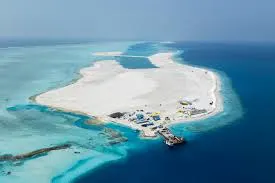
For most families, getting a Ras Malé plot will be the start of a long project, not the end of one. The government is allocating land, not houses. Under the Housing for All scheme, each plot is 1,250 square feet, about 116 square metres. Families will need to finance, design, get approval for and build their own homes. This guide brings together what's been published about the loans, permits and rules, and what is still unknown. It's general information, not financial advice, so check the latest terms with the bank and the ministry before you commit.
In short ⌄
- Housing for All plots are 1,250 square feet, about 116 square metres. No handover date for Ras Malé plots has been published.
- Bank of Maldives now asks for just 5% of the cost upfront for home construction loans up to MVR 3 million.
- The government-backed Hiyaavehi programme offers construction loans at 5% a year over up to 25 years, with the plot as the only collateral.
- Ras Malé's own building rules, such as heights and density, are to come from its master plan, which hasn't been published.
First, the land has to be ready
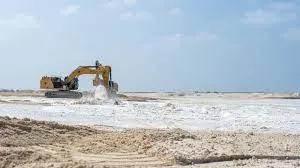
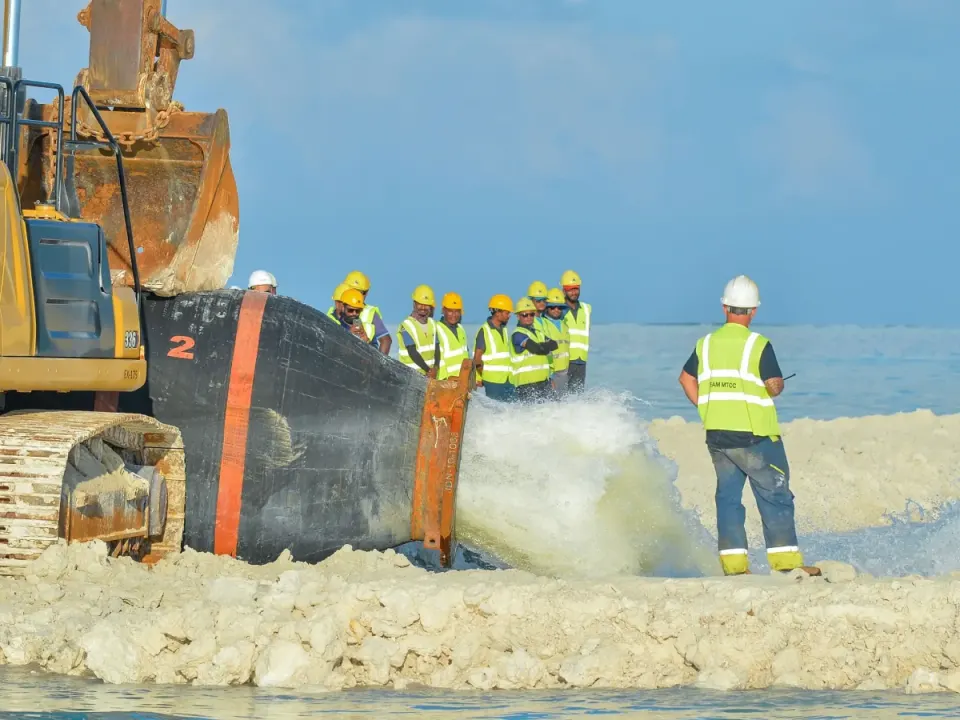
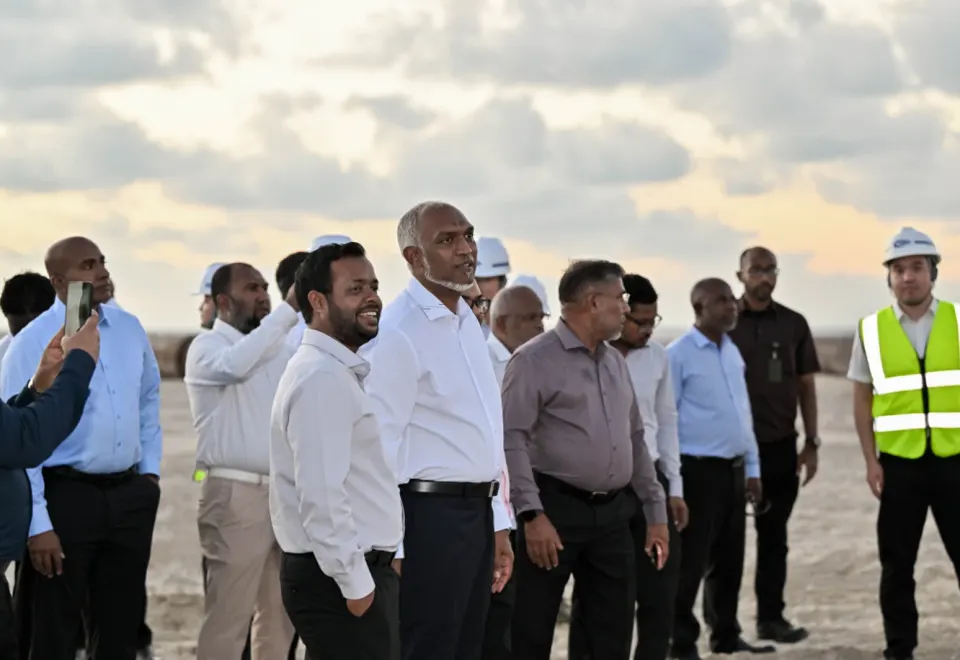
Nobody can build in Ras Malé yet. In September 2026, the President said reclamation was about 70% complete and should finish by the end of the year, and that work on electricity, water, sewerage and roads would start before then. Plots can only be handed over once the land has those basics. No handover date or allocation list had been published by October 2026. Our housing guide explains the plot scheme, and the Ras Malé timeline tracks the reclamation.
That gives families some time. Use it to sort out finance and design, so you're ready when the land is.
What you'll be allowed to build
The rules for building in Ras Malé haven't been published. They are meant to come from the city's master plan. The government's brief for the master planners asks for zoning regulations, density limits, building height controls and urban design guidelines, all with climate adaptability standards. It also calls for compact, mixed-use, high-density development to reduce the city's environmental footprint. That suggests Ras Malé will favour multi-storey homes over sprawling single-storey ones, but the details aren't known yet.
The brief also says the plan must follow national laws, including the Urban Development Act (No. 28/2024), the Physical Planning Act (No. 16/2024) and the Construction Act. Until the master plan is out, nobody can tell you exactly how high you can build, how much of the plot you can cover, or what setbacks apply.
Getting approval
In the Maldives, new buildings need approved drawings and a construction permit from the housing ministry, now called the Ministry of Infrastructure, Housing and Urban Development. Drawings are checked and stamped by registered architectural and structural reviewers before they're submitted. Work is then inspected as it goes.
Enforcement has been patchy in the past. A 2020 report for the World Bank's disaster-risk programme found that single-storey houses were in practice exempt from the newer building regulations, and that local authorities had very few staff with the skills for planning, approvals and inspections. A new city planned for climate resilience may well be stricter. Plan on proper drawings, structural design and inspections from the start.
Paying for it: the loans
Bank of Maldives home construction financing
In April 2026, Bank of Maldives (BML) cut the minimum equity for its Home Construction Financing to 5% for projects up to MVR 3 million, down from 20%. For projects above MVR 3 million, the minimum stays at 20%. The bank's example: a MVR 2 million build now needs MVR 100,000 upfront instead of MVR 400,000. The bank's chief executive, Mohamed Shareef, said the change removed one of the biggest barriers to building a home.
For families who already have home finance, BML also offers a home equity loan. It lets customers borrow up to the amount they've already paid towards a property, over 20 years at 10%.
The Hiyaavehi programme
The government-backed Hiyaavehi financing programme, launched in September 2025, offers housing construction loans at 5% a year. As reported at its launch, the terms are:
- Term: up to 25 years, including an 18-month grace period
- Collateral: the building site is the only security, with no other mortgage needed
- Loan caps and equity: MVR 1 million on the atolls (no equity), MVR 3 million in cities and urban areas (5%), and MVR 6 million in the Malé area (10%)
- Purpose: building new homes, renovating, or finishing unfinished work
- Lenders: Bank of Maldives, Maldives Islamic Bank and the Housing Development Finance Corporation
Applications go through the housing ministry, and applicants can track them on the housing portal. It hasn't been confirmed which category Ras Malé plots will fall into, though the Malé-area terms seem the most likely fit.
What it might cost
There's no official figure for building a house in Ras Malé, and costs will depend on the rules the master plan sets. A few pointers:
- BML's own example of a MVR 2 million build gives a sense of scale for a family home.
- When it raised its island housing loans to MVR 3 million in 2025, BML said construction costs had been rising.
- Ras Malé is an island site, so materials and machinery have to come by sea, which adds to the cost.
- Budget for design and engineering fees, permits, utility connections, and furniture and fittings, as well as the build itself.
Get at least two quotes from registered contractors, and build in a margin for price rises while you wait for the land.
The eco-city factor
Ras Malé is planned as a net-zero city. The master plan brief says it should run exclusively on renewable energy, with carbon-neutral transport, smart water and waste systems, and resilience to sea-level rise and storm surges. The land itself is being raised 2 to 3 metres above sea level. How those goals will translate into rules for individual homes hasn't been set out. Possibilities include requirements for rooftop solar, rainwater storage or building materials, so watch for the master plan before finalising your design. Read more in Ras Malé's eco-city plans.
What to do now
- Keep your Housing for All paperwork safe, including your application reference and residency documents.
- Talk to your bank early. Ask about BML's 5% equity construction loans and the Hiyaavehi programme, and what each needs from you.
- Start saving the equity. 5% of MVR 2 million is MVR 100,000. Under Hiyaavehi's Malé-area terms, 10% of a MVR 6 million loan would be MVR 600,000.
- Find a registered designer, but hold off on final drawings until Ras Malé's height and density rules are published.
- Watch for the master plan and the handover schedule. Both will decide when, and what, you can build.
Questions that still need answers
- When will plots be handed over, and in what order?
- What are the building rules for plots: height, coverage, parking, setbacks?
- Will Ras Malé plots qualify for Hiyaavehi's Malé-area terms?
- Will homes need to meet energy or water standards linked to the eco-city goals?
- Who will build roads and connect utilities to each plot, and will families pay connection charges?
We'll update this guide as answers are published. Sign up for our monthly update to hear first.
Questions people ask
How big is a Ras Malé plot? ⌄
How much deposit do I need to build a house with a BML loan? ⌄
What is the Hiyaavehi housing loan? ⌄
Can I start building on my Ras Malé plot now? ⌄
Sources
- Quick overview to Boahiyaavahikan Enmenah scheme as deadline looms ahead · The Edition, 2026-06-11
- Ras Malé project will proceed, no foreign land ownership: President · Atoll Times, 2026-09-26
- Consultancy Services for the Preparation of Rasmale' Master Plan: terms of reference · Ministry of Finance and Planning, 2025-10
- BML slashes home construction equity to 5%, opening doors for thousands · The Standard, 2026-04-09
- BML cuts home construction financing equity to 5% · MMTV, 2026-04-08
- BML launches "Hiyavehi" financing program · The Edition, 2025-10-09
- Hiyaavehi low-interest housing loan scheme · MMTV, 2025-09-11
- Loans of up to MVR 3 million to be issued for housing in islands · The Edition, 2025-09-26
- Managing risks for a safer built environment in the Maldives · GFDRR / World Bank, 2020-08
- Services guidelines: construction and drawing approval permits · Government of Maldives
- Abdulla Muththalib · Wikipedia