Live Here
Schools, Healthcare and Services Planned for Ras Malé
A city of 150,000 to 300,000 people will need schools, clinics, a hospital, mosques, parks, power and water. Here is what has been promised for Ras Malé so far, where those promises come from, and the big gaps families should know about.
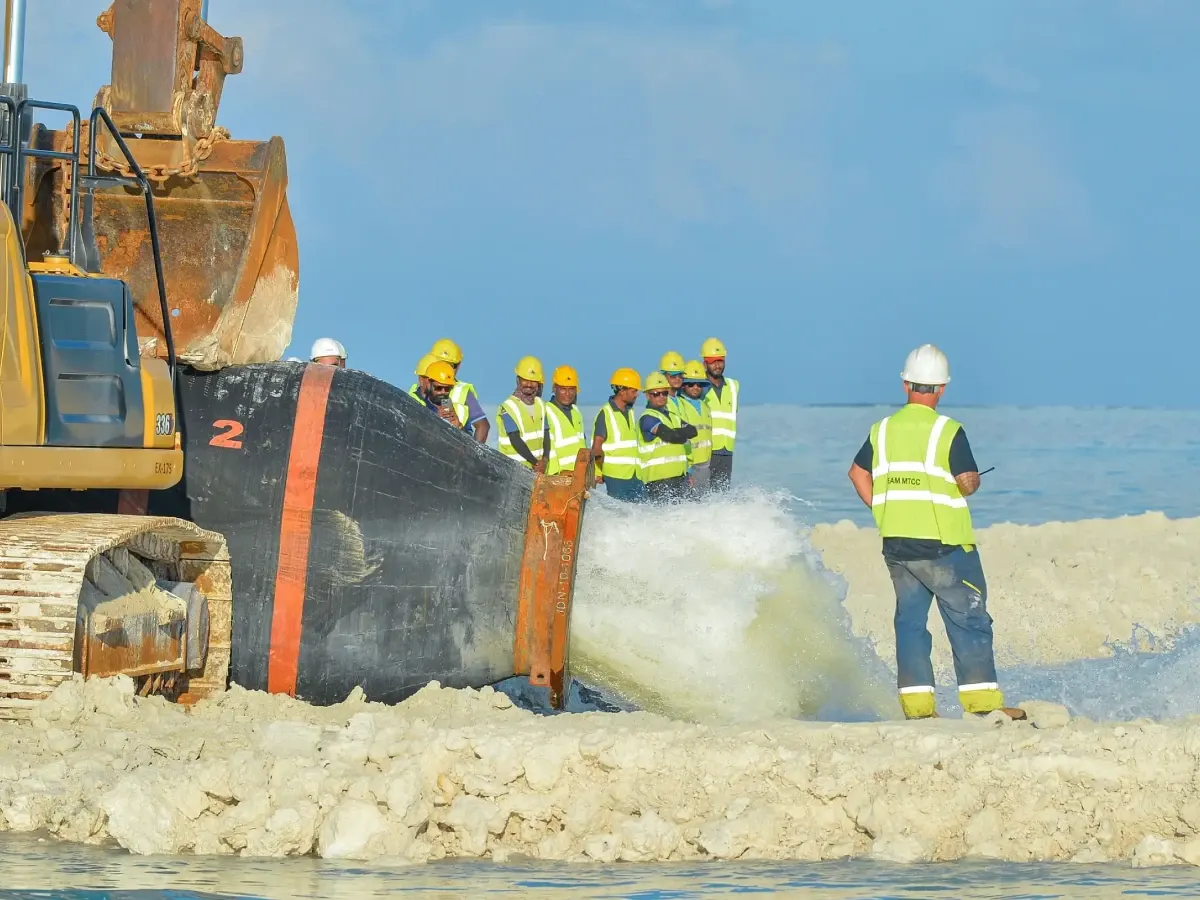
When families think about moving to a new city, they ask practical questions. Where will the children go to school? How far is the nearest clinic, and the hospital? Is there a mosque, a park, a shop nearby? For Ras Malé, most of those answers aren't known yet. This guide sets out what has been promised, what the official planning documents require, and what's still missing. We'll update it as plans are published.
In short ⌄
- No detailed plan for schools, clinics or hospitals in Ras Malé has been published yet.
- The government's master plan brief requires land for education, healthcare, sports and civic centres, plus inclusive public spaces.
- Eagle Hills says its waterfront district will include education, healthcare and community facilities.
- Work on power, water, sewerage and roads was due to start before the end of 2026.
How many people it has to serve
The scale of services depends on how many people live there, and the official figures vary:
- The government's long-term housing target is 65,000 homes.
- The government's statement on the Eagle Hills deal said the land kept for housing could hold more than 150,000 residents. In September 2026, the President said the city would eventually house 150,000 or more people.
- The brief for the city's master plan aims for more than 300,000 residents within 20 years.
For comparison, Malé had 211,908 people in its administrative area at the 2022 census, and Hulhumalé had 65,714. At its full size, Ras Malé would need services on the scale of a major Maldivian city.
What the master plan must include
The clearest commitment to public services is in the government's terms of reference for the Ras Malé master plan, put out to tender in October 2025. The brief requires a land-use plan for the whole island, including:
- residential, commercial, civic, industrial, cultural and recreational zones
- allocation of public and community facilities: education, healthcare, sports and civic centres
- inclusive and accessible public spaces, designed for community needs and climate resilience
- defined neighbourhoods, districts and central hubs, with civic squares
It also calls for a socio-economic study of population growth, migration, housing demand and jobs, and an assessment of infrastructure for energy, water, wastewater, solid waste, transport and communications. The plan is to include preliminary cost estimates for each phase, including housing and "other social infrastructure". The final master plan was due by June 2026. As of October 2026, we haven't found it published.
The Eagle Hills district
About 500 hectares of Ras Malé are to be developed by Eagle Hills as the Maldives Waterfront and Marina. The government and Eagle Hills say the district is designed to bring together education, healthcare, community infrastructure and high-quality public spaces, alongside hotels, homes, a marina and shops. No details have been published, such as how many schools, what kind of healthcare, or who they would serve.
If the district is developed as a "sustainable township" under the Special Economic Zones Act, it may carry extra obligations. Under the November 2025 amendment, projects with that status must commit to key infrastructure, including a world-class education facility for hospitality training, a hospital offering technology-enabled medical services, and agriculture or aquaculture projects. The government hasn't confirmed whether Ras Malé's waterfront will use that status.
Utilities: power, water and sewerage
Before anyone can live in Ras Malé, it needs basic utilities:
- In January 2024, the government signed an agreement with China Machinery Engineering Group for water and electricity in Ras Malé and Gulhifalhu. No further details have been released.
- In September 2026, the President said work to start electricity, water, sewerage and road development was under way, aiming to begin before the end of the year.
- The master plan brief asks for renewable energy grids and smart water and waste management, in line with the goal of a net-zero city.
How water will be produced, how waste will be handled, and who will run these services haven't been announced.
Getting to services in Malé
In the early years, residents are likely to depend on Malé for many services. The capital has the country's main hospital, many schools and most government offices. So transport links matter a great deal. A transport master plan is being prepared, comparing express ferries and hydrofoils, an undersea tunnel and an airstrip. No route or timetable has been decided.
What Hulhumalé shows
Hulhumalé, the reclaimed city built from 1997, is the best guide to how services in Ras Malé might develop. Its revised master plan of May 2025:
- puts green spaces, schools and mosques within a five-minute walk of every neighbourhood
- sets aside about 10% of the land for schools, mosques and community facilities, and about 30% for green space and sport
- expands the harbour from 36 to 53 hectares for boats and logistics
Hulhumalé's first residents moved in during 2004, about two years after its first phase was reclaimed. Its road link to Malé, the Sinamalé Bridge, opened in 2018. Services grew alongside the population over many years. Ras Malé families may see a similar pattern: the first neighbourhoods may be lived in while schools, clinics and shops are still being built.
Who is responsible
Several bodies share the job. The Housing Development Corporation (HDC), a state-owned company, runs the reclamation and much of the housing. The Ministry of Infrastructure, Housing and Urban Development, renamed in April 2026, runs the Housing for All scheme and building permits. For the master plan, the brief names the Ministry of Finance and Planning as the implementing agency, responsible for coordinating with all stakeholders. Planning must follow the Urban Development Act (No. 28/2024) and the Physical Planning Act (No. 16/2024). Eagle Hills will be responsible for services within its own district. Schools and healthcare are normally the responsibility of the education and health ministries, but no plans from either for Ras Malé have been published.
The questions that matter
These are the gaps we'll be following:
- Schools. How many, where, and opening when? Will the first plots have a school within reach from day one?
- Healthcare. Will there be a hospital in Ras Malé, or clinics with transfers to Malé? What will the Eagle Hills district's healthcare be, and who can use it?
- Mosques, parks and markets. How much land is set aside, and how close to homes?
- Utilities. When will power, water and sewerage reach the first housing plots?
- Who pays. Which services will the state build, and which will developers provide? See who pays for Ras Malé.
- Emergency services. Where will fire, police and ambulance services be based?
What families can do now
- If you've applied for a plot, think about how your family would manage school and work journeys from Ras Malé in the early years.
- Watch for the master plan, which should show where schools, clinics and parks will go.
- Ask questions at any public consultations. The master plan brief requires stakeholder engagement with communities.
- Sign up for our monthly update to hear when school, health and utility plans are published.
For the wider picture, see housing in Ras Malé and Ras Malé's eco-city plans.
Questions people ask
Will there be schools in Ras Malé? ⌄
Will Ras Malé have a hospital? ⌄
When will Ras Malé have electricity and water? ⌄
Sources
- Consultancy Services for the Preparation of Rasmale' Master Plan: terms of reference · Ministry of Finance and Planning, 2025-10
- Government statement on the Maldives Waterfront and Marina · Khulaasaa, 2026-09-30
- Eagle Hills project will not affect housing plans: President · The Edition, 2026-09-26
- Eagle Hills in Rasmale': what is potentially in store for Maldives? · The Edition, 2026-10-13
- President ratifies amendment to Special Economic Zone Act enabling sustainable township development · Invest Maldives, 2025-12-14
- Maldives signs with Chinese company to develop municipal facilities in Rasmale' and Gulhifalu · The Edition, 2024-01-12
- Ras Malé project will proceed, no foreign land ownership: President · Atoll Times, 2026-09-26
- HDC announces changes to Hulhumale' Master Plan · The Edition, 2025-05-26
- Hulhumalé · Wikipedia
- Malé · Wikipedia
- Social housing MoU with China for Rasmale' · PSM News
- Abdulla Muththalib · Wikipedia