Progress
Who Pays for Ras Malé? The Cost of Building the Land
Nobody has published a full bill for Ras Malé. But the pieces are on the record: a contractor-financed plan that failed, a budget line Parliament removed, a loan through HDC whose size is secret, and a waterfront deal the government says will pay much of it back.
Ras Malé is one of the largest public works projects the Maldives has taken on, but there's no single published figure for what it costs or who is paying. What's on the record comes from contracts, budget debates, settlements and ministers' statements, spread across three years of reporting. This article puts those pieces together, and marks clearly where the numbers stop.
In short ⌄
- The total cost of reclaiming Ras Malé hasn't been published. In 2024, the construction minister estimated at least US$500 million to US$700 million.
- The original plan had the contractor pay and be repaid in land. It collapsed in 2024, and Parliament removed the MVR 400 million budget allocation.
- The work is now funded by a loan through HDC. Neither the government nor HDC has disclosed how much or from whom.
- The government expects more than US$11 billion in state revenue from the Eagle Hills waterfront over the development period, but says that is a projection.
The original plan: the contractor pays
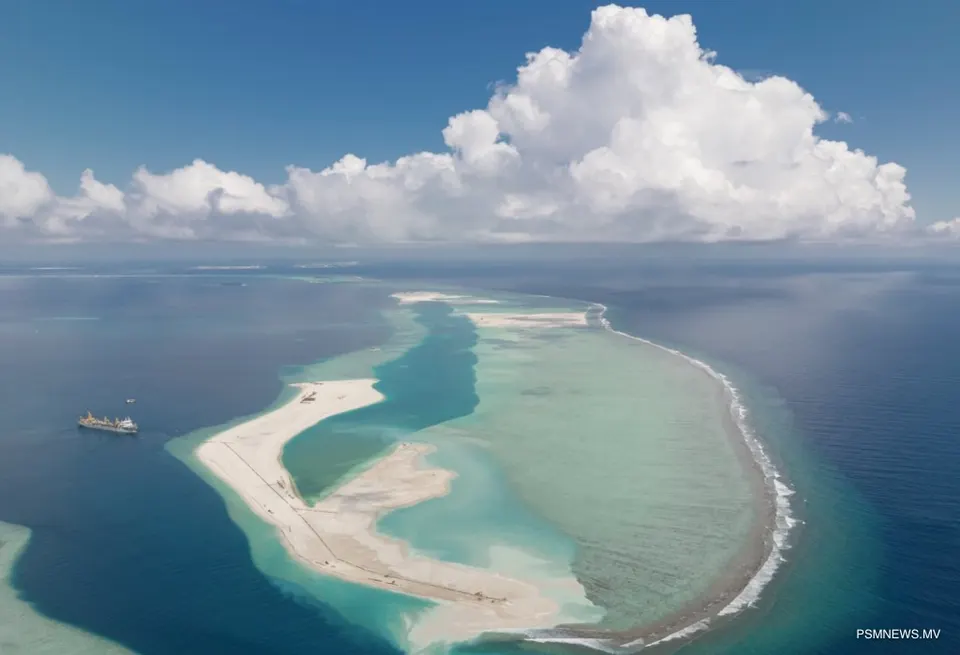
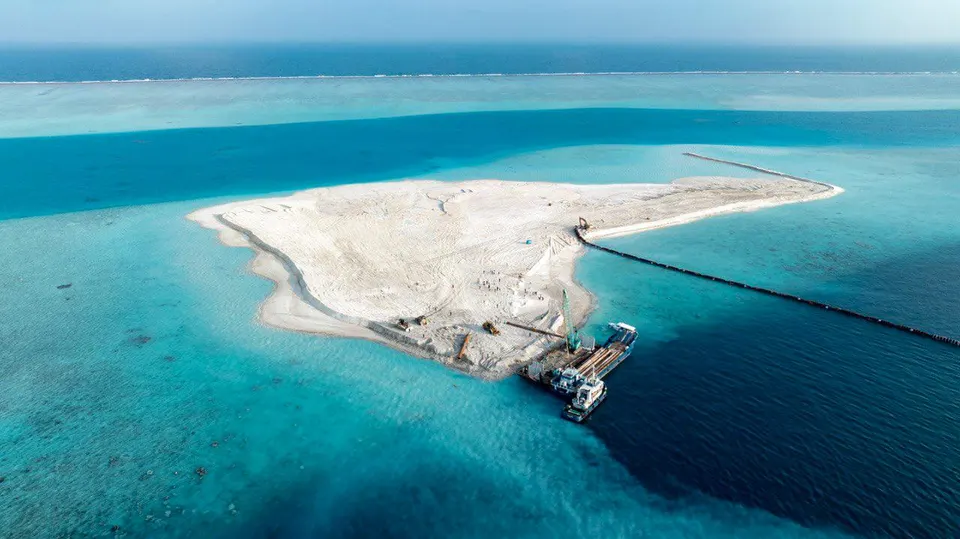
When the project was launched in December 2023, the cost was given as MVR 1.4 billion over three years, with MVR 400 million set aside for 2024. The plan relied heavily on contractor financing. The Sri Lankan firm Capital Marine and Civil Construction (CMC) would carry the cost of reclamation, and be paid partly in land. Reports put that at 70 hectares: 60 in Fushidhiggaru lagoon and 10 in Hulhumalé.
It didn't work out. Parliament, then controlled by the opposition MDP, passed the 2024 budget without the MVR 400 million, and the money went to other projects. The MDP called the land-for-reclamation deal a corruption case, valuing the land involved at MVR 70 billion to 100 billion. In March 2024, the Anti-Corruption Commission confirmed it was investigating a complaint about the project. CMC's work stalled after 29 hectares, and its contract was cancelled in 2024.
The new plan: an HDC loan
With the contractor-financed model gone, the work was handed to new contractors and paid for through the state-owned Housing Development Corporation (HDC). In September 2024, Adhadhu reported that HDC would take out a large loan to fund it. Neither the government nor HDC has disclosed the amount or the lender. The report said it was believed to be at least US$500 million. That was based on Construction Minister Abdulla Muththalib's estimate that reclaiming about 1,100 hectares would cost at least US$500 million to US$700 million.
The government has also described the reclamation as not using the state budget. HDC is a state-owned company, though, so its debts are ultimately a public matter. The terms of the loan haven't been made public.
What's been paid so far
Individual payments have come out through settlements and contract reporting:
- CMC: HDC agreed to pay US$21 million (MVR 323 million), in instalments, for the 29 hectares at Site J. By January 2025, MVR 77 million had been paid.
- CRCC: its July 2024 contract was worth US$265.5 million for 352 hectares. It received a US$13.2 million advance. After the contract ended in July 2025, HDC's board accepted CRCC's claim of US$9.4 million for completed work, above an assessed US$6.7 million.
- CHEC and MACL: the contract values for China Harbour's Sites C and E, and for MACL's work at Site A with the Cristóbal Colón, haven't been published.
Other estimates are higher. The Maldives Independent has put the cost of the dredging at about US$1.4 billion. Without official figures, it isn't possible to check any of these totals.
For comparison
Gulhifalhu, west of Malé, is the closest recent comparison. The Dutch firm Boskalis reclaimed about 150 hectares there between May 2020 and July 2024, pumping 18 million cubic metres of sand, at a cost of about MVR 3 billion. Ras Malé is planned at more than six times that area. Reclamation costs don't rise in a straight line with size, because they depend on water depth, how far the sand has to travel and the price of fuel and ships. Still, the comparison shows why estimates for Ras Malé run into the hundreds of millions of dollars.
The money trail so far
- December 2023: launch, with MVR 1.4 billion budgeted over three years and a contractor-financed model.
- Early 2024: Parliament passes the 2024 budget without the MVR 400 million for Ras Malé. In March, the Anti-Corruption Commission confirms an investigation.
- 2024: CMC's contract is cancelled after 29 hectares. CRCC signs a US$265.5 million contract in July, and HDC is reported to be taking out a large loan.
- January 2025: a US$21 million settlement with CMC is reported.
- July 2025: HDC ends the CRCC contract. China Harbour joins in August.
- August 2026: HDC's board accepts CRCC's US$9.4 million claim.
- September 2026: Eagle Hills signs commercial terms. The government projects more than US$11 billion in state revenue.
Getting the money back
The government's case is that Ras Malé will more than pay for itself, mainly through land.
The Eagle Hills waterfront
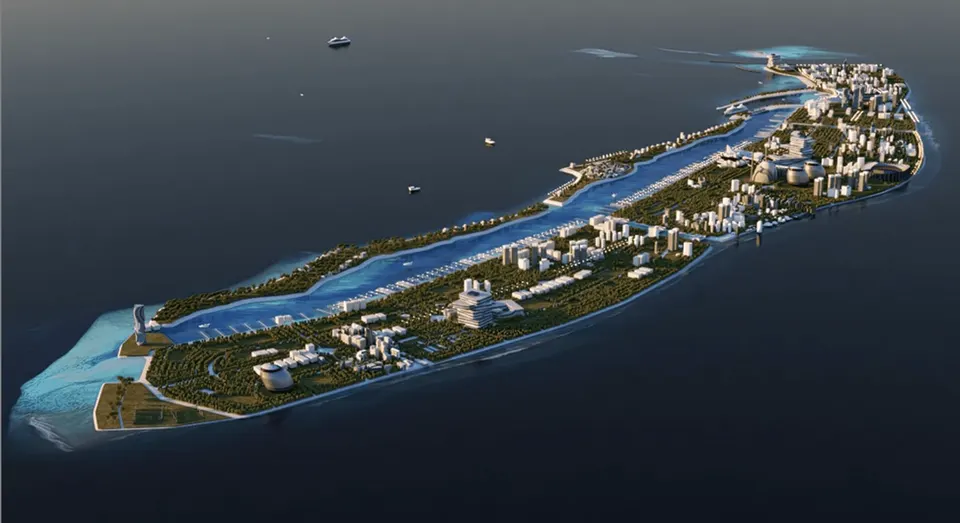
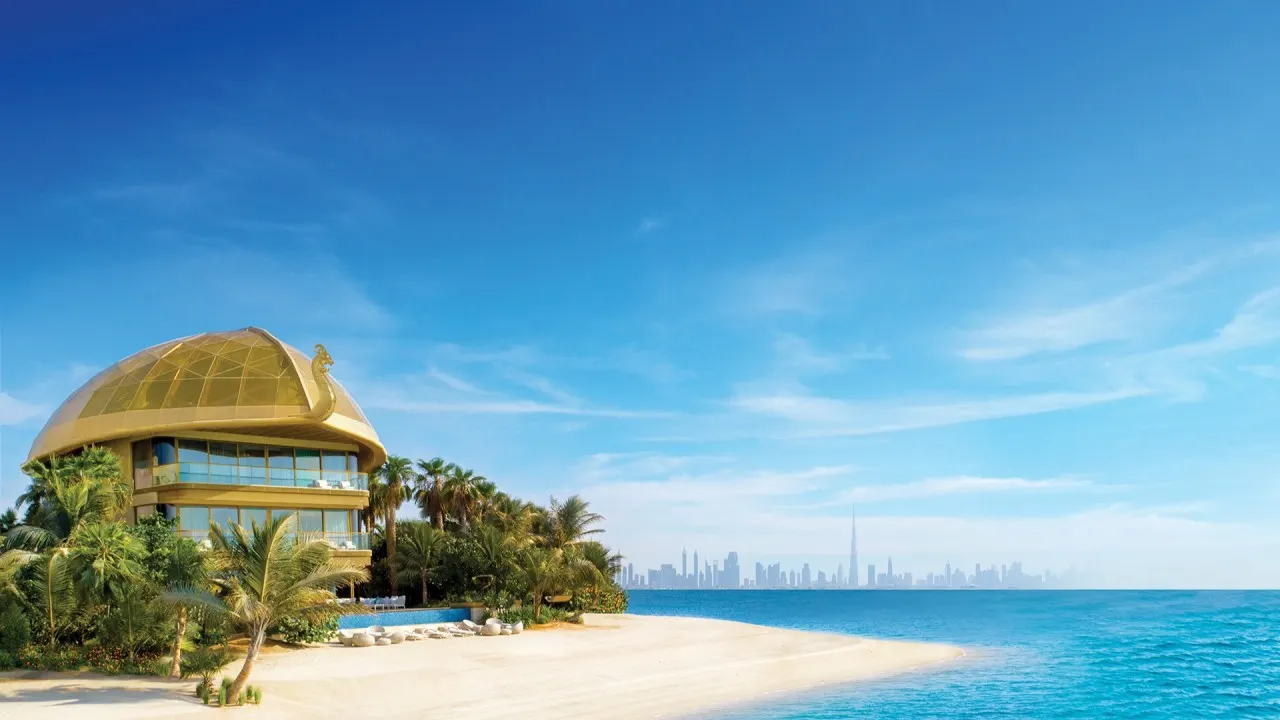
About 500 hectares are to be leased to Eagle Hills for a waterfront and marina district. The government says the state will receive:
- 10% of the developer's revenue from first sales and leases. The Housing Minister estimated this at about US$3.1 billion over 10 years.
- A 4% fee on the value of every property sale and later transfer.
- Tourism GST on activity in the district.
It projects more than US$11 billion in state revenue over the development period, without loans, guarantees or tax breaks, but describes this as a projection. About US$500 million of the state's share is to be advanced as 5,000 homes in Hulhumalé, built by Eagle Hills.
The value of the land
The size of that return is disputed. Critics argue the state is giving up an upfront fee, rent or equity for land worth far more. Estimates by an analyst and an opposition MP put the value of the reclaimed land at between US$7 billion and US$17 billion. The government replies that a share of sales over time earns more than a lump sum. See our Eagle Hills deal explainer for both sides.
Housing
Most of the rest of Ras Malé is meant for public housing, through schemes like Housing for All. Those plots are allocated to eligible families through a government scheme rather than sold on the open market. Their main return is social rather than financial: housing for some of the 22,575 applicants for plots in the scheme's first round.
The costs still to come
Reclamation is only the first bill. After it come coastal protection, roads, power, water and sewerage, transport links to Malé, schools, clinics and homes. A January 2024 agreement with China Machinery Engineering Group covers water and electricity for Ras Malé and Gulhifalhu, but its value wasn't released. The transport master plan was put out to consultants in December 2025, and its options include ferries, a tunnel and an airstrip, each with very different costs. Families who get plots will pay to build their own homes, helped by bank loans.
What we'd like to see published
- The total cost of reclamation to date, and the expected final cost.
- The size, lender and terms of HDC's loan.
- The contract values for CHEC and MACL.
- A full budget for the infrastructure that comes next.
- The final Eagle Hills agreement, including the investment schedule.
When any of these is published, we'll add it here. For who did the work, see who has built Ras Malé so far.
Questions people ask
How much does Ras Malé cost? ⌄
Who is paying for Ras Malé? ⌄
How will the government earn money from Ras Malé? ⌄
Sources
- President Muizzu launches Maldives' largest-ever land reclamation project 'Ras Malé' · MV Republic, 2023-12-18
- ACC probes into a case related to RasMale' project · The Edition, 2024-03-30
- HDC to take out huge loan and hand over Rasmale' reclamation to Indian and Chinese companies · Adhadhu, 2024-09-03
- Government onboards two more Chinese companies for Rasmalé project amid ongoing delays · MV Republic
- Social housing MoU with China for Rasmale' · PSM News
- CMC settlement for Rasmale Site J · Adhadhu, 2025-01-26
- HDC board accepts CRCC's $9.4 million Rasmale work claim despite lower valuation · Atoll Times, 2026-08-11
- Foreign money, not foreign neighbours: Rasmalé and the politics of land · Maldives Independent, 2026-10-01
- Government statement on the Maldives Waterfront and Marina · Khulaasaa, 2026-09-30
- Minister answers MP's questions on the Eagle Hills commercial terms · Atoll Times, 2026-10
- Maldives signs with Chinese company to develop municipal facilities in Rasmale' and Gulhifalu · The Edition, 2024-01-12
- Rasmale' Transport Master Plan: request for expressions of interest (TES/2025/C-007) · Government Gazette (Ministry of Finance and Planning), 2025-12-08
- Over 58,000 applications for government housing schemes · Adhadhu, 2026-06-17
- Gulhifalhu · Wikipedia