Progress
The Dredgers Building Ras Malé, From Cristóbal Colón to Mahaa Jarraafu
Ras Malé is being built by ships. Giant dredgers suck sand from the seabed and pump it into the lagoon, and the arrival of bigger ones has done more than anything else to speed the project up. Here are the vessels involved and how they work.
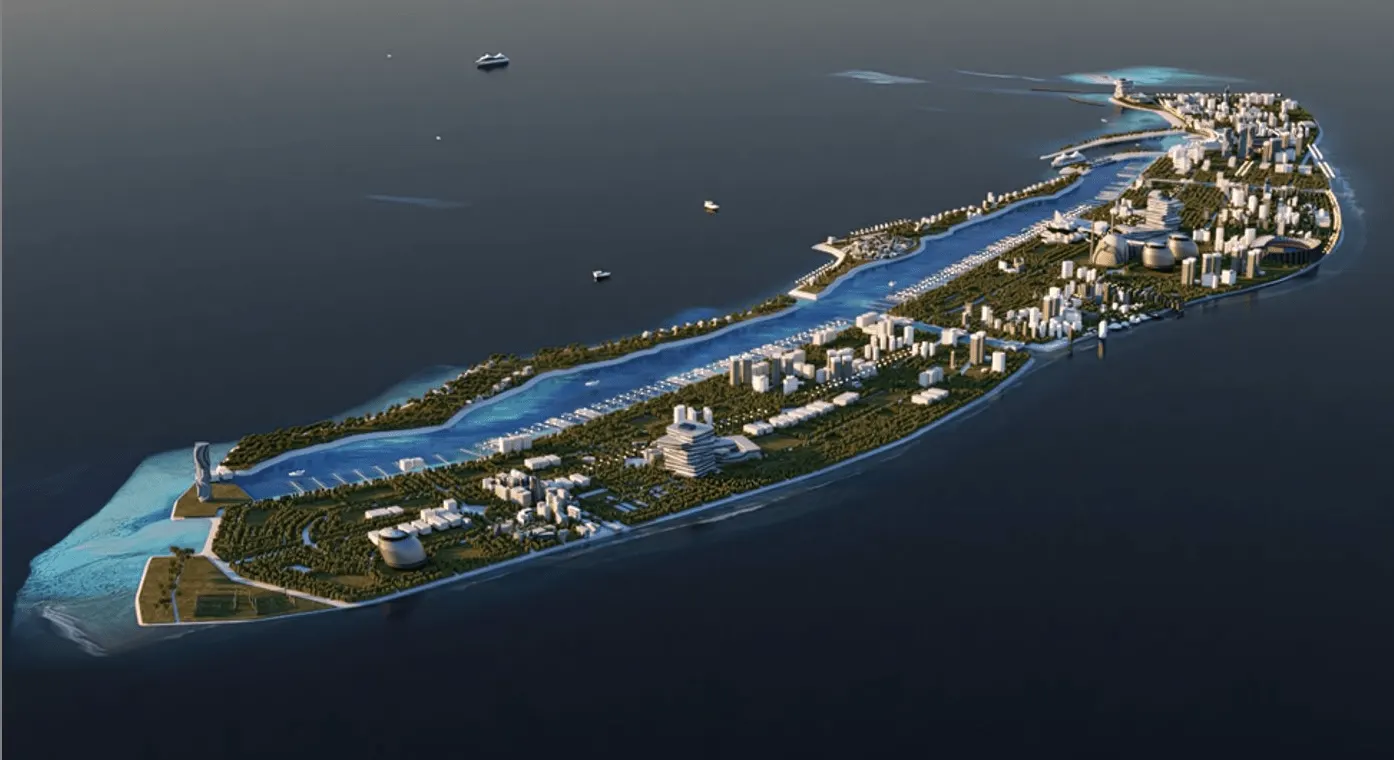
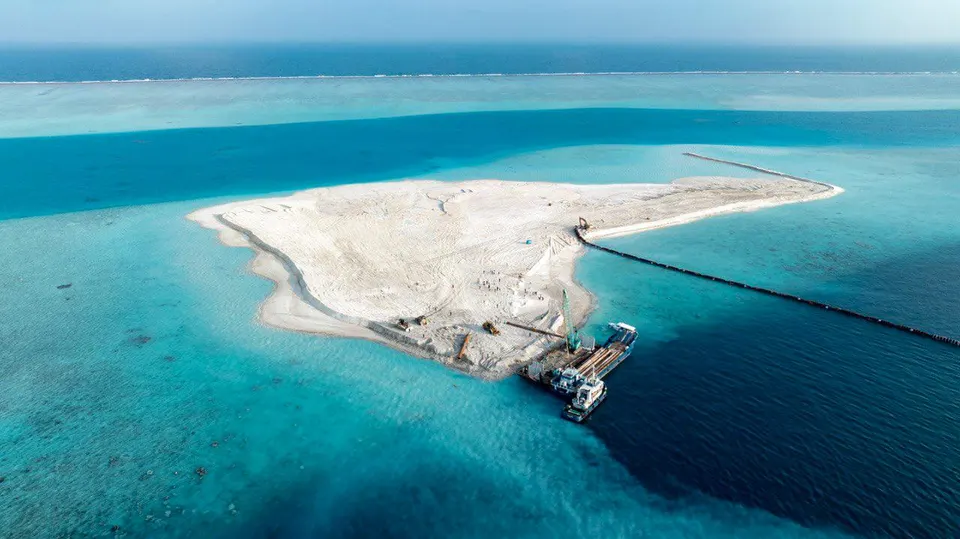
Every hectare of Ras Malé started as sand on the seabed somewhere else in the atoll. Moving it is the job of dredgers, specialist ships that dig sand underwater and deliver it to the reclamation site. The size and number of dredgers working at Ras Malé has done more to shape the project's progress than any other factor. When small ones were used, progress crawled. When the big ones arrived in late 2025, it jumped. This guide explains how the ships work and which ones have been involved.
In short ⌄
- Ras Malé is being reclaimed mainly by trailing suction hopper dredgers, ships that suck sand from the seabed, carry it to the site and pump it ashore.
- The biggest so far is Jan De Nul's Cristóbal Colón, which carries 46,000 cubic metres per load. It took Site A from nothing to 84% in about ten weeks.
- China Harbour's Jun Yang 1, with 21,000 cubic metres, about doubled the capacity of the earlier dredgers when it arrived in 2025.
- The state-owned MTCC has secured a dredger three times larger than its Mahaa Jarraafu, due before the end of 2026.
How a hopper dredger works
Most of Ras Malé is being built by trailing suction hopper dredgers, or TSHDs. They work in a cycle:
- Dredge. The ship sails slowly over a permitted sand area, dragging one or two suction pipes along the seabed. Powerful pumps suck up a mix of sand and water.
- Load. The mix fills the ship's hold, called the hopper. The sand settles and excess water runs off, until the hopper is full.
- Sail. The loaded ship sails to the reclamation site.
- Discharge. The dredger connects to a floating pipeline and pumps the sand ashore, or sprays it in an arc onto the site, a technique called rainbowing.
Then it sails back and starts again, around the clock. The bigger the hopper, the more sand per trip. A dredger's capacity, measured in cubic metres per load, is the single best guide to how fast it can build land.
For Ras Malé, the Environment Protection Agency permitted dredging from two areas west of Maafushi and a third near Ithaafushi resort, with permits for enough sand to reclaim 562 hectares. Because each trip means sailing between the sand area and the lagoon, distance adds to time and fuel.
The ships
Cristóbal Colón
The largest dredger to work at Ras Malé is the Cristóbal Colón, operated by the Belgian dredging group Jan De Nul. It's a trailing suction hopper dredger with a capacity of 46,000 cubic metres per load. It arrived at the end of November 2025 and began dredging the next day for Maldives Airports Company Limited (MACL), which took on Site A.
The results were dramatic. Work at Site A began on 1 December 2025. MACL reported 41 hectares reclaimed by 24 December. By 12 February 2026, it reported 116 of Site A's 137.5 hectares, or 84.36%, done in about ten weeks. For comparison, the first contractor reclaimed 29 hectares in several months of 2024.
Jun Yang 1
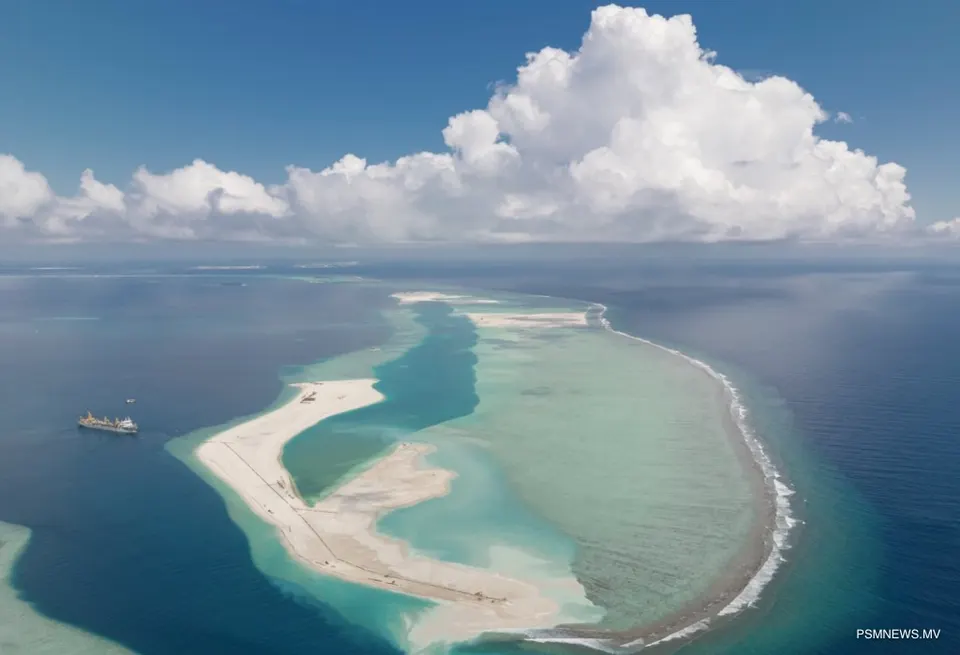
China Harbour Engineering Company (CHEC) joined the project in August 2025 to reclaim Sites C and E, a total of 265 hectares. PSM News reported it was using the Jun Yang 1, a trailing suction hopper dredger with a capacity of 21,000 cubic metres, about twice the size of the vessels used earlier. By November 2025, Site C was 20.09% complete.
The earlier dredgers
Before August 2025, the work was done by smaller vessels belonging to the earlier contractors, CMC, Mohan Mutha Exports and CRCC. Their names and capacities haven't been widely published. What's clear is the pace: from the launch in December 2023 to August 2025, about 130 hectares were reclaimed in total. After the bigger dredgers arrived, the government reported nearly 500 hectares by March 2026.
Mahaa Jarraafu and MTCC's new dredger
The Mahaa Jarraafu is the trailing suction hopper dredger of the state-owned Maldives Transport and Contracting Company (MTCC). Built at Nantong Rainbow Shipyard in China, it's 92.95 metres long, can dredge at depths of up to 50 metres and has a 3,700-cubic-metre hopper. It cost about US$36 million and was due in the Maldives in October 2017. It ran aground and stopped work on 8 June 2022, and sat idle for 571 days. MTCC put the cost of that idle period at US$33 million, and said the main cause was the lack of proper maintenance schedules. It has since been repaired.
On 25 September 2026, President Mohamed Muizzu said MTCC had secured a trailing suction hopper dredger three times larger than its existing one, and hoped it would arrive before the end of 2026. He said it would speed up reclamation projects given to MTCC that hadn't yet started. He didn't name a specific project, and we haven't found confirmation of whether it will work at Ras Malé.
Why the ships matter so much
Ras Malé's history shows the link between dredger size and progress:
- The original target, at the launch in December 2023, was to reclaim the lagoon within months. With small vessels and contract problems, only 29 hectares had been reclaimed when the first contractor left in 2024.
- The government's November 2025 promise that reclamation would finish in March or April 2026 depended on large dredgers arriving in December.
- When fuel prices rose in mid-2026, the President said the work slowed. Big dredgers burn large amounts of fuel on every cycle.
The dredgers belong to, or are hired by, the contractors. Our article on the contractors who have built Ras Malé covers who has done the work, and why so many have come and gone.
Ras Malé in context
The Maldives has used dredgers to make land for decades, but never on this scale. Hulhumalé's first phase, 188 hectares, took from October 1997 to June 2002 to reclaim, and its second phase added about 244 hectares from 2015. Gulhifalhu, west of Malé, was filled in a project that finished in July 2024. Ras Malé's planned 1,009 hectares is more than twice the size of both Hulhumalé phases together, and the government wants it reclaimed in about three years.
That's only possible with the world's largest class of dredgers. Ships like the Cristóbal Colón belong to international dredging groups, which move them between big port and land projects around the world. So the timing of their arrival, and how long they stay, matters a great deal to Ras Malé's schedule.
The environmental side
Dredging on this scale changes the seabed where sand is taken and the water around it. In early 2026, satellite images showed sediment plumes from the Ras Malé and Hulhumalé dredging spreading across large parts of South Malé Atoll. Dive operators and bait fishermen raised concerns, and the Environmental Regulation Authority received complaints about dredging outside permitted areas. Eagle Hills has said its waterfront project will need no further dredging. Read more in Ras Malé's environmental impact.
What to watch
- Whether MTCC's new dredger arrives by the end of 2026, and where it's sent first.
- How long the Cristóbal Colón stays, and whether MACL takes on more sites.
- Updated figures for Sites C and E, where the Jun Yang 1 has been working.
For the latest site figures, see Ras Malé site by site and the progress tracker.
Questions people ask
Which dredger is building Ras Malé? ⌄
What is a trailing suction hopper dredger? ⌄
What is the Mahaa Jarraafu? ⌄
Sources
- Rasmale' land reclamation reaches 30% completion, MACL says · MV+, 2025-12-24
- Rasmalé Site A reclamation reaches 84% completion · MMTV, 2026-02-12
- Rasmalé land reclamation faces temporary slowdown · Dredging Today, 2026-06-29
- China's CHEC joins Ras Malé reclamation as government expands contractor base and deploys mega-dredger · PSM News, 2025-08
- Rasmalé reclamation work starts with Chinese company on site · MMTV, 2025-08-21
- President inspects progress of Rasmalé Land Reclamation Project · The President's Office, 2025-11-12
- New TSHD on its way to Maldives · Baird Maritime, 2017-10-09
- MTCC bears a loss of USD 33 million due to damaged dredger · PSM News
- Dredger three times larger than MTCC's existing vessel to be brought · The Edition, 2026-09-26
- EPA permits dredging of two areas for land reclamation of Rasmale' · PSM News
- 25,000 land plots to be issued from Rasmale': President · The Edition, 2025-11-18
- Housing for All initiative: Rasmalé project reclaims nearly 500 hectares of land · Dredging Today, 2026-03-31
- President champions climate adaptation abroad as dredgers blanket atoll in sediment · Maldives Independent, 2026-02-12
- Eagle Hills signs $12 billion Maldives waterfront deal · Gulf News, 2026-09-21
- Hulhumalé · Wikipedia
- Gulhifalhu · Wikipedia