Invest & Buy
The Eagle Hills Deal Explained: What the Waterfront Means for Ras Malé
In September 2026, the government agreed commercial terms with Abu Dhabi developer Eagle Hills for a waterfront and marina on about 500 hectares of Ras Malé. Here is what has been agreed, how the state expects to earn from it, and why the deal has divided the country.
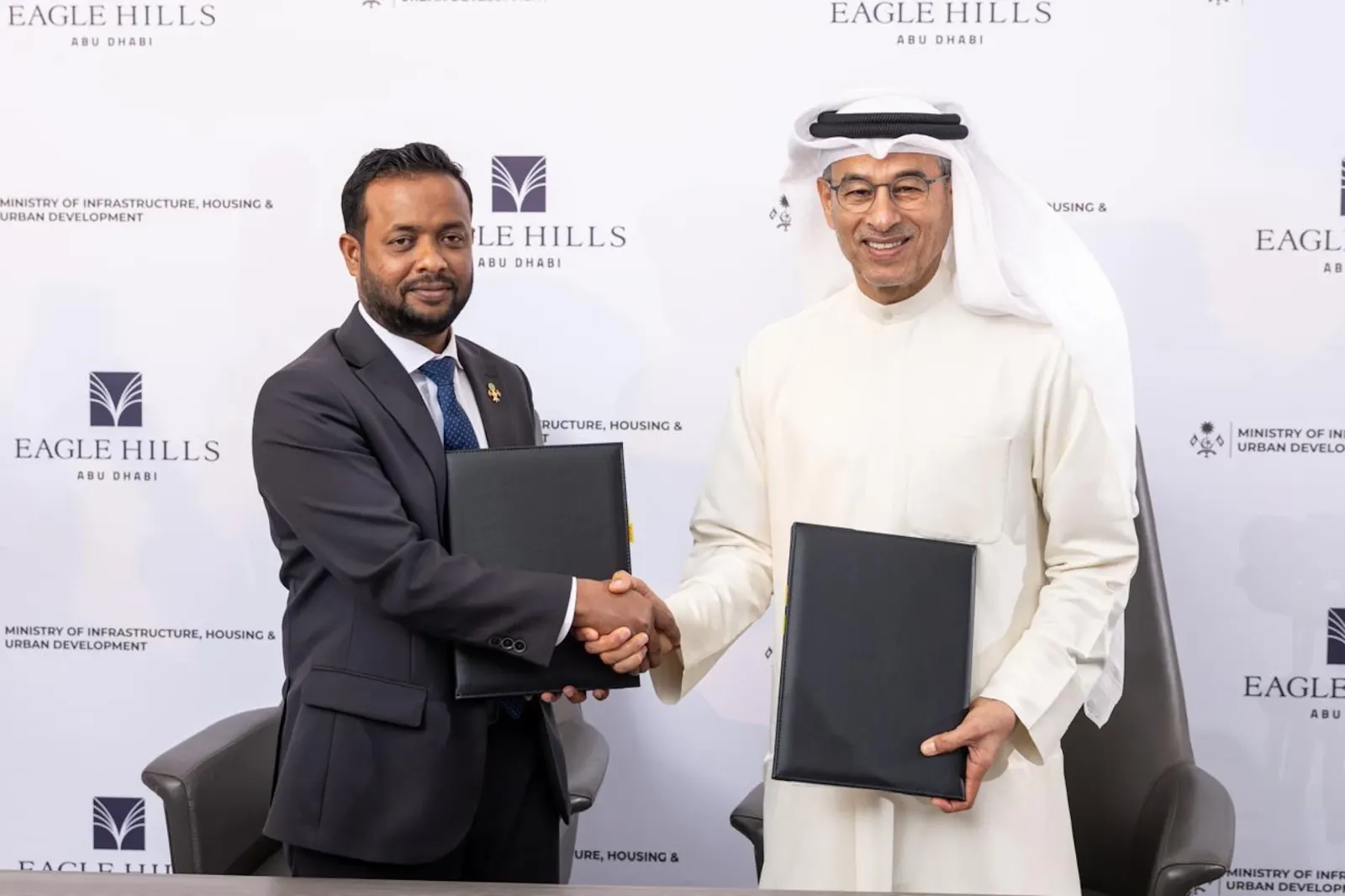
On 21 September 2026, the Maldives government signed a commercial terms agreement with Eagle Hills, the Abu Dhabi developer chaired by Mohamed Alabbar. The agreement is for the Maldives Waterfront and Marina in Ras Malé. It is the largest private investment the country has announced, and it changes how part of the new city will be built. This explainer sets out what has been agreed, using the government's own statements and independent reporting. For what it means if you want to buy, see our guide to buying property in Ras Malé.
In short ⌄
- Eagle Hills is to be master developer for the "Maldives Waterfront and Marina" on about 500 hectares of Ras Malé. The rest of the land stays for public housing.
- Homes will be sold on leases of up to 99 years. There is no freehold, and every transfer needs government approval and a 4% fee.
- The state expects 10% of first-sale revenue, the 4% transfer fee and tourism tax, and says it gives no loans, guarantees or tax breaks.
- Only commercial terms have been signed. The final agreement, master plan and timetable are still to come, and critics have challenged the deal in court.
Who is Eagle Hills?
Eagle Hills is a private real estate developer based in Abu Dhabi, chaired by Mohamed Alabbar, the founder of Dubai's Emaar. It specialises in large waterfront and city developments, and has worked on projects in countries including Serbia, Georgia and Albania. In some of those projects, the host government took an equity stake, a point critics in the Maldives have raised.
What will be built
Eagle Hills is to be master developer for about 500 hectares of reclaimed land in Ras Malé. Its plans include hotels and resorts, branded and premium homes, a marina, shops, restaurants and offices, and schools, healthcare and community facilities. The government says the district will be built in stages and reach maturity in about 10 years. Reporting on Eagle Hills' plans mentions more than 8,800 properties.
The value has been reported in different ways. Reuters, Bloomberg and The National reported about US$12 billion. The government and Mr Alabbar have spoken of up to US$20 billion across all phases. Neither figure is an upfront payment. Both describe the expected scale of development over the years.
What happens to the rest of Ras Malé
According to the government, the land not given to Eagle Hills stays for public housing. Its statement puts this at about 500 hectares, with room for more than 150,000 residents. In a television interview, the President put the land kept for public housing plots at about 600 hectares. He said no housing plots had been cancelled because of the deal. Our housing guide covers the plot scheme.
How the leases work
- There is no freehold. The constitution bars foreign ownership of land, and the land stays with the state.
- Homes will be sold on leases of up to 99 years.
- Every sale, resale or inheritance needs government approval. The old lease is cancelled, a new lease is issued, and a fee of 4% of the property's value is paid.
- The Housing Minister has said the lease won't include automatic extensions, and that the government will have the final say on who can lease property and who gets a visa.
- Buying gives no automatic right to residency or citizenship. The minister has said buyers could qualify for the existing corporate resident visa.
How the state earns from it
The government lists three income streams:
- 10% of the developer's revenue from first sales and leases. The Housing Minister estimated this at about US$3.1 billion over 10 years.
- The 4% fee paid by buyers on every first sale and later transfer.
- Tourism GST on activity in the development. The minister said the project gets no import duty exemptions.
Buyers' payments for off-plan homes are to be held in escrow at Maldivian banks licensed by the Maldives Monetary Authority, and released to the developer as building progresses. The government says it is giving no loans, sovereign guarantees or tax concessions. It projects more than US$11 billion in state revenue over the development period, more than 54,000 jobs, and over a million visitors a year at maturity. The ministry describes all of these as projections that assume the project reaches full scale.
The 5,000 homes in Hulhumalé
As part of the deal, Eagle Hills is to fund and build 5,000 three-bedroom homes in Hulhumalé, costing about US$500 million (around MVR 7.7 billion), before starting work in Ras Malé. The cost counts as an advance against the state's 10% share of sales, so the government says it needs no borrowing for them. The Housing Minister has said they will be on Hulhumalé's Urban Island.
Why the deal is controversial
Ras Malé was launched as a housing project, so giving close to half of it to one foreign developer has sparked strong debate:
- The lease reset. Critics argue that a 99-year lease starting afresh on every transfer is a sale in all but name, and gets around the constitutional ban on foreign ownership. The government says "not an inch" has been sold, and that every transfer needs its approval.
- No tender and no published contract. The project came from an Eagle Hills proposal rather than an open tender. Critics say the state gave up an upfront fee, rent or an equity stake. One economist has pointed out that governments in Georgia, Serbia and Albania took an equity stake in their Eagle Hills projects.
- The value of the land. Estimates by opposition figures and analysts put the reclaimed land's value at between US$7 billion and US$17 billion, set against the state's expected share.
- Legal challenges. A petition has been filed at the Supreme Court to void the agreement, and a complaint has been lodged with the Anti-Corruption Commission. Former President Abdulla Yameen's party has promised to halt the deal after the current government leaves office, and to hold a referendum on it.
Supporters, including the government, say revenue sharing earns the state more over time than a lump sum. They also argue that the project brings investment, jobs and homes without public borrowing.
Timeline of the deal
- 21 September 2026: commercial terms agreement signed.
- 26 September: the President defends the deal on television, saying the land is leased, not sold.
- 28 September: lawyer and former MP Ali Hussain asks the Supreme Court to void the agreement.
- Late September: the government publishes a statement on the terms, revenue and the 5,000 Hulhumalé homes.
- 5 October: Parliament accepts an opposition motion demanding the full agreement.
- 11 October: the Supreme Court registrar declines to register Ali Hussain's case. He plans to appeal.
- 15 October: the Housing Minister answers an MP's 20 written questions on the deal.
For the latest developments, see our news stories on the signing and the Supreme Court challenge.
What happens next
Only the commercial terms have been signed. A final agreement is to follow further negotiation, "subject to the Constitution and laws of the Maldives", according to the minister. The Attorney General has said a real estate law will follow. No master plan, construction timetable or sales launch has been published. We'll update this explainer as each step happens. Follow the reclamation itself on our Ras Malé timeline.
Questions people ask
What is the Eagle Hills deal in Ras Malé? ⌄
Is Ras Malé land being sold to Eagle Hills? ⌄
How much will the state earn from the Eagle Hills deal? ⌄
Does buying an Eagle Hills property give residency? ⌄
When will Eagle Hills start building in Ras Malé? ⌄
- Eagle Hills
- Leasehold
- Foreign buyers
- Waterfront
Sources
- Government statement on the Maldives Waterfront and Marina · Khulaasaa, 2026-09-30
- Minister answers MP's questions on the Eagle Hills commercial terms · Atoll Times, 2026-10
- Foreign money, not foreign neighbours: Rasmalé and the politics of land · Maldives Independent, 2026-10-01
- 'Not an inch sold': the Eagle Hills deal and the foreign ownership question · Maldives Independent, 2026-09-23
- Rasmalé fallout, expat assault and Soneva sale · Maldives Independent, 2026-09-27
- Eagle Hills signs $12 billion Maldives waterfront deal · Gulf News, 2026-09-21
- Eagle Hills project will not affect housing plans: President · The Edition, 2026-09-26
- Eagle Hills housing, localisation rules and seized pots · Maldives Independent, 2026-10-11
- Residents, not guests: Ayla, Henley and the Pearl visa · Maldives Independent, 2026-10-14
- Case submitted to Supreme Court to nullify agreement of Eagle Hills in Rasmalé · The Edition, 2026-09-28
- Supreme Court rejects case against 500-hectare Ras Malé pact · Atoll Times, 2026-10-13
- MDP seeks disclosure of Eagle Hills pact on Ras Malé project · Atoll Times, 2026-10-05
This guide is general information, not legal or financial advice.