Invest & Buy
The Pearl Residence Programme: What We Know So Far
The Maldives Pearl Residence is a planned residency-by-investment scheme, developed with the global firm Henley & Partners. It was due to launch in April 2026, but by October it still had no law, no published terms and a growing list of critics. Here is what has actually been confirmed.
The Maldives Pearl Residence is meant to be the country's first full residency-by-investment programme: a way for wealthy foreigners to win the right to live in the Maldives by investing there. It has been heavily promoted abroad, but at home it remains unfinished. There's no law, no published terms, and there are open questions about its partner and its link to property sales. This guide sets out what has been confirmed, what hasn't, and how it relates to Ras Malé. It's a fast-moving story, so check for updates before relying on it.
In short ⌄
- Pearl Residence is a planned Maldives residency-by-investment scheme, developed under an agreement with Henley & Partners signed in July 2025.
- It was meant to launch in April 2026. Henley now says the second half of 2026, and in July the Attorney General's Office said the bill was still at the policy stage.
- No investment thresholds, residency terms or renewal rules have been published.
- The President has said no part of Ras Malé will be included. Ras Malé buyers would use the separate corporate resident visa.
Where it came from
The programme is being developed under an agreement between the Maldives government and Henley & Partners Immigration Services DMCC, a UAE-based company. The agreement was signed in July 2025 at the Maldives-Singapore Business Forum in Singapore, during President Mohamed Muizzu's visit. Henley & Partners is one of the world's best-known firms advising on residence and citizenship by investment. Its chairman, Christian Kälin, has been dubbed the "Passport King".
In November 2025, Economic Development Minister Mohamed Saeed presented the scheme at the Global Citizenship Conference in London. He said it would launch in April 2026, and described it as part of the government's plan to diversify the economy and attract long-term investment. The government calls it a "private sector initiated proposal".
How it's meant to work
Few details have been published. From what the government and Henley have said:
- Foreigners would get residency in return for qualifying investments, which are expected to include property.
- Henley & Partners would help process applications and prepare recommendations, but the Maldivian government would decide who is approved.
- Applicants' fees could fund a programme office, and Henley may charge its own clients separately for help with applications.
- Henley's website describes the main benefit as "the right to live in the Maldives".
- The economic ministry has estimated, from preliminary modelling, that the programme could bring in more than US$1 billion.
No investment categories, minimum amounts, residency terms or renewal rules have been published. Property marketing has mentioned figures around US$250,000, but those aren't official terms.
Where it stands
The launch has slipped repeatedly:
- November 2025: launch announced for April 2026.
- March 2026: the economic minister says legal work is under way with the Attorney General's Office.
- April 2026: the minister says a bill has been drafted and will soon go to parliament.
- July 2026: in response to a right-to-information request, the Attorney General's Office says the bill is still at the policy stage.
- October 2026: Henley's website lists the launch as the second half of 2026.
As of mid-October 2026, we haven't seen a bill passed or published regulations. We'll update this guide when either appears.
Permanent residence, or not?
One of the most confusing points is whether Pearl Residence would offer permanent residence. The programme's government website invites investors to "secure permanent residence". But speaking about Ayla, a development linked to the programme, the parliamentary majority leader, Ibrahim Falah, said it involved neither citizenship nor permanent residency. The difference hasn't been explained. It matters, because a permanent right to live in the country, granted without a law passed by parliament, is exactly what critics object to.
The criticism
On 18 August 2026, opposition MDP MP Dr Ahmed Shamheed proposed a resolution to suspend the programme. Parliament rejected it by 55 votes to 10. The resolution set out the main concerns:
- residency was being granted by administrative decision, not by a law passed by parliament
- the financial and legal terms of the Henley & Partners arrangement, and how the company was chosen, hadn't been disclosed
- the scheme could affect immigration, tax, land ownership, public finances and national security
- its expected threshold was similar to the existing corporate resident visa's
- Henley & Partners had been involved in Malta's citizenship-by-investment programme, which the European Court of Justice ruled unlawful in 2025
It asked for processing to stop until a residency law was passed, and for all agreements, fees and commissions with Henley to be submitted to parliament. Because the resolution was rejected, none of that happened.
The Ayla connection
The development most closely tied to Pearl Residence is Ayla, a planned township in Noonu Atoll. Large townships can qualify for "sustainable township" status under a November 2025 amendment to the Special Economic Zones Act, which applies to projects worth more than US$500 million and brings lower income tax for developers. MP Ahmed Shamheed has cited an example of a US$250,000 property purchase in Ayla, the same amount as the existing corporate resident visa threshold. Marketing for residential developments linked to the programme was one of the concerns raised in his resolution.
Is Ras Malé part of it?
No, according to the government. On 29 June 2026, President Muizzu denied that any part of Ras Malé would go to the Pearl Residence programme. The township most often linked to Pearl is Ayla, a separate development in Noonu Atoll.
For Ras Malé, the government points to a different route. Housing Minister Abdulla Muththalib has said buyers in the Eagle Hills waterfront would be eligible for the existing corporate resident visa, not for permanent residency or citizenship. That visa needs an investment of US$250,000 and lasts five years, renewable. Read the corporate resident visa explained.
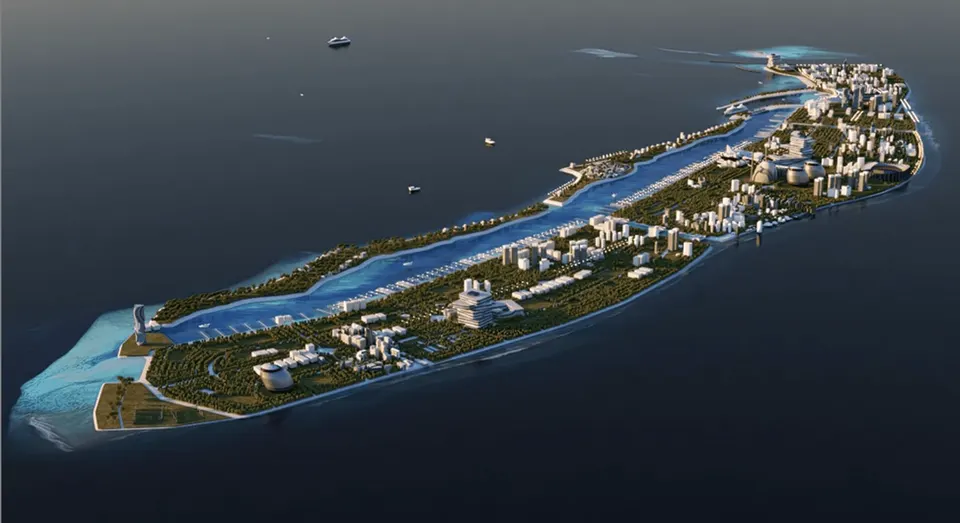
Even so, the two are closely watched together. Eagle Hills' Ras Malé project is planned for more than 8,800 properties, and the Maldives Independent has reported a government target of 35,000 foreign residents there. Critics quoted in local reporting worry that residency schemes and long property leases together could change who lives in the Maldives, in a country where land is scarce.
What to look for
If Pearl Residence goes ahead, these are the details that will matter:
- The law. Will it be set out in an act of parliament, or only in regulations?
- The thresholds. What investments qualify, and how much?
- The status. Is it permanent residence, or a renewable visa like the existing one?
- The checks. Who vets applicants, and what are the conditions for keeping residency?
- The property link. Which developments qualify, and will the list be published?
- The money. What does Henley & Partners earn, and what does the state receive?
Before you invest
If you're being offered property "with Pearl residency", be careful. As of October 2026, the programme hadn't launched and its terms weren't public, so no seller can guarantee what it will offer. Be especially wary of any deposit taken before the programme's rules exist. Ask for the legal basis in writing, check with Maldives Immigration, and get independent advice from a lawyer licensed in the Maldives. For property rules more generally, see how 99-year leases work in the Maldives.
Questions people ask
What is the Maldives Pearl Residence? ⌄
Has Pearl Residence launched? ⌄
Does Pearl Residence include Ras Malé? ⌄
How much do you need to invest for Pearl Residence? ⌄
Sources
- Residents, not guests: Ayla, Henley and the Pearl visa · Maldives Independent, 2026-10-14
- 'The Maldives Pearl Residence' to open path for investment-based residency · Corporate Maldives, 2025-11-06
- Maldives Residence by Investment · Henley & Partners
- Parliament votes down call to halt investor residency scheme · Atoll Times, 2026-08-18
- 'Not an inch sold': the Eagle Hills deal and the foreign ownership question · Maldives Independent, 2026-09-23
- Foreign money, not foreign neighbours: Rasmalé and the politics of land · Maldives Independent, 2026-10-01
- Majlis approves to grant residency visas for foreigners with investments over USD 250,000 · Raajje.mv, 2020-11-09
- President ratifies amendment to Special Economic Zone Act enabling sustainable township development · Invest Maldives, 2025-12-14
This guide is general information, not legal or financial advice.