Invest & Buy
Who Is Eagle Hills? The Developer Behind the Ras Malé Waterfront
Eagle Hills is the Abu Dhabi developer that will build the waterfront and marina on about 500 hectares of Ras Malé. Founded in 2014 by Mohamed Alabbar, the man behind Dubai's Emaar, it has built large waterfront districts from Belgrade to Bahrain, often in partnership with governments.
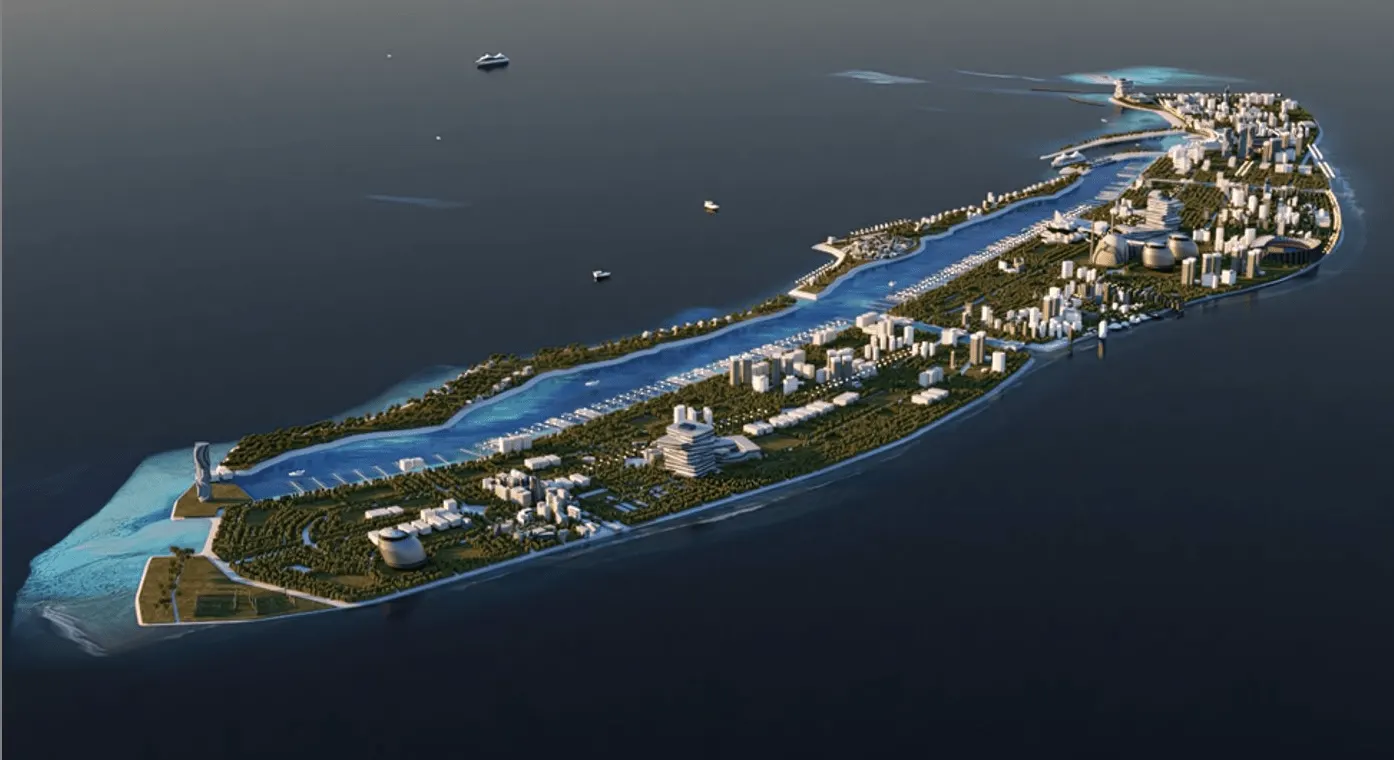
On 21 September 2026, the Maldives government signed commercial terms with Eagle Hills for the "Maldives Waterfront and Marina", a district of hotels, homes, a marina, shops, schools and healthcare on about 500 hectares of Ras Malé. Most people in the Maldives had never heard of the company before. This guide explains who Eagle Hills is, what it has built elsewhere, how it usually works with governments, and what its record suggests about the Ras Malé project. For the terms of the deal itself, see our Eagle Hills deal explainer.
In short ⌄
- Eagle Hills is a private Abu Dhabi developer, founded in 2014 by Mohamed Alabbar, who also founded Dubai's Emaar Properties.
- It builds large waterfront and city districts, often as joint ventures with governments, in at least 18 countries.
- Its best-known project, Belgrade Waterfront in Serbia, has been both a landmark and a target of protests over consultation and transparency.
- Ras Malé is reported to be its largest-ever investment, valued at US$12 billion to US$20 billion across all phases.
The company
Eagle Hills is a privately held real estate investment and development company based in Abu Dhabi, in the United Arab Emirates. It was presented in January 2014. Semafor describes it as having close ties to Abu Dhabi's ruling family, and as working in at least 18 countries.
Its founder and chairman is Mohamed Alabbar, one of the Gulf's best-known property developers. Alabbar founded Emaar Properties, the Dubai developer known for Downtown Dubai and the Burj Khalifa. Emaar and Eagle Hills are separate companies. Alabbar has said Emaar may also invest in the Maldives project, according to reporting of his comments to Reuters.
The man behind it
Mohamed Alabbar is best known for developing Downtown Dubai through Emaar. According to Semafor, he was already expanding abroad as the UAE property market became saturated. Earlier in 2026, Eagle Hills said it would go ahead with a multibillion-dollar plan for housing and tourism developments on Syria's Mediterranean coast. The Maldives deal is part of that push into new markets. It puts one of the Gulf's most experienced developers in charge of a large part of the Maldives' newest city.
What it builds
Eagle Hills specialises in large mixed-use districts, often on waterfronts: homes, hotels, offices, shopping and marinas, built in phases over many years. Its projects include:
- Serbia: Belgrade Waterfront, on the Sava river. Construction began in 2015. Finished parts include the Galerija shopping centre and Kula Belgrade, a 168-metre tower with the St. Regis Belgrade.
- Bahrain: Marassi Al Bahrain, a residential, retail and hotel district in Muharraq, built with Diyar Al Muharraq.
- United Arab Emirates: Maryam Island and Kalba Waterfront in Sharjah, and Ramhan Island in Abu Dhabi, a project of about 400 hectares.
- Oman: the Mandarin Oriental Muscat, opened in June 2024.
- Jordan: hotels in Amman, and projects at Marsa Zayed in Aqaba.
- Albania: Durrës Yachts & Marina.
- Georgia: Tbilisi Waterfront, and Gonio Yachts & Marina.
- Ethiopia: La Gare, a mixed-use district in Addis Ababa launched in 2018.
- Croatia: a majority stake in the Sunce Hoteli hotel group, bought in 2021.
- Latvia: a 2024 memorandum for the Riga Waterfront, with more than 6,500 homes planned over 10 to 15 years.
For Eagle Hills, Ras Malé is reported to be its largest-ever investment.
How it works with governments
A pattern runs through many of Eagle Hills' projects. It partners with a government or public body that provides the land, and then develops and sells property over a long period. Some examples:
- In Sharjah, projects are a 50:50 partnership with the Sharjah Investment and Development Authority.
- In Georgia, the government holds a third of a joint venture, with Eagle Hills holding two-thirds.
- In Albania, the Durrës project is 67% private and 33% state-owned.
That's a key difference from the Ras Malé deal. In the Maldives, the government isn't taking an equity stake. Instead, it is to receive 10% of the developer's revenue from first sales and leases, a 4% fee on the value of every property transfer, and tourism GST. Maldivian critics, including economist Fayyaz Ismail, have argued the state should have taken equity, as governments did elsewhere. The government says revenue sharing will earn more over time.
The controversies
Eagle Hills' big projects have often drawn criticism, usually over transparency and public consultation:
- Serbia: Belgrade Waterfront was criticised for limited public consultation, and prompted protests. It was advanced through a special law.
- Georgia: the government classed its 2025 agreement with Eagle Hills as commercially confidential. Economists and opposition figures called for the land and investment terms to be published.
- Hungary: a proposed Grand Budapest district on an 85-hectare former railway site didn't go ahead. Budapest's council used its right of first refusal to buy the land. The mayor said the city preferred affordable housing and green space to "luxury for a few".
Similar questions have been raised in the Maldives. The Ras Malé agreement came from an Eagle Hills proposal rather than an open tender, and its full text hasn't been published. In late September 2026, a lawyer asked the Supreme Court to void it, and in early October Parliament accepted a motion demanding its disclosure. The government says the main terms are public, and that the final agreement will follow Maldivian law.
What it plans for Ras Malé
Under the commercial terms, Eagle Hills is to be master developer of the Maldives Waterfront and Marina:
- about 500 hectares of reclaimed land, with more than 8,800 properties reported in its plans
- hotels and resorts, branded and premium homes, a marina, shops, restaurants, schools and healthcare
- homes sold on leases of up to 99 years, with a new lease on each sale or inheritance
- no further dredging, with independent marine monitoring during construction
- a reported value of US$12 billion, which the government and Alabbar say could reach US$20 billion
Before starting in Ras Malé, Eagle Hills is to build 5,000 three-bedroom homes in Hulhumalé, costing about US$500 million, as an advance on the state's share of sales.
The Hulhumalé homes are to go on Hulhumalé's Urban Island, according to a video shared by the Housing Minister. That land had previously been set aside for a US$8.8 billion financial centre proposed by Qatar's MBS Global Investments. That plan didn't go ahead, and the government says it is being rescoped.
What its record suggests
Eagle Hills' track record points both ways. On one hand, it has finished large, complicated waterfront projects, such as Belgrade Waterfront and Marassi Al Bahrain, and runs hotels with international brands. It has experience of exactly the kind of district planned for Ras Malé. On the other hand, its projects take many years, are usually built in phases, and depend on property sales. Some, like Grand Budapest, never got off the ground.
For buyers and for the Maldives, the useful questions are the same ones raised in other countries. What exactly has been agreed? What's the timetable, and what happens if the project stalls? Who checks that the promised public benefits, like schools, healthcare and the Hulhumalé homes, are delivered? The Housing Minister has said the investment schedule and provisions for non-completion will be in the final agreement. Until that's signed and published, the answers aren't known.
For what this means if you want to buy, read buying property in Ras Malé.
Questions people ask
Who owns Eagle Hills? ⌄
Is Eagle Hills the same as Emaar? ⌄
What has Eagle Hills built? ⌄
Sources
- Eagle Hills Properties · Wikipedia
- Abu Dhabi-based Eagle Hills lands in the Maldives · Semafor, 2026-09-22
- Eagle Hills signs $12 billion Maldives waterfront deal · Gulf News, 2026-09-21
- Foreign money, not foreign neighbours: Rasmalé and the politics of land · Maldives Independent, 2026-10-01
- 'Not an inch sold': the Eagle Hills deal and the foreign ownership question · Maldives Independent, 2026-09-23
- Government statement on the Maldives Waterfront and Marina · Khulaasaa, 2026-09-30
- MDP seeks disclosure of Eagle Hills pact on Ras Malé project · Atoll Times, 2026-10-05
- Case submitted to Supreme Court to nullify agreement of Eagle Hills in Rasmalé · The Edition, 2026-09-28
- Rasmale' Marina project agreement signed under PSIP rules: Muththalib · The Edition, 2026-10-18
- Eagle Hills housing, localisation rules and seized pots · Maldives Independent, 2026-10-11
This guide is general information, not legal or financial advice.