Live Here
Ras Malé vs Hulhumalé: How the Two New Cities Compare
Hulhumalé is the reclaimed city that showed the Maldives could build new land for housing. Ras Malé is the next, much larger attempt. Here is how they compare on size, homes, transport and timing, and what Hulhumalé's story suggests about Ras Malé's.
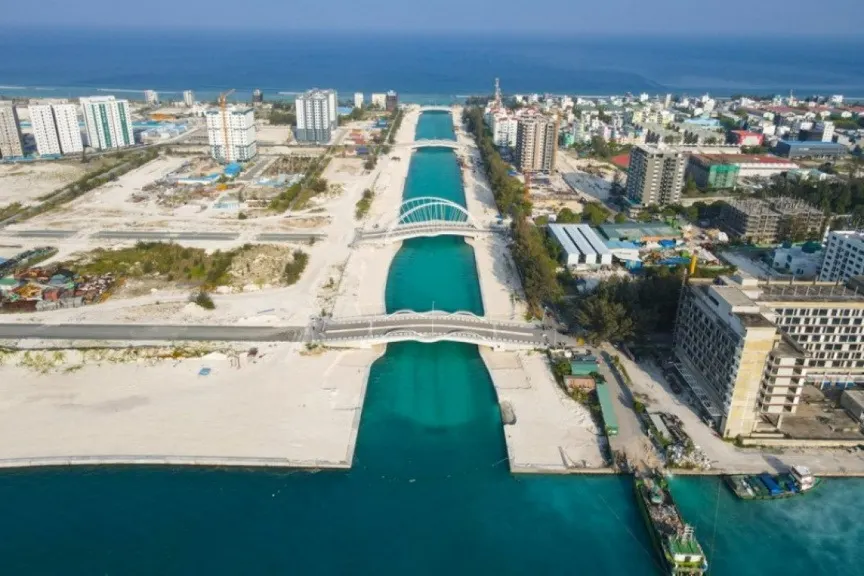
Greater Malé has been short of space for decades, and the Maldives' answer has been to make new land. Hulhumalé, reclaimed from 1997 onwards next to the airport island, was the first large reclaimed city. Ras Malé, in Fushidhiggaru lagoon south of Malé, is the next and much bigger attempt. This guide compares the two on the facts that have been published. For the background on Ras Malé, start with What is Ras Malé?
In short ⌄
- Hulhumalé covers about 445 hectares in two phases and had 65,714 residents at the 2022 census. Ras Malé's planned 1,009 hectares is more than twice as large.
- Hulhumalé is already a working city with road links to Malé and the airport. Ras Malé is still being reclaimed and has no transport links yet.
- Hulhumalé took more than 25 years to grow from first reclamation to a city of tens of thousands. The government expects Ras Malé to take about 10 years.
- Both are built on state land run by HDC, so homes in either are leased or allocated rather than owned outright.
At a glance
| Hulhumalé | Ras Malé | |
|---|---|---|
| Location | North Malé Atoll, next to the airport island | South Malé Atoll, near Gulhi |
| Land | About 194 ha (Phase 1) + 251 ha (Phase 2) | About 1,009 ha planned |
| Reclamation began | October 1997 | December 2023 |
| First residents | 2004 | Not yet |
| People | 65,714 (2022 census) | 65,000 homes planned |
| Link to Malé | Sinamalé Bridge and causeway | Ferries, tunnel and airstrip under study |
| Developer | HDC | HDC, plus Eagle Hills for about 500 ha |
Size
Hulhumalé was reclaimed in two phases. Phase 1, about 188 hectares, was reclaimed between October 1997 and June 2002. Phase 2 added about 244 hectares from 2015. HDC's revised master plan of May 2025 gives the developed areas as about 194 hectares for Phase 1 and 251 hectares for Phase 2, about 445 hectares in total. When that plan was published, a third phase was being reclaimed.
Ras Malé's planned land is about 1,009 hectares. The government regularly describes it as nearly three times the size of Hulhumalé's two phases, a figure based on the larger total of 1,153 hectares for the whole lagoon. On the land figures above, Ras Malé would be a little over twice the size of Hulhumalé.
People and homes
Hulhumalé's first residents, about 1,000 people, moved in during 2004. By the 2022 census it had 65,714 residents. The May 2025 master plan raises the long-term targets to 100,000 people in Phase 1 and 250,000 in Phase 2.
Ras Malé has no residents yet. The government's long-term figure is 65,000 homes, and in September 2026 it said the area would eventually house 150,000 or more people. The first housing round offers land plots of 1,250 square feet, while most of the flats in the same scheme are in Hulhumalé. Our housing guide explains the scheme.
Getting to Malé
This is the biggest practical difference today. Hulhumalé is joined to the airport island by a causeway, and since September 2018 the Sinamalé Bridge has linked the airport island to Malé. That means you can drive from Hulhumalé to the capital, and it's minutes from Velana International Airport.
Ras Malé is in a different atoll, about 17 minutes from Malé by speedboat. The plans mention express ferries and hydrofoils, a possible undersea tunnel and an airstrip. A transport master plan is being prepared to choose between them. Until it's built, residents would depend on boats. Our guide Where is Ras Malé? covers the options.
How each city is planned
Hulhumalé's revised master plan sets aside about 30% of the land for green space and sport, and about 30% for housing. It also aims to put green spaces, schools and mosques within a five-minute walk of every neighbourhood. The plan has been revised several times as the city grew, most recently in December 2023 and May 2025.
Ras Malé has been presented as an eco-city, planned to run on renewable energy with electric transport, and raised 2 to 3 metres above sea level. It will be developed in 12 zones, and about 500 hectares are to be leased to Eagle Hills for a waterfront and marina district. A full master plan for Ras Malé hasn't been published yet, so it isn't possible to compare land uses in the same detail.
Timeline
Hulhumalé shows how long a reclaimed city takes to grow. About two years passed between the end of Phase 1 reclamation and the first residents. By the end of 2019, more than 20 years after work began, it had passed 50,000 residents, and it is still being built out today.
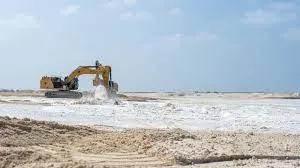
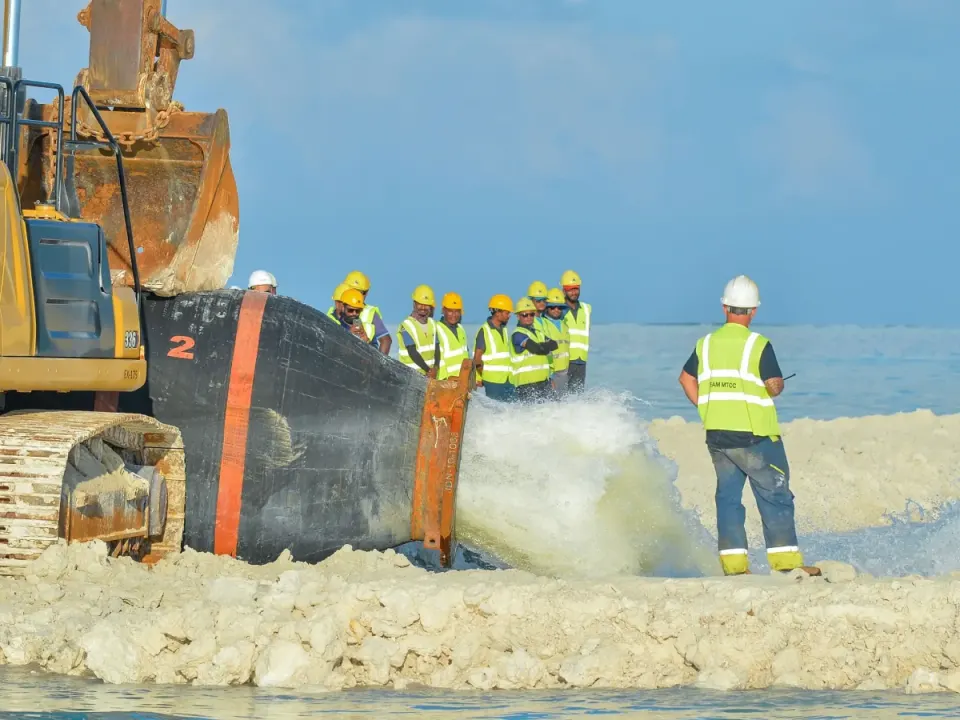
Ras Malé is being reclaimed much faster, using several large dredgers at once. In September 2026, the President said about 70% was done, with completion expected by the end of 2026, and that the wider development would take about 10 years. Our Ras Malé timeline has the details.
Lessons from Hulhumalé
Hulhumalé's history offers some clues about how Ras Malé might develop:
- Plans change. Hulhumalé's master plan has been revised several times, most recently in December 2023 and May 2025. The latest version raised the long-term population target for Phase 2 to 250,000.
- People arrive before everything is finished. Phase 1 reclamation ended in June 2002, and the first residents moved in during 2004, about two years later. The city has kept growing around them ever since.
- Links take time. Hulhumalé's road link to Malé, the Sinamalé Bridge, opened in 2018, 14 years after the first residents arrived.
- Infrastructure keeps expanding. The 2025 plan expands Hulhumalé's harbour from 36 to 53 hectares, adding space for boats and logistics.
If Ras Malé follows a similar path, its first neighbourhoods could be lived in well before the city is complete, with services and links catching up over the following years. The difference is scale and distance: Ras Malé is more than twice the size, and it's in a different atoll from the capital.
Eagle Hills in both cities
The two cities are now linked by the Eagle Hills deal. Before starting its waterfront and marina in Ras Malé, Eagle Hills is to build 5,000 three-bedroom homes in Hulhumalé, on Hulhumalé's Urban Island, according to a video shared by the Housing Minister. That land had previously been set aside for a US$8.8 billion financial centre proposed by Qatar's MBS Global Investments. That project hasn't gone ahead, and the government says it is being rescoped. The homes, worth about US$500 million, count as an advance on the state's share of Ras Malé sales.
Which is better for buyers?
They're at different stages, so they suit different needs. Hulhumalé is the place to look if you need a home or office now: it has finished buildings, roads, shops, schools and a direct road link to Malé. Ras Malé is a long-term prospect. There are no homes yet, no published prices and no fixed transport link. Its land rules are still being worked out, especially for the Eagle Hills district.
In both cities, the land belongs to the state and homes are leased or allocated rather than owned outright. Foreigners can't own land anywhere in the Maldives. Our guide to buying property in Ras Malé explains the lease model. This guide is general information, not financial advice.
Questions people ask
Is Ras Malé bigger than Hulhumalé? ⌄
How many people live in Hulhumalé? ⌄
How will Ras Malé connect to Malé compared with Hulhumalé? ⌄
Can you buy property in Hulhumalé and Ras Malé? ⌄
Sources
- Hulhumalé · Wikipedia
- HDC announces changes to Hulhumale' Master Plan · The Edition, 2025-05-26
- Rasmale (Maldives Eco City) project page · Housing Development Corporation
- Eagle Hills project will not affect housing plans: President · The Edition, 2026-09-26
- Ras Malé project will proceed, no foreign land ownership: President · Atoll Times, 2026-09-26
- Rasmalé Site A reclamation reaches 84% completion · MMTV, 2026-02-12
- Undersea tunnel to link Male, Rasmale, president says · Atoll Times, 2024-01-23
- Rasmale' reclamation deal with CMCC to be terminated · Adhadhu, 2024-06-02
- Quick overview to Boahiyaavahikan Enmenah scheme as deadline looms ahead · The Edition, 2026-06-11
- 'Not an inch sold': the Eagle Hills deal and the foreign ownership question · Maldives Independent, 2026-09-23
- Eagle Hills housing, localisation rules and seized pots · Maldives Independent, 2026-10-11
- Government statement on the Maldives Waterfront and Marina · Khulaasaa, 2026-09-30