News
Eagle Hills Deal Was Signed Under PSIP Rules, Housing Minister Tells Parliament
Why wasn't the Ras Malé waterfront put out to competitive tender? Because Eagle Hills brought it to the government as a private sector initiated proposal, the housing minister has told Parliament. Here is what the PSIP rules say, and what they don't settle.
The government's agreement with Eagle Hills for the Ras Malé waterfront was signed under the rules for Private Sector Initiated Proposals (PSIP), which is why it wasn't put out to competitive tender, Minister of Construction, Housing and Infrastructure Dr Abdulla Muththalib has told Parliament. His written answer, reported by The Edition on 18 October 2026, is the government's most detailed explanation yet of how the deal was made.
In short ⌄
- Minister Dr Abdulla Muththalib told Parliament the Eagle Hills agreement was signed under the procedure for Private Sector Initiated Proposals (PSIP), set out in section 10.22(c) of the public finance regulations.
- He was answering MP Mohamed Ibrahim (Kudu), who asked why the project wasn't opened to competitive bidding.
- Under the PSIP policy, the Cabinet can choose to accept a proposal, negotiate directly, put it out to tender, or reject it.
- The investment schedule and penalties for non-completion are to be in the main agreement, which is still to be signed.
The question came from Mohamed Ibrahim (Kudu), the MP for Galolhu North, who asked why the project hadn't been opened to bidding before the agreement was granted. This report explains the minister's answer, what the PSIP rules say, and the questions they leave open.
What the minister said
According to The Edition, the minister made three main points:
- The legal basis. The agreement was signed under the procedure for Private Sector Initiated Proposals, as provided for in section 10.22(c) of the public finance regulations.
- Disclosure. The main provisions of the signed commercial terms agreement have already been made public.
- What's still to come. The investment schedule, and the penalties if the developer doesn't complete the work, will be set out in the main agreement.
He also described the financial and economic benefits the government expects from the project, though the report doesn't give the figures he used. Finance Minister Hassan Zareer has separately estimated that the project will bring the state more than US$11 billion over its 10-year development.
What is a PSIP?
A PSIP is an unsolicited proposal: a project that a private company brings to the government, rather than one the government designs and then puts out to tender. Many countries allow them, because companies sometimes come up with projects that the state hadn't planned. The risk is that, without competition, the state can't be sure it got the best terms.
The Maldives first introduced an unsolicited proposals policy in 2019. The current procedure, published by the government in English as Submission and Review of Private Sector Initiated Proposals, sets out how proposals are received and judged.
What can't be proposed
The policy says a proposal can't be made under section 10.22(c) if the government had already decided to announce the project, had already announced it, or had publicly announced it and started a tender to find someone to carry it out.
What a company has to submit
A proposal has to set out, among other things, the proponent's name, the location and the land area needed, the project's scope and how it fits government priorities, the business model and key commercial terms, the total investment and how it will be raised, and any support needed from the government.
How proposals are assessed
The process has three stages:
- Initial check. The ministry checks that the proposal is complete and that the proponent is competent in the field.
- Strategic and detailed assessment. The ministry assesses the public benefit, the technical and financial feasibility, the expected social, environmental and economic impact, the proponent's experience and finances, the financing arrangement (which must be affordable to the government), the attractiveness of the commercial terms, and due diligence, including blacklists, insolvency and criminal records.
- Decision and agreement. An executive committee decides whether to send the proposal to the Cabinet or a Cabinet sub-committee. The Cabinet then chooses one of four routes: proceed as proposed, negotiate directly, put it out to competitive bidding, or reject it. If it goes to bidding, the original proponent can take part.
After direct negotiations, the finalised key commercial terms go back to the Cabinet or sub-committee for approval. Only then does the government enter a binding agreement, through the ministry or agency chosen to implement the project.
What has to be published
The policy says information on PSIPs that reach a contract will be published, including details of the proponent and the scope of the proposal. It also says the government will consult the proponent before disclosing anything, so that commercially sensitive information stays confidential.
Why the question matters
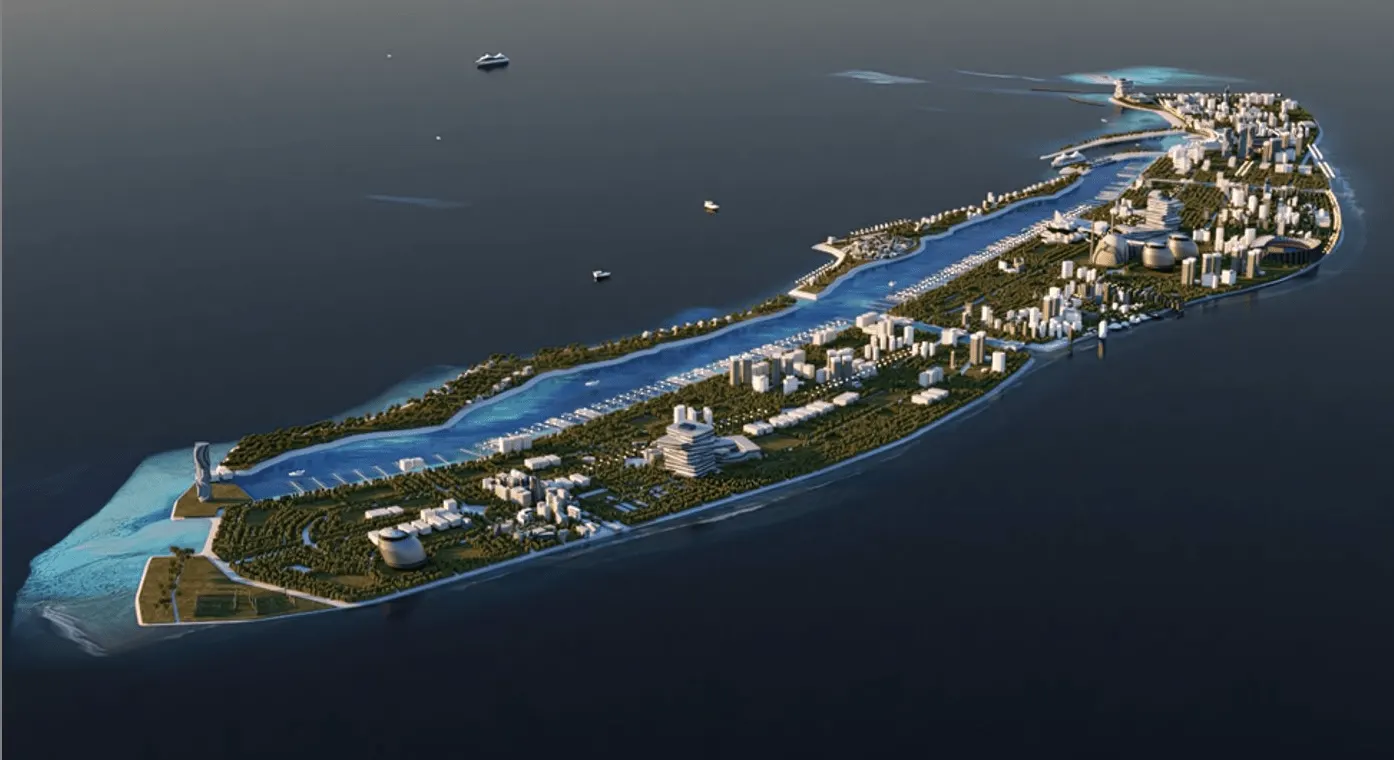
The waterfront is the largest private investment the Maldives has announced, covering about 500 hectares of land the state has paid to reclaim. Critics argue that a deal of this size should have been tested against other bids. Former President Ibrahim Mohamed Solih has said an agreement made in secret should not go ahead. Former President Mohamed Nasheed has called for the agreement to be published, and former President Abdulla Yameen has called for it to be scrapped by the next government.
The PSIP rules do give the Cabinet the option of competitive bidding. The minister's answer confirms the government chose direct negotiation instead. Under the policy, that is a lawful choice. Whether it was the right one is a political question, and it can only be judged fully once the terms are public.
How other countries handle unsolicited proposals
Unsolicited proposals are common around the world, especially for infrastructure, and so is the debate about them. The World Bank's guidance on managing unsolicited proposals describes the main ways governments try to keep some competition in the process even when a company brings the idea:
- A Swiss challenge. The government publishes the proposal and invites other companies to beat it. The original proponent can then match the best rival offer.
- A bonus system. The proposal goes to a competitive tender, and the original proponent gets a scoring advantage for having brought the idea.
- Best and final offer. Several bidders compete over rounds, and the original proponent is guaranteed a place in the final round.
None of these is a perfect fix. A World Bank review notes that the Swiss challenge can still favour the original proponent: in the Philippines, all 11 public-private partnership contracts awarded from unsolicited proposals up to 2006 went to the company that had first proposed them. The World Bank's advice is to treat unsolicited proposals with caution, as an exception to normal public procurement, and for governments to prepare their own studies so that rival bidders compete on equal terms.
The Maldivian PSIP policy allows the Cabinet to send a proposal to competitive bidding, with the original proponent able to take part. It also allows direct negotiation without any competition, which is the route the government took for Eagle Hills.
The quality of the assessment matters too. When the IMF reviewed how the Maldives manages public investment in 2019, before the current PSIP rules, it found no independent quality assurance of project appraisals. That is why critics want the assessments for this deal to be published.
The legal challenge
A separate constitutional challenge has questioned the deal on different grounds. The lawyer and former MP Ali Hussain asked the Supreme Court to declare the agreement void from the start, arguing that it breaches Article 250 of the constitution, on how state property can be transferred or leased, and Article 251, which caps leases to foreigners at 99 years.
The Supreme Court registrar declined to register the case, saying this type of case can't be brought straight to the Supreme Court at the first stage. The decision can be sent for review by the judges. It was a procedural decision, not a ruling on the deal. Our report on the Supreme Court case has the details.
What has and hasn't been published
The government and Eagle Hills have announced the main points of the commercial terms:
- about 500 hectares of Ras Malé for a waterfront and marina, on a 99-year arrangement;
- about 5,000 homes for the state, worth around US$500 million, to be built before work on the waterfront begins;
- a share of sales revenue and a buyers' fee for the state, with tourism GST on top;
- no tax or duty concessions, no state loans and no sovereign guarantee;
- sale proceeds paid into an escrow account in the Maldives.
What hasn't been published is the full text, or the assessments the PSIP policy requires: the strategic assessment, the detailed assessment and the executive committee's report. Those documents would show how the government judged the public benefit, the feasibility and the commercial terms.
What happens next
- The main agreement. The investment schedule and penalties for non-completion will be in the definitive agreement. Its signing will be the next big step.
- The Real Estate Bill. President Mohamed Muizzu has said rules on who can buy, including a 25% cap on buyers from any one country and a ban on Israeli buyers, will be set out in a Real Estate Bill for Parliament.
- Parliamentary scrutiny. More written questions are likely as the bill and the main agreement come forward.
For what the deal contains, see our Eagle Hills deal explainer. For the agencies involved, from HDC to the infrastructure ministry, see who's who in Ras Malé.
Questions people ask
Why wasn't the Ras Malé waterfront put out to tender? ⌄
What is a PSIP? ⌄
Has the Eagle Hills agreement been published? ⌄
Sources
- Rasmale' Marina project agreement signed under PSIP rules: Muththalib · The Edition, 2026-10-18
- Submission and Review of Private Sector Initiated Proposals (policy) · Government of Maldives, 2024-01-23
- PSIP application form · Ministry of Construction, Housing and Infrastructure, 2025-10
- Unsolicited proposals in infrastructure: a balancing act between incentives vs. competition · World Bank
- Maldives: Technical Assistance Report, Public Investment Management Assessment (IMF Country Report No. 19/102) · International Monetary Fund, 2019
- Government announces Unsolicited Proposals Policy to promote private sector participation in development · The President's Office
- Supreme Court rejects case seeking to void Eagle Hills deal · The Edition, 2026-10-13
- Rasmale' agreement should not be allowed under MDP: Solih · The Edition, 2026-10-02
- "Rasmale' project to bring over USD11bn during development" · The Edition, 2026-09-30