News
Ras Malé Marina to Bring the State Over $11 Billion, Finance Minister Says
Finance Minister Hassan Zareer says the Eagle Hills waterfront and marina in Ras Malé will bring the state more than US$11 billion over its 10-year development, from a share of sales, a buyers' fee and tourism GST. Here is how the government reaches that figure, and why critics are cautious.
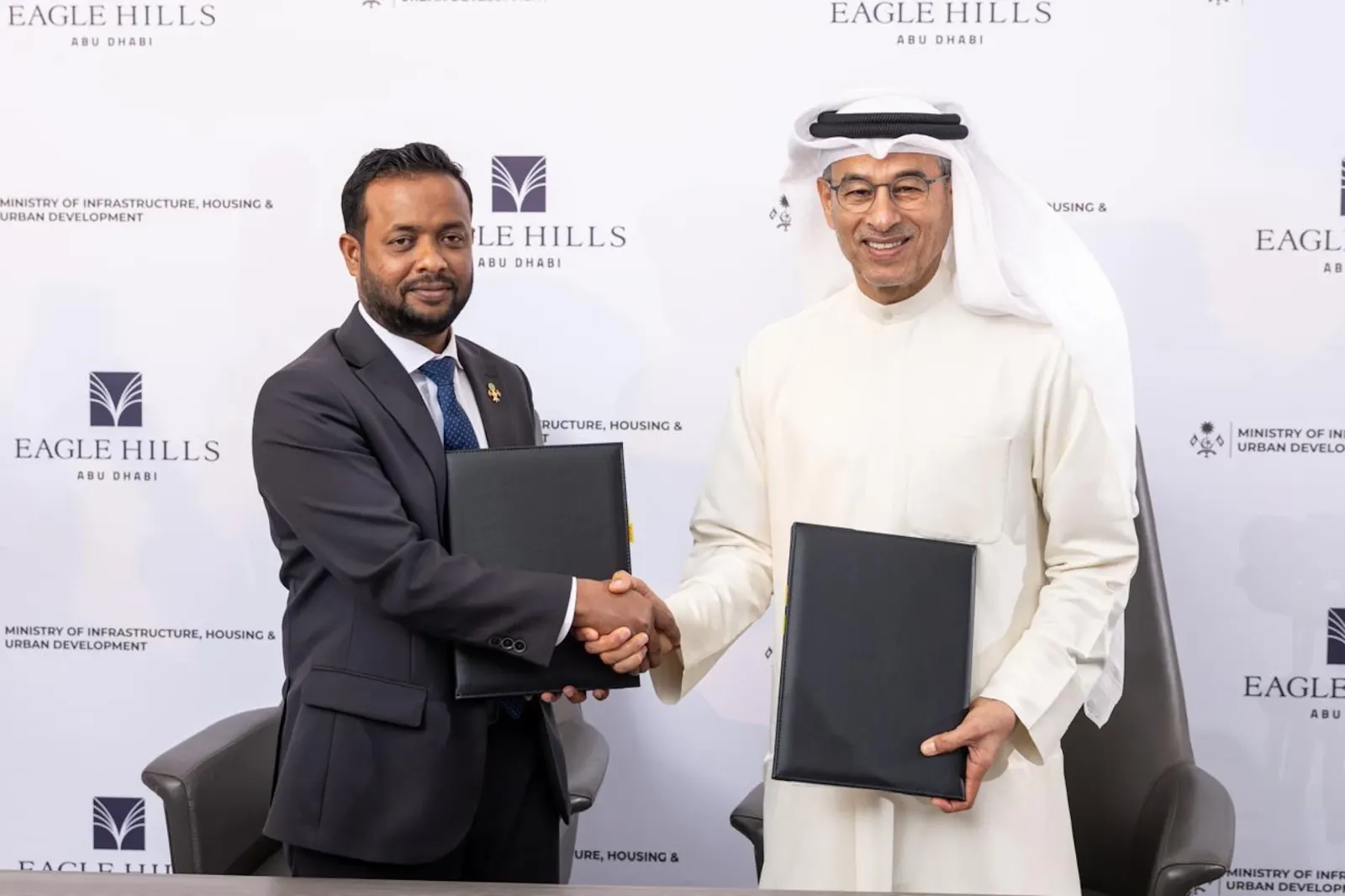
The Eagle Hills waterfront and marina in Ras Malé will bring the state more than US$11 billion (about MVR 169 billion) during its 10-year development, Finance Minister Hassan Zareer has said. That works out at about US$1.1 billion a year. The minister set out the figure in a post on X and in statements reported by The Edition on 30 September 2026, nine days after the government signed commercial terms with the Abu Dhabi developer.
In short ⌄
- Finance Minister Hassan Zareer says the Eagle Hills project in Ras Malé will bring the state over US$11 billion during its 10-year development, about US$1.1 billion a year.
- The money is meant to come from tourism GST, 10% of the developer's revenue from first sales and leases, and a 4% fee paid by first-time buyers.
- The government says there are no tax breaks, no state loans and no sovereign guarantee, and that sale proceeds will go through an escrow account in the Maldives.
- Critics say the full agreement hasn't been published, and that the state will wait years before most of the money arrives.
It is the largest revenue estimate the government has given for any single project, and it has become central to the political argument over the deal. This report sets out where the money is meant to come from, what the government has promised, and what critics have questioned.
Where the money is meant to come from
According to the minister, the state's income from the project would come from three main sources:
- Tourism goods and services tax (TGST), at the rates set in the agreement, on hotels, resorts and other tourism businesses in the development.
- 10% of the developer's revenue from the first sale or lease of properties.
- A 4% fee on the value of a property, paid by first-time buyers.
The published reports don't break the US$11 billion down by source, so it isn't possible to say how much depends on property sales and how much on tourism. That matters, because the two depend on different things. Property income depends on how many units Eagle Hills sells, and at what price. Tourism income depends on the hotels being built, opening on time and filling their rooms.
What the government says it hasn't given away
The government has repeatedly stressed what is not in the agreement. According to the finance minister and President Mohamed Muizzu:
- No tax exemptions or duty waivers. The project won't get the concessions available under the Special Economic Zones Act or the Tourism Act.
- No state loans and no sovereign guarantee. The government isn't lending to the project or guaranteeing its debts.
- Money stays in the Maldives. Property sale proceeds are to go into an escrow account opened in the Maldives, and all the project's financial transactions are to go through Maldivian banks.
The last point matters because the Maldives is short of US dollars. In June 2026, the World Bank reported that official reserves had fallen to US$717.9 million in April, enough for about 1.4 months of imports, after the government repaid a US$500 million Islamic bond. The government argues that foreign buyers paying into a local escrow account will bring dollars into the country.
The bigger claims: visitors and jobs
Alongside the revenue figure, the government has made wider claims about the project's effect on the economy:
- Over one million visitors a year. About 10 years after full operation, the minister said, the development could attract more than a million tourists a year and generate about US$2 billion a year for the economy.
- More than the current tourism sector. He said the estimated annual revenue was greater than the state's current combined revenue from 179 resorts, 16 hotels, 920 guest houses and 165 safari vessels.
- Jobs. In a separate interview on 26 September, President Muizzu said the project would create more than 54,000 jobs over the development period.
For scale, the Maldives received a record 2.25 million tourists in 2025, according to the World Bank. A single development attracting a million visitors a year would be a very large addition to that total.
How big is the project?
Reports have given two values. Gulf News and others described a US$12 billion first phase, while The National and the government have referred to a programme worth up to US$20 billion. Neither figure is an immediate cash payment to the state. Both describe the total value of what Eagle Hills plans to build over many years.
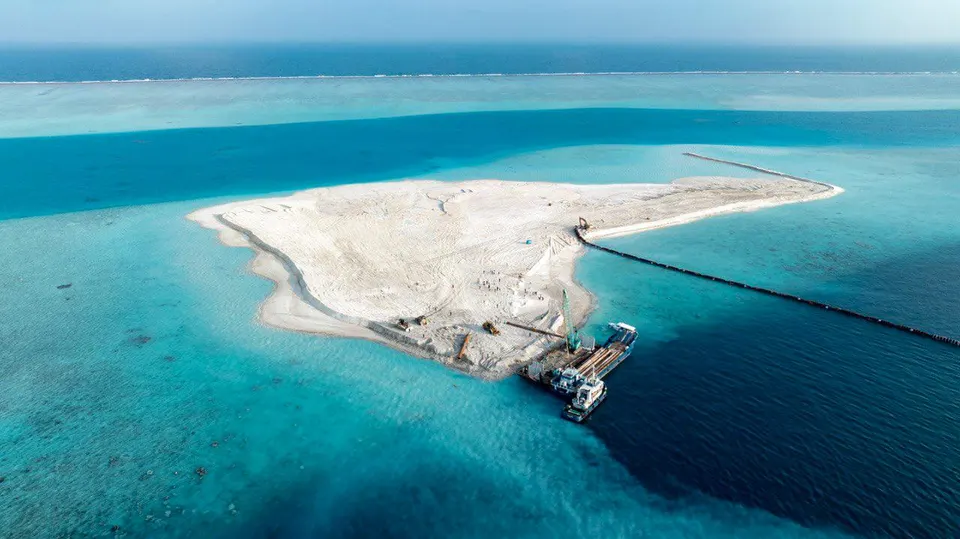
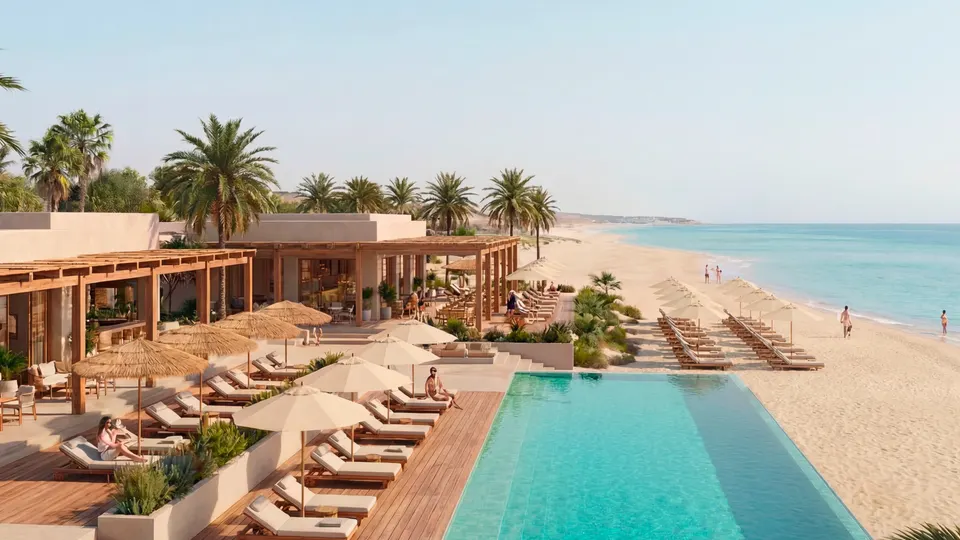
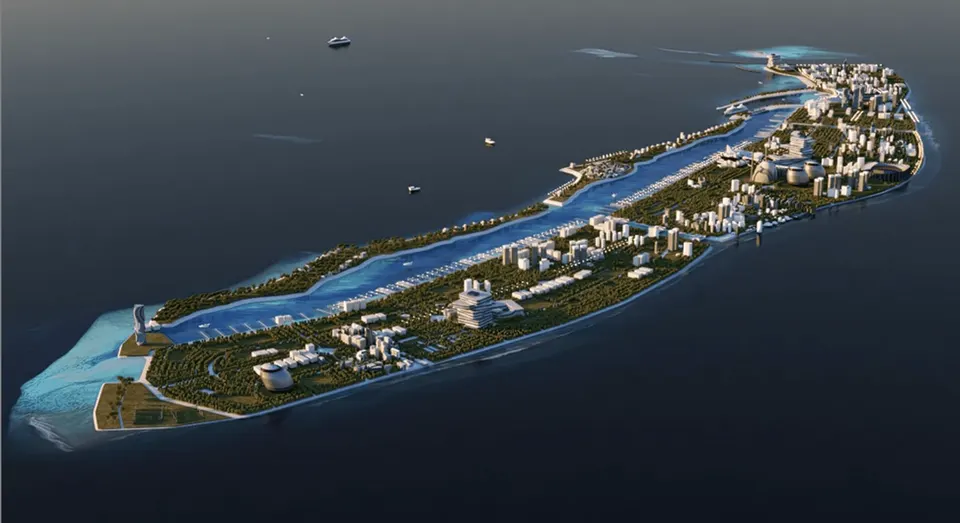
The site is about 500 hectares of land reclaimed from Fushidhiggaru lagoon, which Eagle Hills is to develop under a 99-year arrangement. Plans published by the developer include hotels and resorts, branded residences, a marina, promenades, shops and restaurants. For the details, see our Eagle Hills deal explainer.
What critics have said
The opposition hasn't disputed that a waterfront could earn money, but has questioned the terms and the timing:
- The agreement isn't public. Former President Ibrahim Mohamed Solih told the Maldivian Democratic Party's congress that the state would forgo significant revenue under the government's arrangements, and that a deal made in secret should not go ahead.
- No advance payment. Former President Mohamed Nasheed has said one of his main concerns is that the project provides no upfront payment to the state.
- A long wait. On the day the deal was signed, Nasheed said that even if everything went perfectly, the state would wait at least two years before receiving any revenue. He argued the country's immediate need is to raise money to service its debts.
The government's answer to the advance-payment point is that Eagle Hills is to build about 5,000 housing units, valued at around US$500 million, for the state before work on the waterfront begins. Those homes are a benefit in kind rather than cash, and they are not part of the US$11 billion figure as reported.
How realistic is US$11 billion?
We can't test the figure without the full agreement and the government's calculations, which haven't been published. But a few things are worth bearing in mind:
- It depends on sales. A 10% share of revenue and a 4% buyers' fee only produce money as properties are sold. If sales are slower than planned, so is the state's income.
- It depends on building. Tourism GST only arrives once hotels open. Large waterfront projects often take longer than planned, and the commercial terms say the investment schedule and penalties for delays will be in the main agreement, which hasn't been signed yet.
- The country needs money sooner. The World Bank estimates the Maldives' external debt service at about US$1.7 billion in 2026, and expects public debt to exceed 140% of GDP over the medium term. Revenue that arrives over 10 years doesn't solve this year's payments.
None of this means the estimate is wrong. It means it is a projection, and its accuracy will depend on how quickly the project is built and sold.
A worked example: what one sale brings in
The President has given an example price of about US$600,000 for a 1,000-square-foot property. Using the two sales-based payments the minister described, a sale at that price would bring the state roughly:
- US$60,000 from its 10% share of the developer's revenue, and
- US$24,000 from the 4% fee paid by the buyer.
That is about US$84,000 per sale, or 14% of the price. It is a simple illustration, not the government's calculation, and real prices will vary. But it shows something useful. At 14% of sales, reaching US$11 billion from property alone would need about US$78 billion of sales, several times the US$12 billion to US$20 billion value reported for the whole project. So most of the US$11 billion must come from somewhere other than these two payments: tourism GST once hotels open, and possibly other taxes and duties, since the government says the project gets no exemptions.
That makes the timing of the hotels, and how full they are, at least as important to the estimate as property sales.
Questions the government hasn't answered
- The breakdown. How much of the US$11 billion comes from GST, the 10% share, the 4% fee and any other taxes?
- The assumptions. What sales pace, prices and hotel occupancy does the figure assume?
- The 5,000 homes. Are the homes the developer is to build for the state counted in the figure, or on top of it?
- The timing. How much is expected in the first few years, when the country's debt payments are heaviest?
What happens next
- The main agreement. The investment schedule and penalties for non-completion are to be set out in the final agreement.
- The Real Estate Bill. The President has said rules on who can buy, including a cap of 25% of properties for buyers from any single country, will go to Parliament in a Real Estate Bill.
- Reclamation. The land itself still has to be finished. The government expects Ras Malé's reclamation to be completed by the end of 2026. Our progress tracker follows the official figures.
We'll update this report if the government publishes how the US$11 billion was calculated. For the developer behind the project, read who Eagle Hills is.
Questions people ask
How much will the Eagle Hills project earn the Maldives? ⌄
Where does the revenue come from? ⌄
Does the government get any money upfront? ⌄
Is the state lending money to the project? ⌄
Sources
- "Rasmale' project to bring over USD11bn during development" · The Edition, 2026-09-30
- Eagle Hills project will not affect housing plans: President · The Edition, 2026-09-26
- Important to sell a state capital asset right now: Nasheed · The Edition, 2026-09-21
- Nasheed opines moving Eagle Hills project to Addu · The Edition, 2026-10-03
- Rasmale' agreement should not be allowed under MDP: Solih · The Edition, 2026-10-02
- Eagle Hills signs $12 billion Maldives waterfront deal · Gulf News, 2026-09-22
- Abu Dhabi's Eagle Hills signs $20bn Maldives waterfront and marina deal · The National, 2026-09-21
- Maldives Development Update 2026 · World Bank, 2026-06-11