News
HDC Board Accepts CRCC's $9.4 Million Claim for Unfinished Ras Malé Work
The Housing Development Corporation's board has accepted a US$9.4 million claim from CRCC for work on its terminated Ras Malé reclamation contract, even though an independent assessment valued the work at US$6.7 million. Here are the numbers, and why they matter.
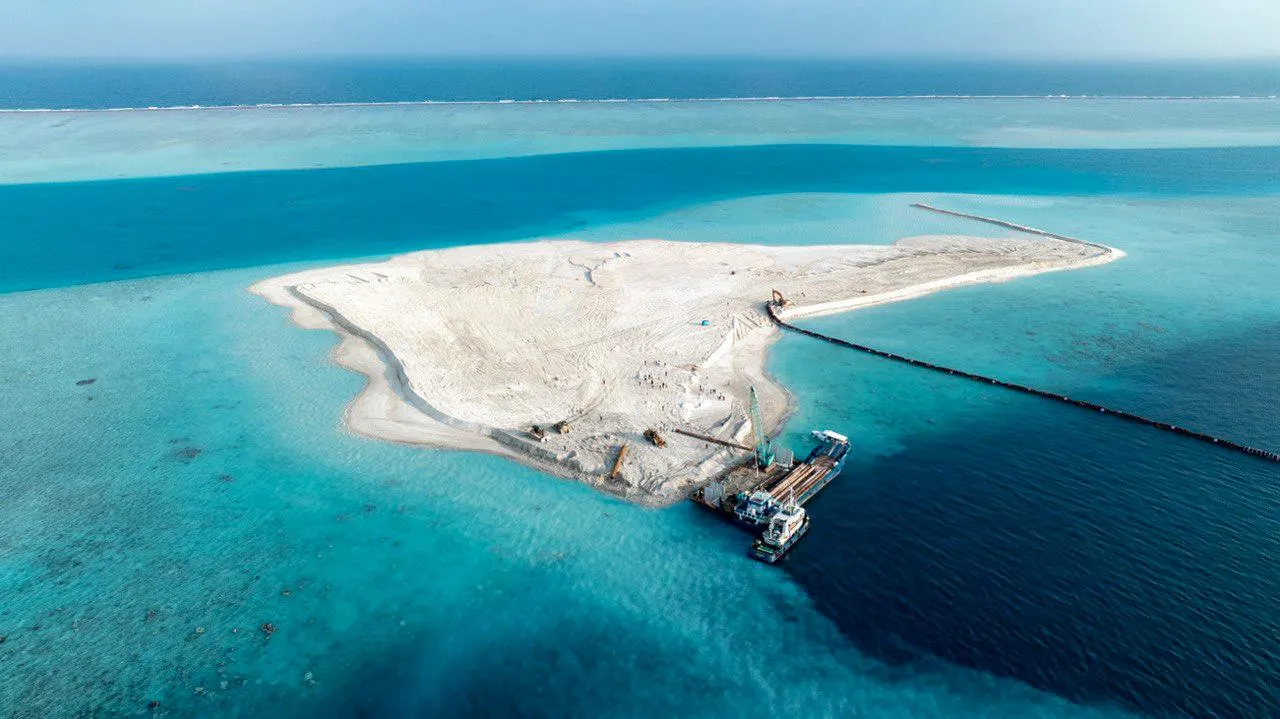
The board of the Housing Development Corporation (HDC) has agreed to recognise a US$9.4 million claim from the Chinese contractor CRCC Harbour & Channel Engineering for work done at Ras Malé before its contract was terminated, according to reports in August 2026. An independent assessment commissioned by HDC had valued the same work at US$6.7 million, US$2.7 million less.
In short ⌄
- HDC's board decided to recognise a US$9.4 million claim from CRCC Harbour & Channel Engineering for work done before its Ras Malé contract was terminated in July 2025.
- An independent assessment by Epoch Associates, commissioned by HDC, had valued the work at US$6.7 million.
- CRCC received a US$13.2 million advance. After deducting the claim, US$3.8 million remains, and the board decided not to recover it for now.
- The details came from a leaked report. HDC hadn't commented at the time of the original reports in August 2026.
The decision, first reported by the local outlet Dhauru and then by Atoll Times and the Maldives Independent, is based on a leaked copy of the assessment. Sources cited by Dhauru confirmed that the report was genuine. HDC hadn't responded to requests for comment at the time.
The contract
CRCC Harbour & Channel Engineering, part of the China Railway Construction Corporation group, was awarded a contract in July 2024 to reclaim 352 hectares across five sites at Ras Malé within 18 months. The contract was worth US$265.5 million (about MVR 4.1 billion).
Before work began, HDC paid CRCC an advance of US$13.2 million, or 5% of the contract value. In July 2025, a year into the contract, HDC terminated the agreement because the reclamation hadn't progressed as the contract required. CRCC then claimed US$9.4 million (about MVR 145.2 million) for work it said it had completed.
Our guide to the contractors who have built Ras Malé sets this contract in the context of the others on the project.
Timeline
- July 2024: HDC awards CRCC Harbour & Channel Engineering a US$265.5 million contract to reclaim 352 hectares across five sites in 18 months, and pays a US$13.2 million advance.
- July 2025: HDC terminates the contract, saying the work hadn't progressed as required. CRCC claims US$9.4 million for work done.
- Around January 2026: the original 18-month deadline would have fallen due, had the contract continued. By then, other contractors and larger dredgers were working on the sites.
- 2025 to 2026: Epoch Associates assesses the work and values it at US$6.7 million.
- Early August 2026: the HDC board accepts CRCC's figure, and the assessment is leaked on social media.
What the independent assessment found
HDC commissioned the consultancy Epoch Associates to value what CRCC had actually done. According to the reports:
- The assessment valued the completed work at US$6.7 million (about MVR 104.7 million).
- The Maldives Independent, citing the leaked report, said the evaluation found CRCC had completed about 3% of the project, and had not finished any contracted line item.
- CRCC's largest single claim, US$2.6 million for coral relocation, couldn't be verified, because the evaluation found no record of where the coral had been moved.
- The evaluation valued the part of the work that the next contractor could actually use at under US$1 million.
The leaked report was first published by the whistleblower account Hassan Kurusee on X.
What the board decided
At a meeting in early August, the HDC board chose to accept CRCC's own figure of US$9.4 million rather than the consultant's lower valuation. That leaves the advance and the claim looking like this:
- Advance paid to CRCC: US$13.2 million
- Claim accepted by the board: US$9.4 million
- Balance of the advance still with CRCC: US$3.8 million
According to Atoll Times, the board decided not to recover the US$3.8 million for now, and to decide later how it would be used. One option being considered is to apply it to another HDC project involving CRCC. A source said the board was leaning that way, but no formal decision had been made.
Had the board used the independent valuation instead, the balance owed back to HDC would have been about US$6.5 million.
How advances usually work
Advance payments are normal in large construction and dredging contracts. A contractor has to mobilise ships, crews, pipes and equipment before any land appears, and an advance helps pay for that. Because the client is paying before it receives anything, the advance is usually treated as a loan against future work: it is deducted, bit by bit, from the contractor's later invoices.
When a contract ends early, the question is how much of the advance the contractor has earned. That is what the independent valuation was for. The difference between the two figures here is not small. On CRCC's figure, it has earned about 71% of its advance. On the consultant's figure, it has earned about 51%. And on the consultant's narrower measure of work the next contractor could actually use, it has earned well under a tenth.
In international contracts, an advance is often backed by a bank guarantee, so that the client can recover it if the contractor fails to perform. The reports don't say whether HDC held such a guarantee for CRCC's advance, or whether it tried to call on one.
Who HDC is
HDC is a state-owned company that began as the body developing Hulhumalé, the reclaimed city next to the airport. According to its annual reports, it was formed by presidential decree in 2009, building on earlier Hulhumalé development bodies set up in 2001 and 2005. In 2020 it merged with Greater Malé Industrial Zone Limited, which brought Thilafushi and Gulhifalhu under the same company.
Today HDC's portfolio includes Hulhumalé, Gulhifalhu, Thilafushi, the Kudagiri picnic island and Ras Malé. It owns the job of making Ras Malé's land: it hires the dredging contractors, pays them and manages the contracts. That is why decisions by its board have a direct effect on what the new city costs.
Why the decision has been questioned
Sources within HDC questioned the decision. One told Dhauru that the independent figure should be the most the company is paid, even on the most generous view, and that the company hadn't done much work.
The concern is about public money. HDC is a state-owned company, and the reclamation of Ras Malé is being paid for through HDC, including through a loan whose size hasn't been disclosed. Every dollar paid for work that wasn't done, or couldn't be used, adds to the cost of the land that will eventually be allocated to families and to the Eagle Hills waterfront. Our explainer on who pays for Ras Malé sets out what is known about the financing.
How it compares with other contracts
CRCC's contract isn't the first at Ras Malé to end in a dispute over money:
- CMC and Site J. The Sri Lankan contractor CMC's contract was cancelled in May 2024 over delays. CMC had reclaimed about 29 hectares at Site J. Reports in 2025 said HDC agreed to pay about US$21 million, in instalments. The government described this as payment for completed work rather than compensation, and CMC said the payments were only for work done under revised terms, including shore protection at Site J.
- MTCC and CMCC. In June 2025, the Civil Court ordered CMCC to pay the state-owned MTCC about US$1.6 million (MVR 24 million) for dredging 10 hectares at Ras Malé as a subcontractor. CMCC had acknowledged the debt but said it was waiting for HDC to pay it.
The Maldives Independent made a pointed comparison: HDC spent about US$21 million to complete all the work at Site J, while CRCC's terminated contract, covering five sites, produced work valued at a few million dollars after a US$13.2 million advance.
What it means for Ras Malé's progress
CRCC's contract ended during a slow period for the project. The work picked up after larger dredgers arrived later in 2025, and the government said in September 2026 that about 70% of the land had been reclaimed, with the rest due by the end of 2026. Our guide to the dredgers explains how the change of ships sped things up, and our progress tracker follows the official figures.
The CRCC decision doesn't change those figures. It affects what the project has cost, not how much land exists.
Unanswered questions
- Why did the board reject its own consultant's valuation? No explanation has been published.
- What happens to the US$3.8 million? Using it on another CRCC project would mean the money is never returned to HDC in cash.
- Was the coral relocation done? The assessment couldn't find a record of where coral was moved. Coral relocation is a standard condition of reclamation permits, so this has environmental as well as financial implications. See our report on Ras Malé's environmental impact.
- Will the Auditor General or Anti-Corruption Commission look at it? No investigation had been announced at the time of reporting.
We'll update this report if HDC publishes a statement or the board's decision is reviewed. For more on HDC itself, see our guide to who's who in Ras Malé.
Questions people ask
How much has HDC agreed to pay CRCC for Ras Malé? ⌄
What did the independent assessment say? ⌄
Why was CRCC's contract terminated? ⌄
Sources
- HDC board accepts CRCC's $9.4 million Rasmale work claim despite lower valuation · Atoll Times, 2026-08-11
- Record dollar rate, Rasmalé advance and widened search (news in brief) · Maldives Independent, 2026-08-10
- CMC decides not to go to arbitration after USD 21 million settlement deal · Adhadhu
- CMC denies settlement claim allegations · The Edition
- Court orders CMCC to pay MVR 24M to MTCC for Rasmale dredging · Atoll Times, 2025-06-19
- Annual Report 2018 · Housing Development Corporation
- About HDC · Housing Development Corporation