News
Single Country Limited to 25% of Ras Malé Waterfront Homes, President Says
Citizens of any single foreign country will be able to buy no more than 25% of the properties in the Eagle Hills waterfront in Ras Malé, President Mohamed Muizzu has said. Israeli citizens will be barred altogether, and the rules are to be written into a Real Estate Bill.
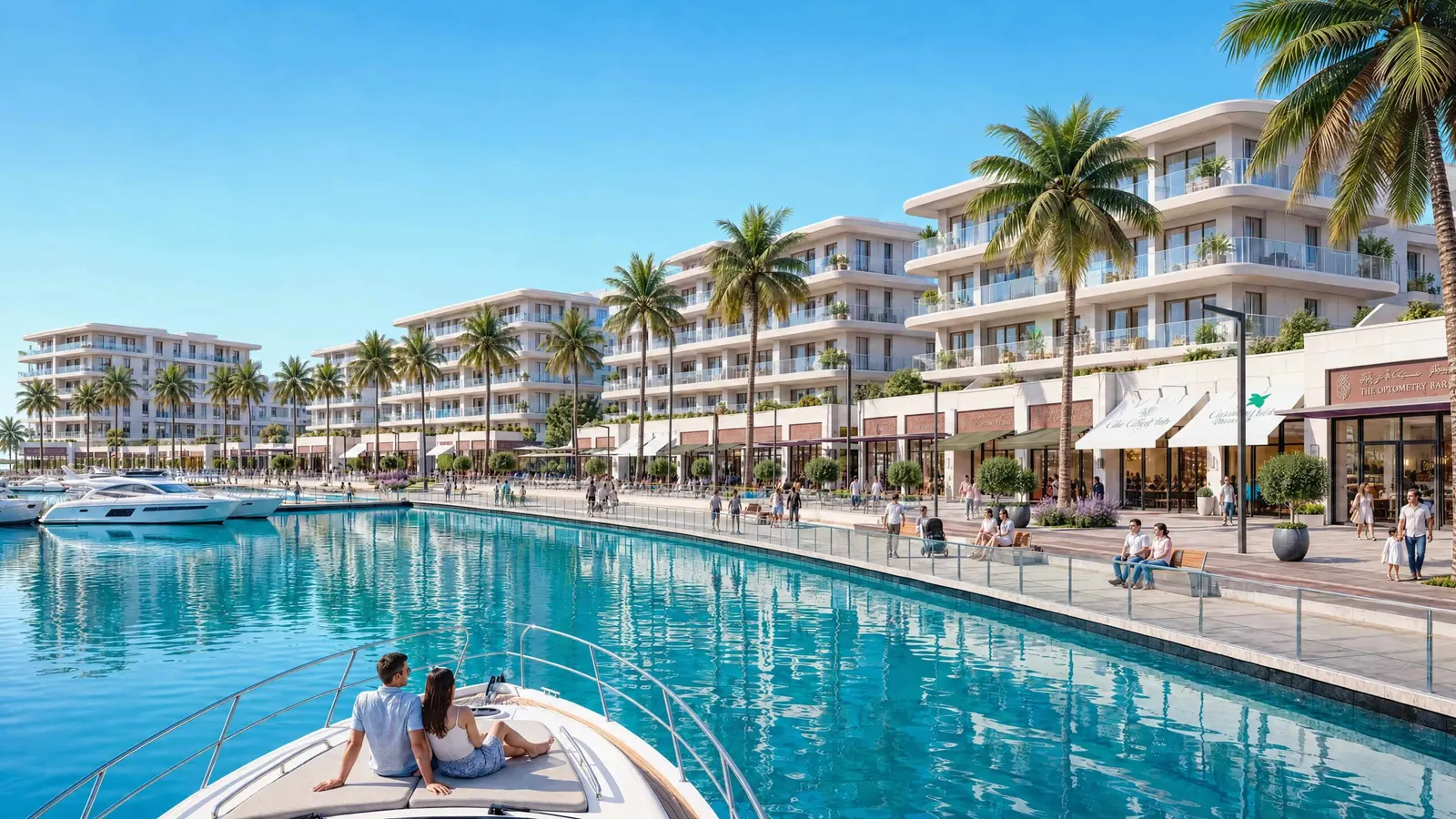
Citizens of any single foreign country will be able to buy no more than 25% of the properties in the planned Eagle Hills waterfront in Ras Malé, President Mohamed Muizzu has said. Speaking on the President's Office podcast The Pulse, in remarks reported on 20 October 2026, he also said Israeli citizens would be barred by law from owning property there, and that the rules would be written into a Real Estate Bill to be sent to Parliament.
In short ⌄
- On 20 October 2026, President Mohamed Muizzu said buyers from any one foreign country will be limited to 25% of the properties in the Eagle Hills waterfront in Ras Malé.
- There will be no limit on Maldivian buyers. Israeli citizens will be barred by law from owning property there.
- The rules are to be set out in a Real Estate Bill, which the government says it will send to Parliament soon.
- Properties will be sold on 99-year terms, after which they return to the state. The President said there is no automatic renewal.
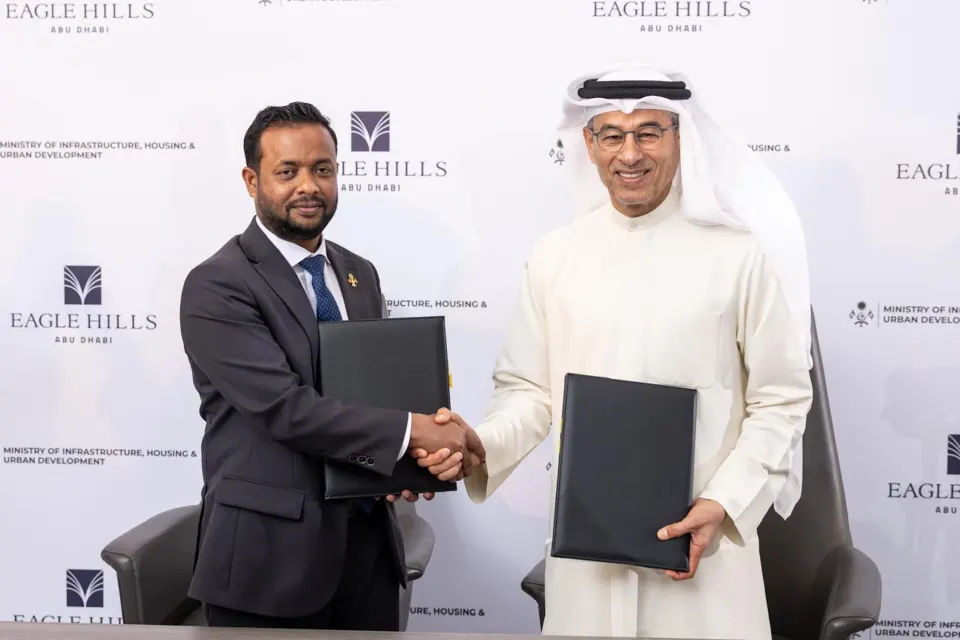
It was the President's first detailed public response to weeks of opposition criticism of the deal, which the government signed with the Abu Dhabi developer on 21 September. For the deal itself, see our Eagle Hills deal explainer.
What the President said
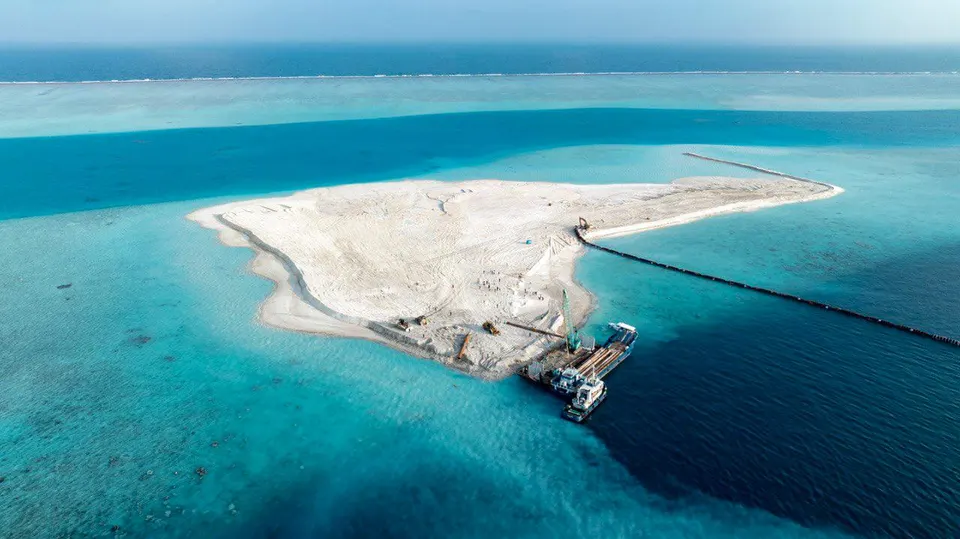
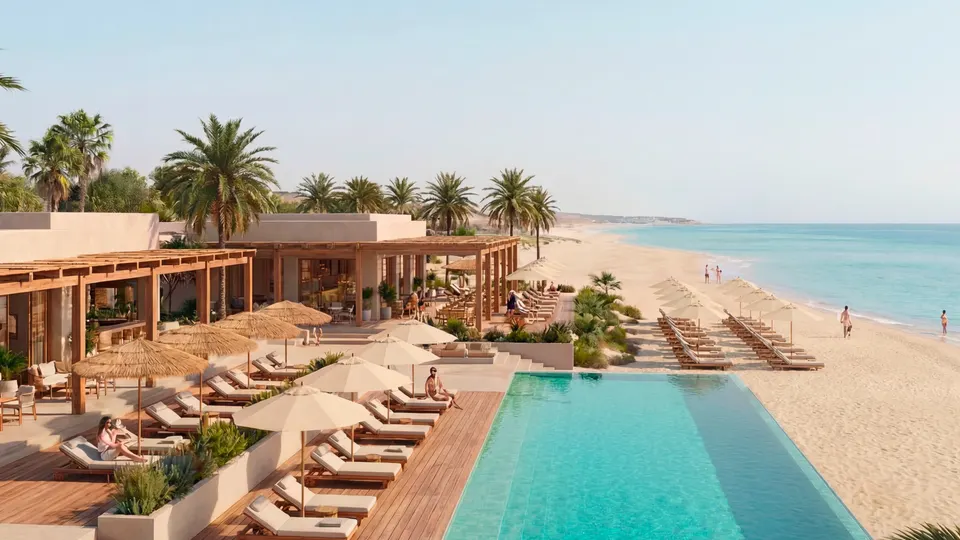
According to reports of the interview in The Edition, the President made these points about who can buy in the Maldives Waterfront and Marina, the district Eagle Hills is to build on about 500 hectares of Ras Malé:
- A 25% cap per country. If foreigners buy, "the maximum a specific country can receive is 25 percent" of the properties.
- No limit for Maldivians. He said there would be no cap on how much Maldivians can buy.
- No Israeli buyers. He said it would be "strictly prohibited by law" for Israeli citizens to obtain property there, and called claims to the contrary baseless. He pointed out that his government had already banned entry to the Maldives on Israeli passports.
- The rules will be in law. The limits are to be set out in a Real Estate Bill, which he said would go to Parliament with these protections visible.
- Most interest is from the Gulf. He said almost all buyer interest so far has come from Gulf and other Middle Eastern countries.
He also gave an indication of price, saying a property of about 1,000 square feet would cost around US$600,000 (roughly MVR 9.2 million), and that many middle-class and upper-middle-class Maldivians could afford that. No price list has been published, and the figure was given as an example, not a fixed price.
What happens when the 99 years end
The President also set out how ownership in the waterfront will work. Buyers will get properties for 99 years. When that period ends, the property goes back to the state, and the state takes full control. He said there would be no automatic renewal, and that owners could not sell to someone else without the government's knowledge.
He compared this to resort islands, which are also leased for long periods. There, the state can take an island back by paying the costs incurred, or it can extend the lease.
The 99-year limit comes from the constitution. Article 251 says no part of the Maldives can be sold to foreigners, though land can be leased for up to 99 years. Our guide to how 99-year leases work explains the background.
Law, religion and policing in the waterfront
Some of the criticism of the project has focused on whether foreign residents will live under different rules. The President rejected that. He said:
- the Maldivian constitution and laws will apply in Ras Malé, as everywhere else in the country;
- Islam is the only religion that can be practised there, and the only places for public prayer will be mosques;
- there will be no school inside the project area;
- a police station run by the Maldives Police Service will be built there.
A few days earlier, on 17 October, Homeland Security Minister Ali Ihusaan had urged people not to spread false information about the project. He was responding to a social media post that objected to Eagle Hills chairman Mohamed Alabbar's security team having authority in the area. Ihusaan said Maldivian law enforcement would hold full legal power across the country, including Ras Malé.
Where the money goes
The President repeated several points the government has made since the signing:
- 5,000 homes for the state. The government expects Eagle Hills to build about 5,000 housing units, worth around US$500 million (MVR 7.7 billion), for the state before physical work on the waterfront starts. Earlier reporting placed these homes in Hulhumalé.
- An escrow account. Money from property sales is to go into a government-controlled escrow account in the Maldives. The government says this will help ease the shortage of US dollars and strengthen the central bank's reserves.
- No tax breaks. The agreement gives no duty or tax concessions under the Special Economic Zones Act or the Tourism Act, so the state will collect tourism GST and other taxes in full.
A week earlier, Finance Minister Hassan Zareer had said the project would bring the state more than US$11 billion over its 10-year development period. We cover that estimate in a separate report.
Why the 25% cap matters
Caps on foreign buyers are used in several countries to stop one group of investors from dominating a development or a housing market. In the Maldives, the debate has a particular edge, because the waterfront would bring a large number of foreign owners into a district close to the capital for the first time.
Several points are still unclear from what has been said so far:
- 25% of what? The reports say 25% of properties. It isn't yet clear whether that means the number of units, their floor area or their value, or whether it applies to each phase or to the whole project.
- How nationality is counted. Buyers with dual nationality, and buyers who purchase through companies, would need clear rules.
- Resales. The President said owners can't sell without the government's knowledge. The bill would need to say how the cap applies when a property changes hands, and what the state's role is.
- What the 99 years mean in practice. In a separate legal challenge, the lawyer Ali Hussain has argued that a clause allowing transfers to third parties could effectively renew the 99-year term each time a property is sold. The President's statement that there is no automatic renewal is the government's answer to that concern, but the wording of the final agreement and the bill will decide it.
We'll update this report when the Real Estate Bill is published.
The political background
The deal has divided opinion since it was signed. Former President Ibrahim Mohamed Solih told the Maldivian Democratic Party's congress that a deal made in secret should not go ahead. Former President Mohamed Nasheed has called for the agreement to be published and suggested the project could be moved to Addu City. Former President Abdulla Yameen has called for it to be scrapped by the next government.
A constitutional case seeking to void the agreement was turned away by the Supreme Court registrar on procedural grounds, without a ruling on the substance. Our report on the Supreme Court case has the details.
The government says the project is being carried out within the law and will benefit Maldivians. In the podcast, the President accused the opposition of distorting the facts for political gain.
What it means for Maldivian buyers
For Maldivians, the main point is that there will be no cap on how much they can buy in the waterfront. That doesn't mean the waterfront will be affordable for most families. At the example price the President gave, a 1,000-square-foot home would cost around MVR 9.2 million, far above what most households in Greater Malé could borrow. The government's main housing offer in Ras Malé remains the land plots and flats under the Housing for All scheme, which are separate from the waterfront. Our guide to housing in Ras Malé explains those schemes.
The President has said that half of the 500-hectare waterfront area is reserved for Maldivians, and that the Eagle Hills project won't affect the government's housing plans. How that reservation will work hasn't been set out in detail.
What to watch next
- The Real Estate Bill. Its text will show exactly how the cap, the Israeli ban, resales and the 99-year term are written into law.
- The main agreement. What was signed in September is a commercial terms agreement. The full agreement, including the investment schedule and penalties if work isn't completed, is still to come.
- Parliament. The governing party has a large majority, so the bill is likely to pass, but the debate will be the first public test of the details.
- Sales. No sales launch has been announced. Before buying anything off-plan, check the final law and the contract terms.
For an overview of the developer, read who Eagle Hills is, and for what buyers can and can't own, see our guide to buying property in Ras Malé.
Questions people ask
How much of the Ras Malé waterfront can foreigners buy? ⌄
Can Maldivians buy property in the Eagle Hills waterfront? ⌄
Will buyers own their property outright? ⌄
When will the rules become law? ⌄
Sources
- Citizens of a country can own up to 25% property in Rasmale' · The Edition, 2026-10-20
- Law will stop Israelis from obtaining land in Rasmale': Pres · The Edition, 2026-10-20
- Maldivian gov will fully control the RasMalé project: Pres · The Edition, 2026-10-20
- Minister Ali Ihusaan urges public not to spread false information about the Rasmale' project · MV+, 2026-10-17
- Rasmale' agreement should not be allowed under MDP: Solih · The Edition, 2026-10-02
- Supreme Court rejects case seeking to void Eagle Hills deal · The Edition, 2026-10-13