Progress
The Ras Malé Master Plan: What We Know About the City's Design
Ras Malé's land is nearly finished, but the plan for what goes on it isn't. Here is what the government's brief for the master plan asks for, from 300,000 residents and 100% renewable energy to walkable streets, and where the tender has got to.
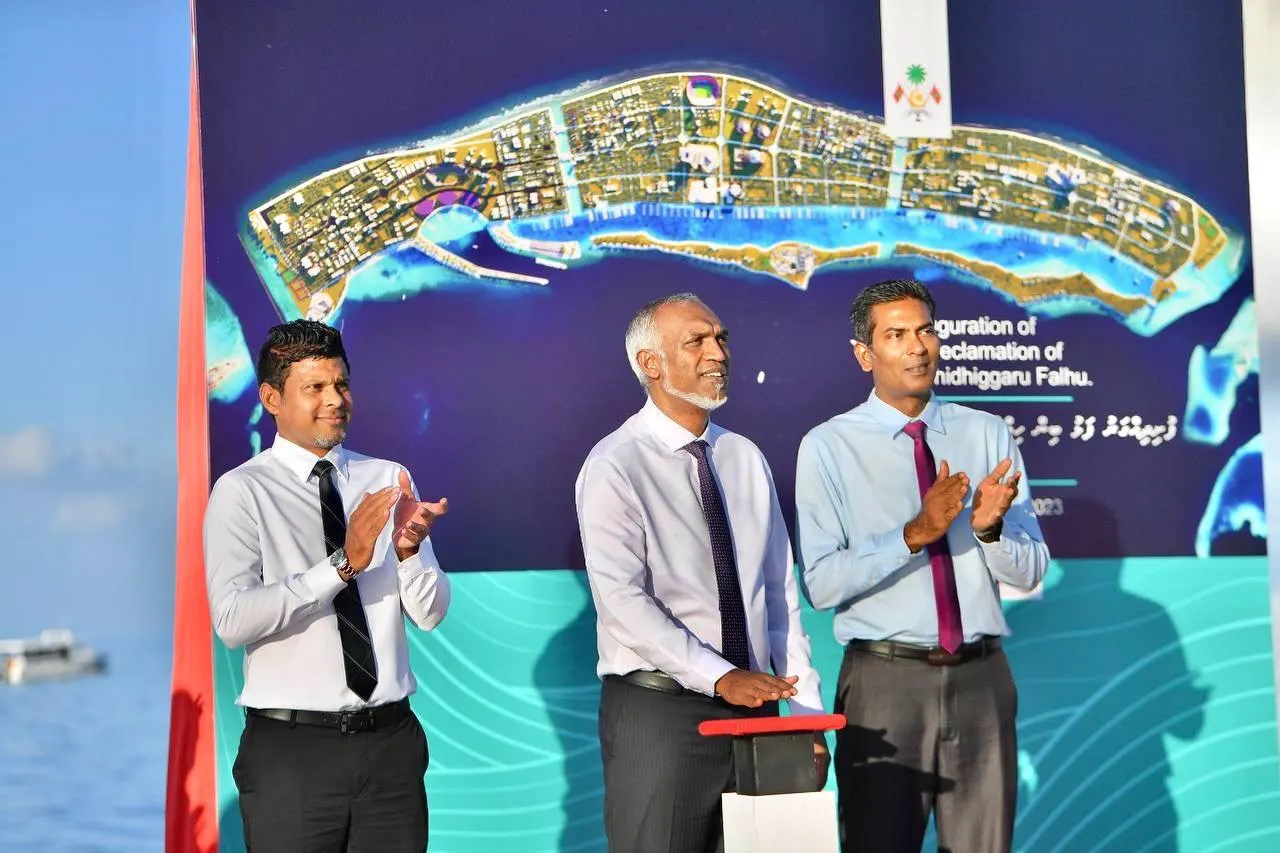
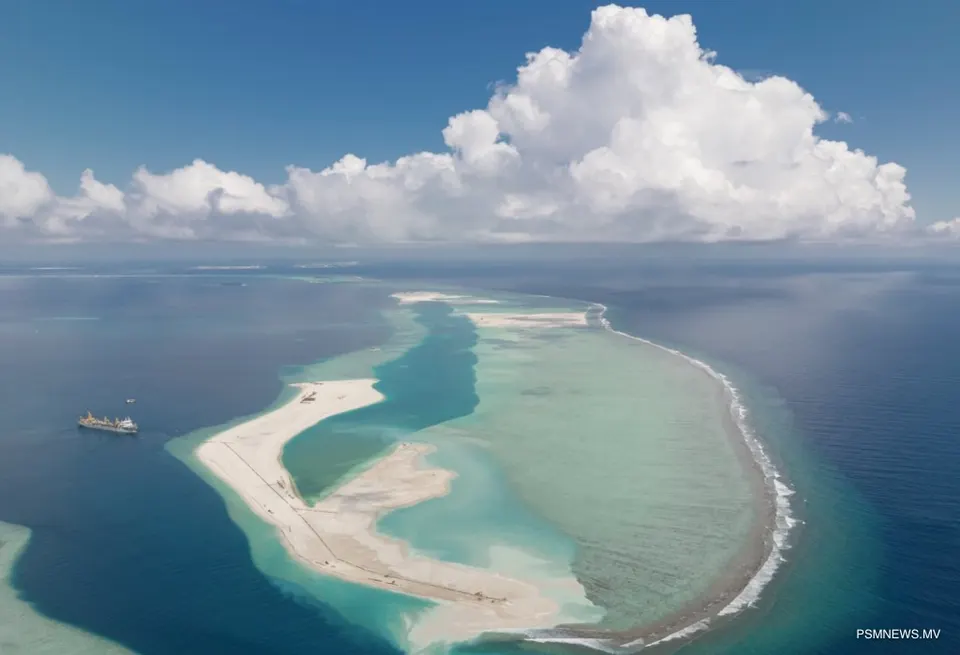
Ras Malé's land is being finished, but the plan for what will be built on it hasn't been published. That plan, known as the master plan, will decide where homes, roads, schools, parks, power plants and the Eagle Hills waterfront go, and how dense and green the new city will be. This guide sets out what the government has asked for, where the process has got to, and why it matters.
In short ⌄
- No master plan for Ras Malé has been published. A government brief from October 2025 sets out what the plan must deliver.
- The brief's targets: over 300,000 residents within 20 years, a city running only on renewable energy, carbon-neutral transport and resilience to climate risks.
- The first brief scheduled a final plan by June 2026. In June 2026 the housing ministry opened a new tender for a master plan consultancy, with bids due on 13 July.
- The plan will decide where housing, the Eagle Hills waterfront, schools, parks and utilities go.
For the land itself, see our progress tracker. For the city's green promises, see Ras Malé's eco-city plans.
What a master plan is
A master plan is the overall design for a city or district. It sets out:
- a land use plan, showing what each area is for: housing, shops and offices, schools and clinics, industry, parks and conservation;
- zoning rules, such as how tall buildings can be and how many homes can go on each plot;
- the street and transport network;
- the utilities: power, water, sewerage, waste and communications;
- a phasing plan, saying what gets built first and how it will be paid for.
In the Maldives, master plans and land use plans for new land are prepared under the Urban Development Act and the Physical Planning Act, both passed in 2024.
The brief: what the government asked for
In October 2025, the Ministry of Finance and Planning published terms of reference for a consultancy to prepare the Ras Malé master plan. The document describes the project as a new island of about 1,150 hectares in Fushidhiggaru lagoon, intended to be a net-zero, carbon-free and fully sustainable city. It sets four headline aims:
- Population: accommodate over 300,000 residents within the next 20 years.
- Energy: operate exclusively on renewable energy.
- Transport: achieve carbon-neutral mobility within the island.
- Resilience: strengthen resilience to climate change and disasters, for long-term liveability and security.
It asks for a leading international urban planning and design firm with experience of large-scale, net-zero master planning, and says the plan should work as a model for climate-adaptive island planning.
What the plan must include
The terms of reference set out a long list of work. The main parts are:
Baseline studies
Reviewing the reclamation reports and environmental assessments; analysing population growth, migration, housing demand and jobs; mapping climate risks, including sea level rise, storm surges, flooding and erosion; assessing what energy, water, wastewater, waste, transport and communications capacity is needed; and carrying out topographic, geotechnical, hydrological, traffic and marine surveys.
Land use and zoning
A land use plan for the whole island, covering residential, commercial, civic, industrial, cultural and recreational zones; space for schools, healthcare, sports and civic centres; and conservation areas, ecological buffers and resilience zones. The brief explicitly asks for compact, mixed-use, high-density development, with zoning rules, density limits, height controls and design guidelines that include climate standards.
Detailed design
Neighbourhoods and central hubs; detailed designs for key areas such as civic squares and waterfronts; a green and blue infrastructure plan with mangrove buffers, wetlands, lagoons and coastal protection; a transport plan prioritising electric public transport, walking and cycling, with less dependence on cars; renewable energy grids and smart water and waste systems; accessible public spaces; and smart-city technology, including a digital model of the city.
Money and phasing
Feasibility studies, an economic impact analysis covering jobs and investment, cost estimates for each phase, recommended financing models including public-private partnerships, and a phased roadmap for developing the land.
Consultation
A stakeholder engagement plan, involving government agencies, local authorities, communities, NGOs, businesses and development partners.
The rules it must follow
The brief lists the laws the plan has to comply with, including the Urban Development Act (No. 28/2024), the Physical Planning Act (No. 16/2024), the Environmental Protection and Preservation Act and the Construction Act. It also says any coastal protection, waterfront or marine works must be designed to minimise disruption to marine ecosystems, navigation and connections between islands.
The consultant is to hand over everything in standard formats, including GIS maps, CAD drawings and high-resolution 3D models, and the Government of Maldives will own all the data and intellectual property. That should make it possible to publish detailed maps once the plan is approved.
A comparison: Hulhumalé's plan
Hulhumalé shows how a master plan can change over time. The reclaimed city next to the airport was first planned in the late 1990s. Its revised master plan, adopted in May 2025, now targets 100,000 people in Phase 1 and 250,000 in Phase 2, far more than it had at the 2022 census, when 65,714 people lived there. That revised plan gives a useful benchmark. It allocates about 31% of the land to green space, sports and recreation, about 30% to housing, 10% to community uses, and smaller shares to industry, commerce and offices, and it aims to put schools, mosques and offices within a five-minute walk of each neighbourhood. HDC also invited public comments on it through an online portal. Ras Malé's plan is likely to be revised too, as the city fills up and needs change. The first version will still set the basic layout of streets, plots and public spaces, which is very hard to change later.
The timetable that slipped
The October 2025 brief set out a fast schedule. It expected monthly progress reports from November 2025, a baseline report by December 2025, a draft land use and master plan by February 2026, feasibility and economic studies by March, a stakeholder engagement report by April, and a final master plan by June 2026.
That plan hasn't appeared. Instead, on 30 June 2026, the Ministry of Housing, Land and Urban Development announced a tender for a consultancy to prepare the Ras Malé master plan, with bids to be opened on 13 July 2026. Bidders had to provide a bid security of MVR 250,000 and three years of financial statements. We haven't found a published award since.
The reports don't explain why the process restarted. It is possible the first tender didn't produce a contract, or that the scope changed. The Eagle Hills deal, signed in September 2026, will also have changed the picture, since it covers about 500 hectares of the island.
The transport plan is separate
How people will get between Malé and Ras Malé is being studied separately. In December 2025, the finance ministry invited consultants to prepare a Ras Malé transport master plan and feasibility study, covering links to the capital and transport within the city. Ferries, an undersea tunnel and an airstrip have all been suggested. See our report on the transport master plan.
How the Eagle Hills deal fits in
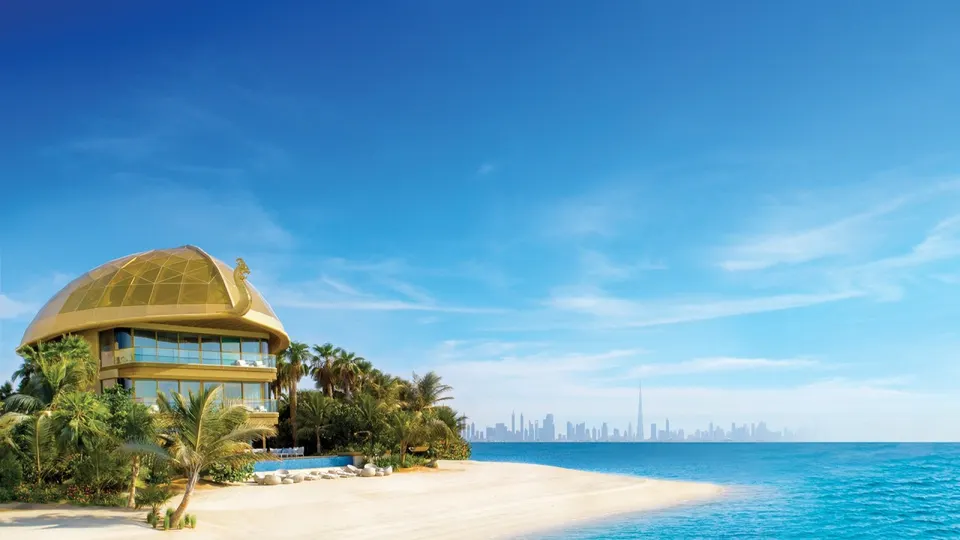
The Eagle Hills waterfront and marina will take up about 500 hectares, roughly half of Ras Malé. Eagle Hills will design its own district, with hotels, branded residences, a marina, shops and public spaces. The master plan for the rest of the island will have to fit around it, and decide how the two parts connect.
The President has said that half of the 500-hectare waterfront area is reserved for Maldivians, and that the Eagle Hills project won't affect the government's housing plans. How that works on a map is one of the things the master plan will have to show. See our Eagle Hills deal explainer.
Why it matters to families
For families waiting for Ras Malé plots under Housing for All, the master plan isn't an abstract document. It decides:
- where the plots are, and what is next to them;
- how far it is to a school, a clinic, a mosque, a park and a shop;
- how people get around, and how they get to work in Malé;
- what you can build on a plot, including height limits and design rules;
- when your area gets roads and utilities, through the phasing plan.
Plots can't be handed over until the land is ready and laid out. A published land use plan will be the clearest sign that handovers are getting close. Our guide to housing in Ras Malé explains the allocation process, and our guide to building a house on a Ras Malé plot covers loans and permits.
The questions it will have to answer
- Density. The brief asks for compact, high-density development. How high will buildings go, and how much open space will there be?
- Population. Official figures range from about 150,000 to more than 300,000 people. The plan will have to settle on a number and design for it.
- Energy. Running a city of that size only on renewable energy, on an island with little space for solar panels, is a big engineering challenge.
- Traffic. Malé is known for congestion. Can Ras Malé really be built around electric public transport, walking and cycling?
- Climate. The land is being raised to about 2 metres at the edges and 3 metres at the centre. The plan will set out drainage, coastal protection and green buffers on top of that.
We'll publish a full summary when the master plan is released. Until then, everything about Ras Malé's layout remains a set of goals rather than a design.
Questions people ask
Has the Ras Malé master plan been published? ⌄
How many people is Ras Malé being planned for? ⌄
Will Ras Malé run on renewable energy? ⌄
Who is preparing the master plan? ⌄
Sources
- Consultancy Services for the Preparation of Rasmale' Master Plan: Terms of Reference · Ministry of Finance and Planning, 2025-10
- Rasmale' masterplan consultancy opened for bidding · Maldives Ledger, 2026-06-30
- Rasmale' Transport Master Plan: request for expressions of interest · Government Gazette, 2025-12-08
- HDC's 'The Rasmale' Eco City Project': building a sustainable, inclusive future · Maldives Financial Review
- Eagle Hills project will not affect housing plans: President · The Edition, 2026-09-26
- Rasmalé · Housing Development Corporation
- Eagle Hills signs $12 billion Maldives waterfront deal · Gulf News, 2026-09-22
- HDC unveils revised Hulhumalé masterplan · The Edition, 2025-05-26