Guides & FAQ
Fushidhiggaru Lagoon: The Place Becoming Ras Malé
Before it was Ras Malé, it was Fushidhiggaru Falhu: a shallow lagoon near Gulhi, used by bait fishermen and divers, and once leased for a tourism zone that never happened. Here is the story of the lagoon, and what turning it into land has meant.
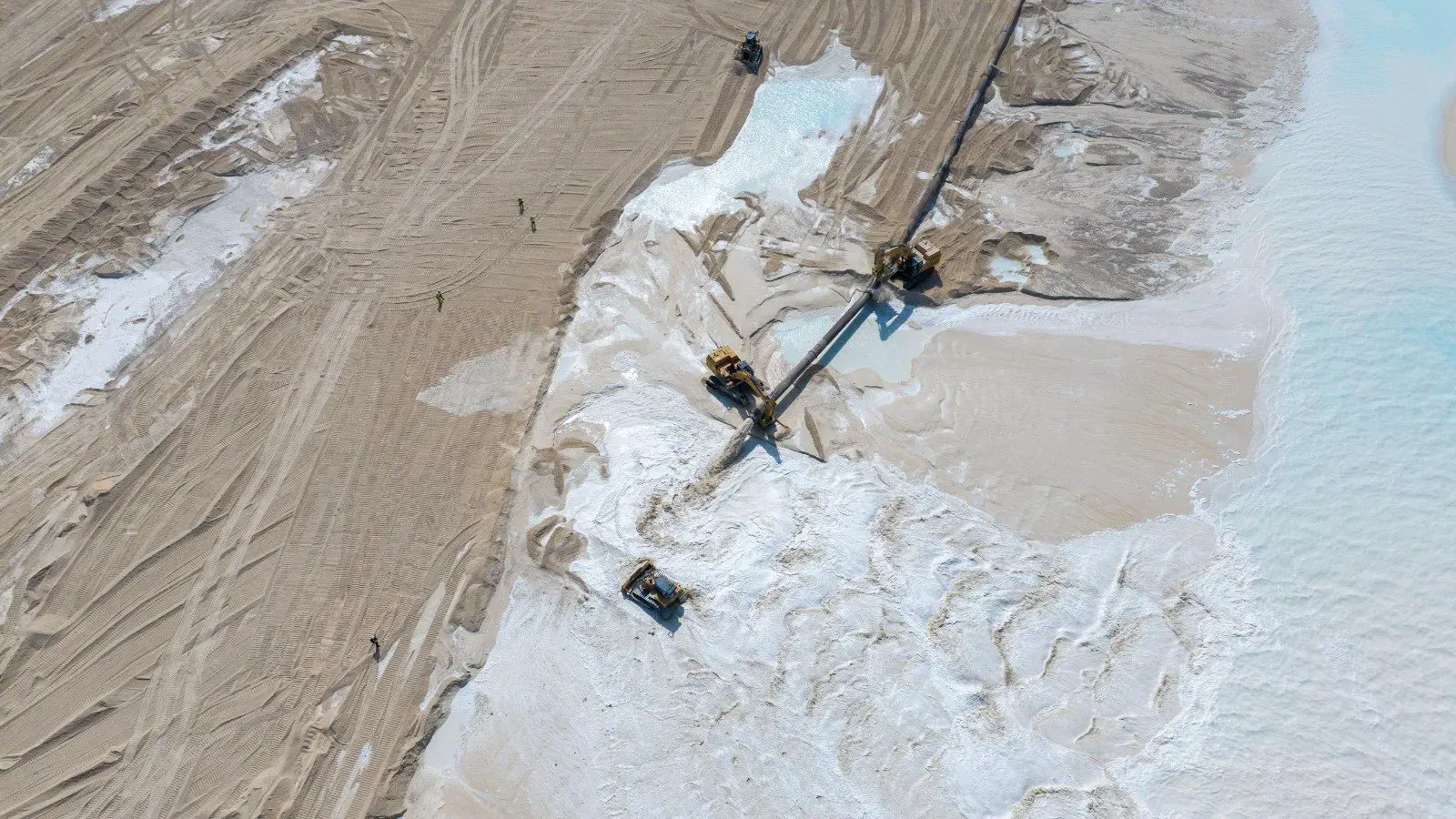
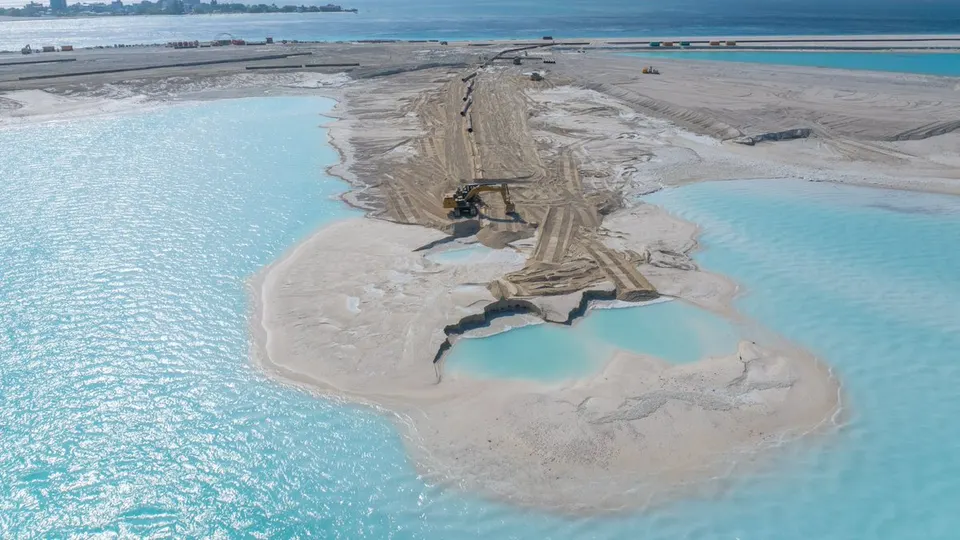
Ras Malé didn't start from nothing. Before the dredgers arrived, the site was Fushidhiggaru Falhu, a wide, shallow lagoon in South Malé Atoll. It was a place where fishermen caught bait, where divers went looking for sharks, and where, a decade earlier, a tourism zone had been planned and then fought over in court. This guide tells the lagoon's story, and what turning it into land has changed.
In short ⌄
- Fushidhiggaru lagoon (Fushidhiggaru Falhu) is a shallow lagoon of about 1,153 hectares in South Malé Atoll, near the island of Gulhi, about 17 minutes from Malé by speedboat.
- In 2013, the government signed a 50-year lease of the lagoon for a tourism zone. It led to a court case and corruption allegations, and the zone was never built.
- Reclamation for Ras Malé began on 18 December 2023. About 1,009 hectares of the lagoon are to become land, in 12 sites.
- Fishermen and divers say the dredging has clouded nearby waters and affected bait fishing grounds.
For the city being built there, start with What is Ras Malé?
Where it is
Fushidhiggaru lagoon lies south of Malé, in the northern part of South Malé Atoll, close to the inhabited island of Gulhi. Administratively, it is in Kaafu Atoll, the same atoll as the capital. When reclamation began in 2023, the lagoon was described as about a 17-minute speedboat ride from Malé.
Its neighbours include the local islands of Gulhi, Guraidhoo and Maafushi, each a short boat ride away. Our guide to local islands near Ras Malé covers them. For distances and links to the capital, see where Ras Malé is.
The neighbours
The closest inhabited island is Gulhi, about 20.6 kilometres south of Malé. It is small, roughly 400 metres long and 225 metres wide, and had 976 residents at the 2022 census. For a few years, it has had an unusual view: a new city rising out of the lagoon next door.
A little further south is Maafushi, the busiest local island for tourism in the country, with 4,471 people at the 2022 census. It is also connected to Ras Malé in another way. The Environment Protection Agency permitted dredging and sand collection for Ras Malé from two areas west of Maafushi, and from a third area near the Ithaafushi resort, under six-month permits. So the lagoon's transformation depends on sand taken from the seabed several kilometres away.
Guraidhoo, known for surfing and snorkelling, is also nearby, as are several resorts in South Malé Atoll. Divers, guesthouse owners and fishermen in all of these places have a stake in how the work is managed.
What a falhu is
Falhu is the Dhivehi word for a lagoon. In the Maldives, it usually means a shallow area of sand and coral enclosed by a reef, sometimes with a small island on it and sometimes with none. The country is made of these features: atolls are rings of reefs, and inside and along them sit thousands of reefs and lagoons, only some of which rise above the sea as islands.
A lagoon like Fushidhiggaru is attractive for reclamation for two reasons. It is shallow, so less sand is needed to raise it above sea level. And the surrounding reef acts as a natural breakwater, sheltering the new land from the open ocean. Those are the same reasons Hulhumalé was built on the lagoon next to the airport island. Our glossary of Ras Malé terms explains other Dhivehi words you'll see in the news.
How big it is
The lagoon covers about 1,153 hectares, according to HDC and press reports. Of that, about 1,009 hectares are planned to become land, divided into 12 sites labelled A to L. At the launch, the figure given was about 1,150 hectares, which Atoll Times described as roughly three times the combined area of Hulhumalé's two phases. The President has more recently described the finished area as about 1,100 hectares.
The differences come mostly from whether a figure describes the whole lagoon or only the land to be made. Our page Ras Malé in numbers sets out every published figure with its date and source.
Before Ras Malé: fishing and diving
Bait fishing
The Maldives' famous pole-and-line tuna fishery depends on live bait: small reef fish caught in shallow water and carried out to sea to attract tuna. Shallow lagoons inside the atolls are important bait grounds. A fisherman quoted by the Maldives Independent explained why: bait fish like shallow lagoons and gather there, but when sand is taken and the depth changes, they no longer use the area.
In early 2026, the Bodu Kanneli Masveringe Union, which represents fishermen, said reclamation had significantly affected the inner-atoll bait fishery, and asked the state to stop taking sand from prime bait fishing locations.
Diving
The Malé atolls are among the most dived waters in the country, because they are close to the airport. Dive operators have reported murkier water and fewer shark sightings at popular sites in the area as reclamation work has expanded, both at Ras Malé and at Hulhumalé. Our guide to day trips from Malé covers the dive and snorkel sites still visited from the capital.
The tourism zone that never happened
Fushidhiggaru was the subject of a political row long before Ras Malé.
On 18 January 2013, during President Mohamed Waheed's administration, the government signed an agreement to lease the lagoon for 50 years to a joint venture with a company called Prime Capital, to develop it as a special tourist zone. The government was to hold a 25% stake in the joint venture and, according to local media at the time, receive 30% of its profits.
The deal became public later that year, when leaked documents were published shortly before the September 2013 presidential election. It was alleged that the agreement had been signed without the Attorney General's advice or Cabinet approval. The ministers involved initially denied that any agreement existed. When the economic development ministry refused to register the joint venture, Prime Capital sued three ministries.
In July 2014, the Civil Court ruled in the company's favour, ordering the government to register the joint venture and sign a master lease. The company was registered the following month. In 2015, a former presidential adviser accused two ministers of corruption over the deal and said he had passed documents to the authorities.
No tourism zone was ever built. The reports we found don't say how or when the arrangement finally ended. The lagoon was still undeveloped when the current government chose it for Ras Malé.
Becoming Ras Malé
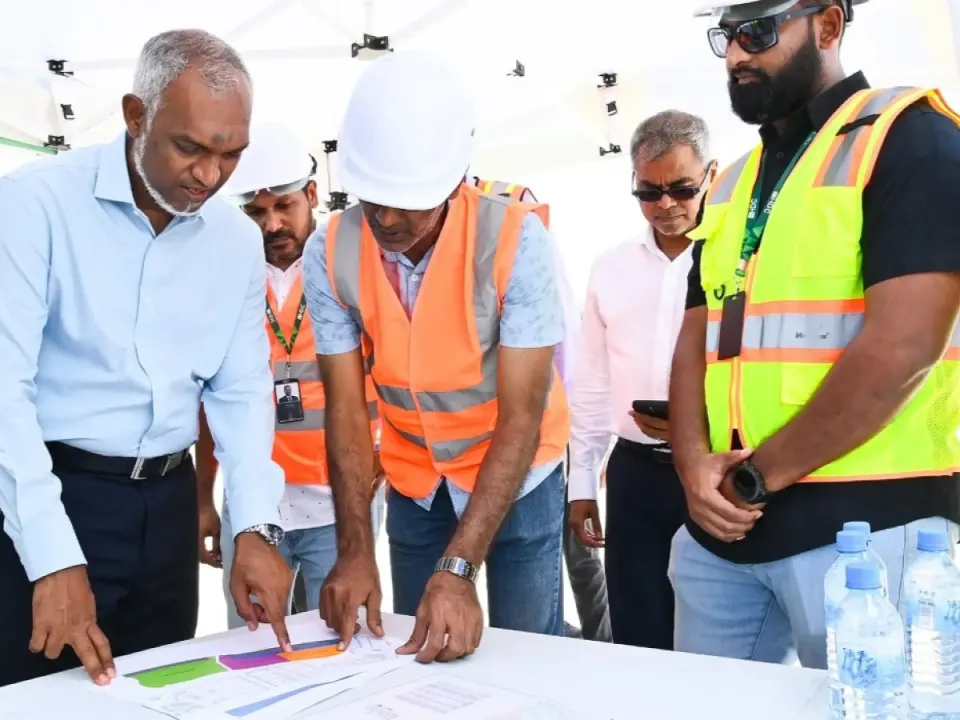
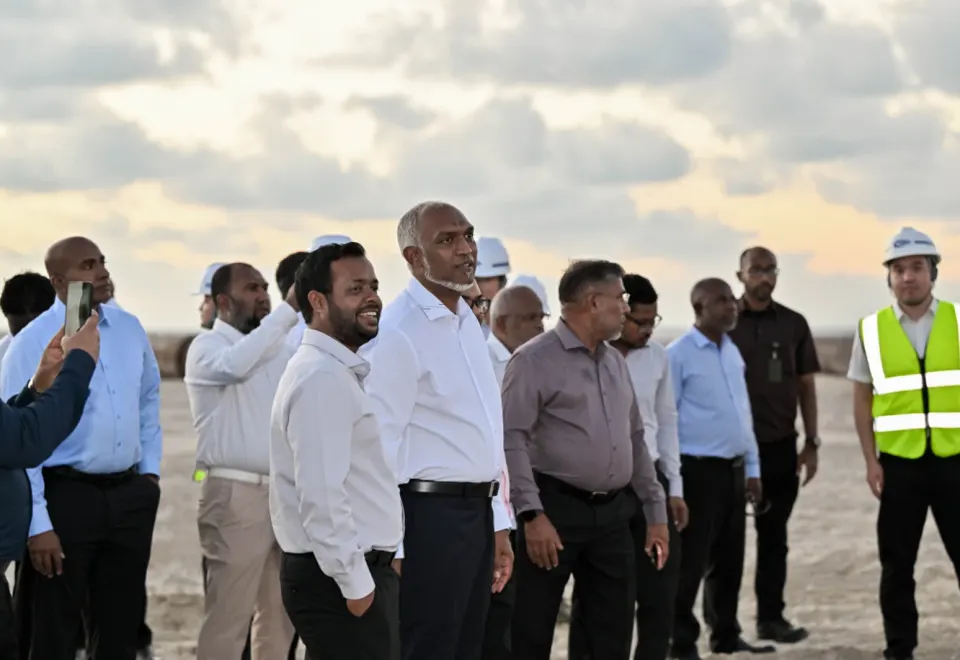
President Mohamed Muizzu launched the reclamation at Fushidhiggaru on 18 December 2023, as one of his first 100-day pledges. He called it a project that would "solve the housing problem in the city forever".
The first contract went to Sri Lanka's CMC, for 29 hectares at Site J. According to the environmental impact assessment reported at the time, that first stage was about 2.9% of the roughly 1,000 hectares the assessment covered, and each further section was to have its own environmental assessment before work could begin.
At the launch, the President pledged to finish the reclamation within eight months of starting. That target was missed by a wide margin. Progress was slow at first, with small dredgers and contractor changes. It sped up after very large trailing suction hopper dredgers arrived in late 2025. By September 2026, the President said about 70% of the land had been reclaimed. Our guides to the dredgers and the 12 sites explain how the work has moved.
What has changed
Turning a lagoon into land changes the water around it, not just the area that is filled.
- Sediment. Satellite images in January 2026 showed sediment plumes across large parts of South Malé Atoll, and campaigners reported sediment spreading about 10 kilometres from the work.
- Reefs. Reclamation buries the lagoon floor and can smother nearby coral. Environmental assessments in the Maldives have previously reported reef impacts up to 10 kilometres from reclamation sites.
- Sand sources. The sand has to come from somewhere. Dredging the seabed in the permitted areas near Maafushi and Ithaafushi changes the depth of those areas too, which is why bait fishermen are concerned about where it is taken from.
The government argues the trade-off is worth it, because the Maldives urgently needs high, safe land, and calls Ras Malé the country's largest climate adaptation project. Our report on Ras Malé's environmental impact sets out both sides.
What the lagoon will become
When reclamation is finished, Fushidhiggaru will be a city site raised about 2 metres above sea level at its edges and 3 metres at its centre. Plans include housing for Maldivian families, a waterfront and marina district to be developed by Eagle Hills on about 500 hectares, and links to Malé that are still being studied.
The name may survive in official documents, but for most people the lagoon is already becoming Ras Malé. For what is planned there, see our guides to housing in Ras Malé and the Eagle Hills deal.
Questions people ask
Where is Fushidhiggaru lagoon? ⌄
How big is Fushidhiggaru lagoon? ⌄
What was Fushidhiggaru used for before Ras Malé? ⌄
What does falhu mean? ⌄
Sources
- Fushidhiggaru reclamation begins; 'Ras Male an example to world' · Atoll Times, 2023-12-18
- Fushidhiggaru first phase covers 29 hectares: EIA report · Atoll Times, 2023-12-19
- Rasmalé · Housing Development Corporation
- President champions climate adaptation abroad as dredgers blanket atoll in sediment · Maldives Independent, 2026-02-12
- Fushidhiggaru lagoon (tag archive) · Minivan News Archive
- Reclamation, die-offs and a watchdog that rarely bites: a timeline of environmental damage · Maldives Independent
- Eagle Hills project will not affect housing plans: President · The Edition, 2026-09-26
- Reclamation begins in Maldives' Fushi Dhiggaru Lagoon · Baird Maritime
- EPA permits dredging for Rasmale' reclamation · PSM News
- Gulhi (Kaafu Atoll) · Wikipedia
- Maafushi (Kaafu Atoll) · Wikipedia