Progress
After the Dredging: Shore Protection, Roads, Power and Water for Ras Malé
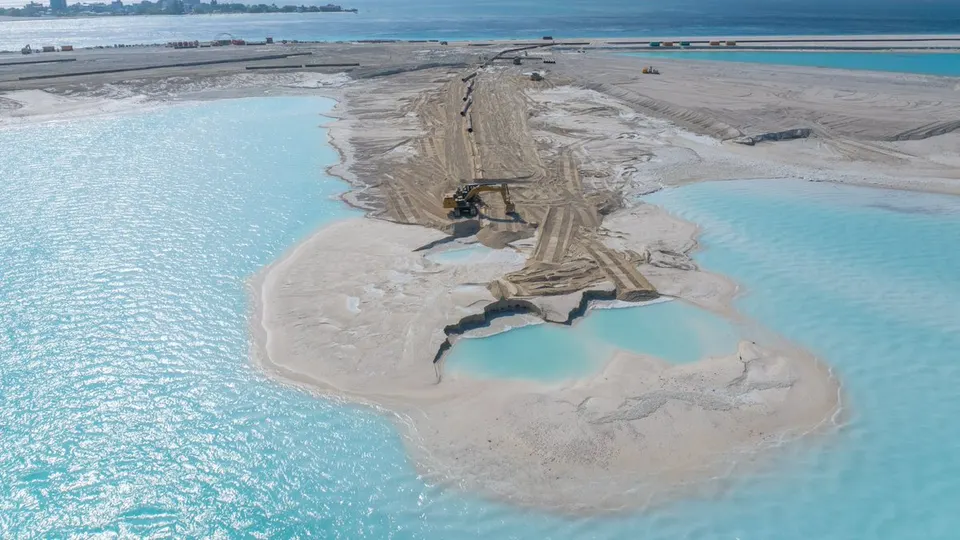
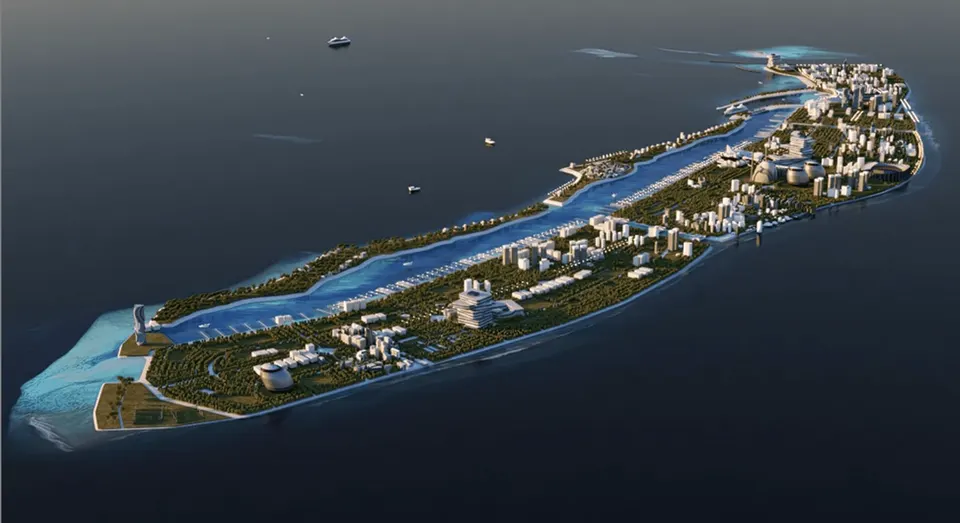
When the last sand is pumped in, Ras Malé will be a flat, empty island. Before anyone can live there, it needs shore protection, roads, power, water and sewerage. Here is what has been announced, who supplies Greater Malé today, and what is still undecided.
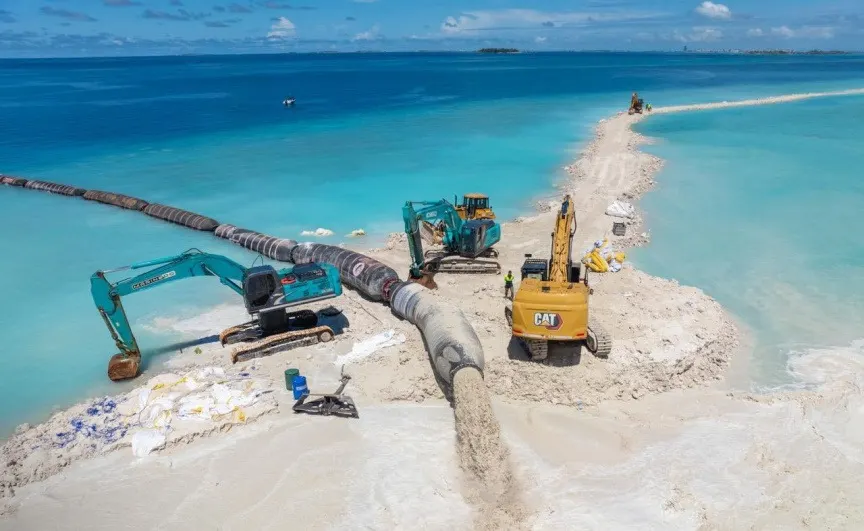
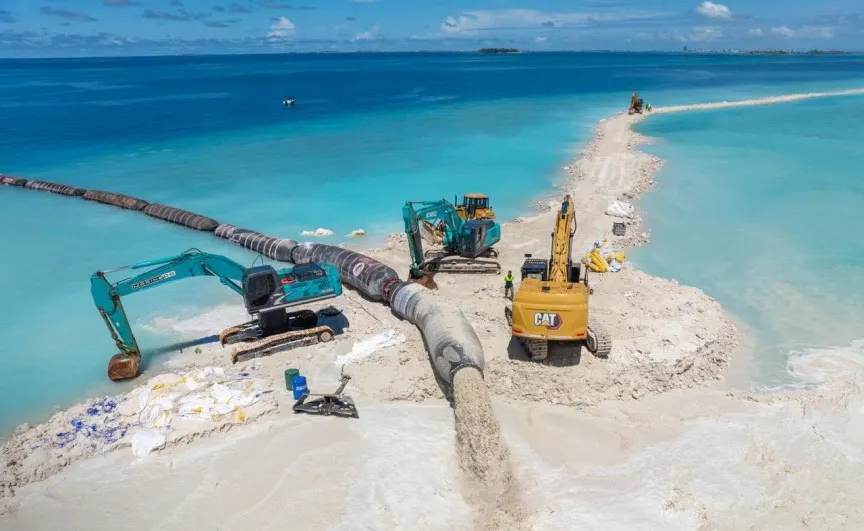
Reclamation makes the ground, and nothing else. When the last load of sand is pumped into Ras Malé, it will be a large, flat, empty island. Before families can build homes there, it needs a long list of things that cities take for granted: protected shores, roads, electricity, clean water, sewerage, drainage and communications. This guide explains what comes after the dredging, what has been announced, and what is still undecided.
In short ⌄
- Reclamation creates bare ground. Before plots can be handed over, Ras Malé needs shore protection, roads, electricity, water, sewerage and communications.
- In September 2026, the President said work on electricity, water, sewerage and roads would begin before the end of 2026. Who will build it hasn't been announced.
- The master plan brief says the city must run exclusively on renewable energy. Today, the whole country is aiming for 33% renewable power by 2028.
- In January 2024, the government signed an agreement with China Machinery Engineering Group for municipal facilities, including water and electricity, in Ras Malé and Gulhifalhu.
For the reclamation itself, see our progress tracker and when Ras Malé will be finished.
Step 1: protecting the shore
Newly reclaimed land is loose sand. Without protection, waves and currents begin to wash it away straight away. So the first job after a site is filled is shore protection: lining the edges with rock armour, concrete units or sea walls, sometimes with breakwaters offshore to reduce the force of waves.
At Ras Malé, this work is done site by site. Site J, the first 29 hectares, was reclaimed and given shore protection by CMC under revised contract terms, according to the company. HDC has reported that efforts were under way to begin shore protection on other completed sites. No overall schedule for shore protection across all 12 sites has been published.
The master plan brief adds another layer. It asks for a green and blue infrastructure plan, including mangrove buffers, wetlands and coastal protection, and says any coastal works must be designed to minimise disruption to marine ecosystems and navigation. That suggests the long-term shoreline may combine hard defences with natural ones. Our guide to sea level rise and the Maldives explains why both matter.
Step 2: settling and surveying
Reclaimed sand settles over time, especially in the first months. Before roads and buildings go in, the ground usually needs to be levelled and compacted, then surveyed so that roads, plots and utility corridors can be laid out exactly. Our guide to how land reclamation works covers the engineering.
Surveying depends on the master plan, which will set out where every road and plot goes. That plan hasn't been published yet. See the Ras Malé master plan.
Step 3: roads, power, water and sewerage
In an interview reported on 26 September 2026, President Mohamed Muizzu said work was under way to begin developing electricity, water, sewerage and road infrastructure across Ras Malé before the end of 2026. He didn't say who would carry it out, or how it would be paid for.
Roads
Roads will be laid out by the master plan. The brief asks for a transport plan that prioritises electric public transport, walking and cycling, and reduces dependence on cars, which suggests narrower streets and more space for pedestrians than in Malé. Links to the capital are being studied separately, in a transport master plan put out to consultants in December 2025. See our report on the transport plan.
Electricity
In Greater Malé, electricity is supplied by the state company STELCO, mostly from diesel generators. The government has been restructuring the utilities: it has decided to dissolve the island utility company Fenaka and transfer its operations to STELCO.
Ras Malé has a much higher bar. The master plan brief says the city should operate exclusively on renewable energy. For comparison, the government's national goal, pledged by the President at the COP28 climate summit, is for 33% of electricity to come from renewable sources by 2028. In February 2026, Tourism and Environment Minister Thoriq Ibrahim said the country was on track, with about 110 megawatts of renewable capacity added since 2023, more than doubling the 53 megawatts installed before, and projects under way that would take the total to about 220 megawatts. Powering a city planned for hundreds of thousands of people entirely from renewables, on an island with limited space for solar panels, will need large-scale solar, possibly floating solar on the surrounding lagoon, and substantial battery storage.
Water
Greater Malé's drinking water comes from desalination. The state company MWSC says the region's water production capacity has risen to about 49,900 tonnes a day, and in February 2026 it commissioned a new 5,000-tonne-a-day reverse osmosis plant in Hulhumalé. Ras Malé will need its own desalination plants and distribution network, sized for a population that the master plan brief puts at more than 300,000 within 20 years. Desalination uses a lot of energy, which links the water plan directly to the renewable energy goal.
Sewerage and drainage
A new city needs a sewer network, treatment and safe disposal, as well as stormwater drainage. The master plan brief calls for smart water and waste management and an assessment of wastewater and solid waste capacity. No design has been published. Because the land is being raised about 2 metres above sea level at the edges and 3 metres at the centre, drainage can be designed in from the start, which is far easier than retrofitting it in an existing city.
Communications
Hulhumalé offers a model. HDC built an Open Access Network there, launched in 2018 to make it a gigabit-enabled city, along with a seven-way duct network that carries cables and pipes under the streets. Something similar for Ras Malé would avoid digging up roads every time a new service is added.
The China agreement
In January 2024, during President Muizzu's state visit to China, the infrastructure ministry signed an agreement with China Machinery Engineering Group (CMEC) to develop municipal facilities, including water and electricity, in Ras Malé and Gulhifalhu. The value and terms weren't disclosed. Another agreement signed on the same visit covered a social housing project in Fushidhiggaru with 30,000 housing units planned. We haven't seen reports of work starting under either agreement, and it isn't clear whether they will be used for the utilities the President announced.
Step 4: services and homes
Once the basic networks are in, the city can start to fill up: schools, health centres, mosques, police and fire stations, shops and parks, and the homes themselves. The government's housing plan is for families to build on land plots under Housing for All, alongside flats. Our guides to schools, healthcare and services and building a house on a Ras Malé plot cover those stages.
The Eagle Hills waterfront, on about 500 hectares, is separate. Eagle Hills will build its own district, and the government says it is to build about 5,000 homes for the state before work on the waterfront begins.
How long will it take?
The government's own estimate is that developing the wider city will take about 10 years. Hulhumalé gives a sense of the pace. Reclamation there began in 1997, and its first residents moved in during 2004, around seven years later. It grew to 65,714 people by the 2022 census. Ras Malé has bigger ships, more experience to draw on and much stronger demand, but also a far larger area to service.
Lessons from the islands next door
Two nearby projects show how long the gap between land and homes can be.
- Hulhumalé. Reclamation began in 1997, and the first residents moved in during 2004, about seven years later. Roads, utilities and the first housing blocks had to be built in between.
- Gulhifalhu. Its land was finished in July 2024, and thousands of housing plots have been assigned there. But plots are only to be handed over once the Thilamalé Bridge is complete, which the government is now targeting for the end of 2027. See our guide to Gulhifalhu.
The common lesson is that the land is the quick part. Transport links, utilities and paperwork usually take longer, and they decide when people can actually move in.
What plot holders can do now
If you're hoping for a Ras Malé plot, there are a few things you can do while the infrastructure is built: keep your Housing for All documents up to date, watch for the published recipient lists and the land use plan, and look into financing early. The Hiyaavehi programme offers construction loans at 5% a year, and Bank of Maldives has cut the equity it requires for home construction loans to 5%. Our guide to building a house on a Ras Malé plot explains both.
What hasn't been decided
- Who builds the utilities. STELCO, MWSC, HDC, a foreign contractor such as CMEC, or a mix?
- How it's paid for. The utilities and roads for a city this size will cost a great deal. No budget or financing plan has been published.
- The order of work. Which areas get roads and utilities first will decide which plot holders can build first.
- The energy mix. How the 100% renewable goal will be met, and what happens in the meantime.
- The link to Malé. Ferries, a tunnel, an airstrip or a bridge: the choice affects where the main roads and transport hubs go.
We'll update this guide when contracts for roads and utilities are announced.
Questions people ask
What happens after Ras Malé's reclamation is finished? ⌄
When will roads and utilities be built in Ras Malé? ⌄
Will Ras Malé run on renewable energy? ⌄
How long until people can live in Ras Malé? ⌄
Sources
- Ras Malé project will proceed, no foreign land ownership: President · Atoll Times, 2026-09-26
- Maldives signs with Chinese company to develop municipal facilities in Rasmale' and Gulhifalhu · The Edition, 2024-01-12
- Consultancy Services for the Preparation of Rasmale' Master Plan: Terms of Reference · Ministry of Finance and Planning, 2025-10
- HDC to pay $21 million to CMCC for Rasmale dredging · Atoll Times, 2025-01-28
- About HDC · Housing Development Corporation
- MWSC: 31 years of serving the public · MWSC
- MWSC announces successful installation of new 5,000 TPD RO plant · Maldives Financial Review, 2026-02-13
- Govt to dissolve Fenaka and RDC under SOE restructuring · Atoll Times
- Government on track to meet 2028 renewable energy targets, minister says · MMTV, 2026-02-10
- Eagle Hills project will not affect housing plans: President · The Edition, 2026-09-26
- Hulhumalé · Wikipedia
- BML slashes home construction equity to 5%, opening doors for thousands · The Maldives Standard, 2026-04-09
- Thila Malé Bridge reaches 76% completion, opening targeted for December 2027 · The Maldives Standard